Healthcare Staffing Verification Platform: Multi-Tenant SaaS with AI Risk Scoring and Automated Provider Integration

CTO & Co-Founder
CTO & Co-Founder at Nirmitee.io. Architects healthcare integrations across FHIR, SMART on FHIR, ABDM and NHCX, writing from production experience taking hospital software from sandbox to go-live.
Part of our complete guide to AI agents in clinical workflows.
Executive Summary
A healthcare staffing company processing 10,000+ background checks per month was drowning in manual verification workflows. Each nurse hire required criminal records, OIG exclusion checks, license verification, drug screening, employment history, and education verification — coordinated across multiple providers via phone calls, faxes, and spreadsheets. Average time-to-clear: 14 days.
See how our healthcare interoperability services connect disparate clinical systems.
We built a multi-tenant SaaS background verification platform integrating directly with Informed (criminal records) and LabCorp (drug screening), plus automated checks against OIG, SAM, NPDB, and state licensing boards. AI-powered risk scoring flags candidates who need additional review. The platform serves multiple employer tenants with fully isolated data, custom check packages, and white-label branding.
Related Reading
For more insights, explore our guides on Multi-Tenant Architecture for Healthcare SaaS and FHIR in Modern Healthcare.
You may also find value in EHR Software Development Guide and Building a Healthtech App.
Our agentic AI solutions bring autonomous intelligence to healthcare operations.
Results: verification turnaround reduced from 14 days to 2.1 days (85% faster), 100% check completion (zero incomplete hires), and AI risk scoring catching 3.2% of candidates requiring escalated review that manual processes previously missed.
See our custom healthcare software development services for tailored clinical solutions.
The Problem: Manual Verification at Scale Doesn't Work
Healthcare staffing is unique: every hire must be verified against federal and state databases before they can touch a patient. Miss a check, and you're liable. The consequences are severe — an excluded provider billing Medicare can trigger $100,000+ in fines per claim.
The Manual Nightmare
- 14-day average verification time: HR coordinators manually ordering checks from multiple vendors, calling state boards, waiting for faxed results, tracking status in Excel
- 8% incomplete check rate: with so many moving parts, 1 in 12 hires started work with at least one verification still pending — a compliance risk
- No OIG/SAM real-time monitoring: exclusion checks done at hire but not continuously monitored. A provider excluded after hire could work for months before anyone noticed.
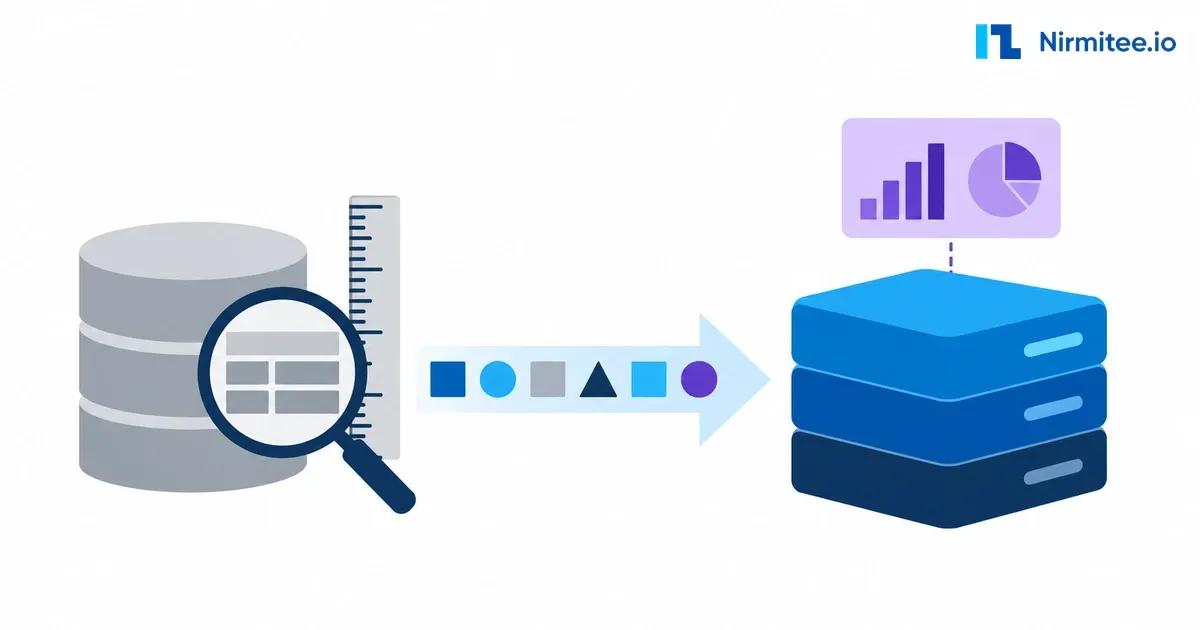
- Multiple disconnected vendors: Informed for criminal records, LabCorp for drug screens, state boards for licenses, each with their own portal, timeline, and result format
- No risk intelligence: a candidate with a minor misdemeanor from 2019 was treated the same as one with a clean record — no graduated risk assessment
Employer Dashboard
Each employer tenant gets a dedicated dashboard showing their verification pipeline:
- Kanban pipeline: candidates flow through columns — Submitted → In Progress → Under Review → Cleared → Flagged. Drag-and-drop for manual status updates.
- Real-time status: every check shows live progress — "Criminal: Searching 3 counties", "Drug Screen: Specimen received by LabCorp", "License: Verified with State Board"
- Priority queue: urgent hires (ICU nurses, travel nurses) flagged for expedited processing
- Bulk ordering: upload a CSV of 50 new hires → system creates verification orders for all automatically
Candidate Verification Detail
Each candidate has a comprehensive verification profile:
- Check-by-check status: criminal background (Clear ✓), OIG/SAM exclusion (Not Listed ✓), nursing license (Active, expires 2027 ✓), drug screening (Pending — LabCorp), employment history (3/3 Verified ✓), education (BSN Confirmed ✓)
- Expandable detail: click any check to see source data, provider response, verification timestamp, and supporting documentation
- AI Risk Score: composite score (0-100) based on all check results, employment gaps, credential anomalies, and historical patterns
- Event timeline: chronological log of every verification event — order placed, provider acknowledged, result received, review completed
Architecture
Multi-Tenancy Design
Each employer is a fully isolated tenant with:
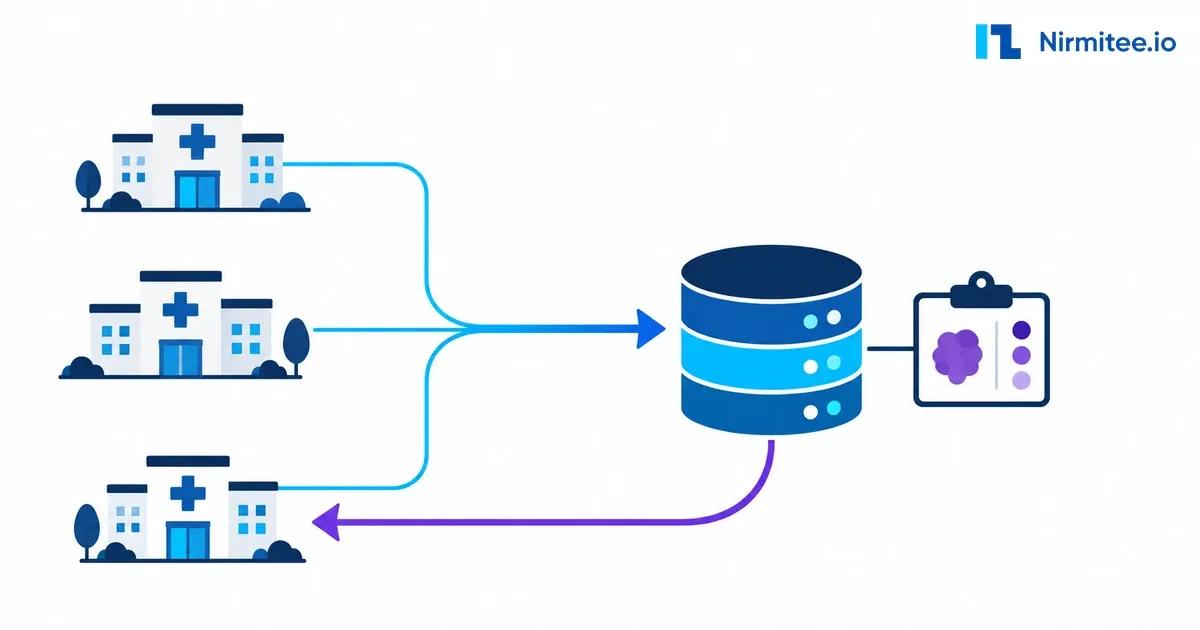
- Isolated PostgreSQL schemas: one schema per tenant. Employer A cannot query Employer B's candidates, even at the database level.
- Tenant-specific configuration: default check packages, pricing tiers, webhook URLs, branding (logo, colors), custom fields
- Shared infrastructure: single deployment serves all tenants — efficient operations while maintaining strict data isolation
External Provider Integrations
| Provider | Check Type | Integration Method | Avg Turnaround |
|---|---|---|---|
| Informed | Criminal records (county, state, federal) | REST API | 1-3 days |
| LabCorp | Drug screening (5/10/12 panel) | HL7 + API | 2-5 days |
| OIG | Exclusion check | Batch file + API | Real-time |
| SAM | Government exclusion | API | Real-time |
| NPDB | Medical board actions | Batch query | 1-2 days |
| State Licensing Boards | License verification | Web scraping + API (varies) | Real-time to 2 days |
Technology Stack
| Layer | Technology |
|---|---|
| Frontend | React + TypeScript (employer dashboard, admin panel) |
| Backend | Node.js (Express) with multi-tenant middleware |
| Database | PostgreSQL (schema-per-tenant isolation) |
| Queue | Redis + Bull (async check processing, retry management) |
| AI/ML | Python (risk scoring models, anomaly detection) |
| Integrations | REST APIs (Informed, LabCorp, OIG, SAM, NPDB) |
| Infrastructure | AWS (SOC 2 compliant, encrypted at rest) |
Background Check Order Flow
When an employer submits a new candidate for verification:
- Order created: employer selects candidate and check package (or system auto-applies default package)
- Parallel routing: system simultaneously sends requests to all required providers — criminal records to Informed, drug screening to LabCorp, exclusion checks to OIG/SAM, license verification to state board
- Async processing: each provider works independently. Results arrive at different times — some in seconds (OIG/SAM), some in days (criminal, drug screen)
- Results aggregated: as each result arrives, the candidate's profile updates in real-time. Employer sees live progress.
- AI risk assessment: once all checks complete, the AI risk model generates a composite score considering all results, employment gaps, credential patterns
- Report generated: comprehensive verification report with all results, risk score, and AI recommendations
- Employer notified: webhook + email notification with clearance status and report link
AI Risk Scoring
The AI risk engine goes beyond pass/fail to provide nuanced risk assessment:
- Composite risk score (0-100): weighted combination of all verification results, with healthcare-specific risk factors
- Contributing factor breakdown: each factor that impacts the score is shown with its individual risk level — employment gap (moderate), minor misdemeanor from 5 years ago (low), active license (no risk)
- Contextual intelligence: a DUI from 10 years ago for an administrative role = low risk. The same DUI for a patient transport driver = elevated risk. Context matters.
- Actionable recommendations: "Proceed with conditional offer — monitor drug screen result" or "Escalate to compliance officer — license disciplinary action found"
- Continuous monitoring: after hire, the system checks OIG/SAM exclusion lists monthly. If a cleared employee appears on an exclusion list, immediate alert to employer.
Multi-Tenant Administration
The platform admin panel manages all employer tenants from a single interface — onboarding new companies, configuring check packages, managing billing, and monitoring platform health.
Analytics
Results
| Metric | Before | After | Impact |
|---|---|---|---|
| Average verification time | 14 days | 2.1 days | 85% faster |
| Check completion rate | 92% (8% incomplete) | 100% | Zero compliance gaps |
| Cost per verification | $89 (manual labor + vendor fees) | $34.20 (automated) | 62% cost reduction |
| HR coordinator time per hire | 4.5 hours | 20 minutes | 93% time saved |
| Candidates flagged by AI | 0% (no risk scoring) | 3.2% (graduated risk assessment) | Better risk management |
| OIG/SAM monitoring | At hire only | Monthly continuous | Ongoing compliance |
| Tenants onboarded | N/A | 24 employer tenants | Scalable SaaS model |
Financial Impact
For a staffing company processing 10,000 checks/month:
- Cost savings: ($89 - $34.20) × 10,000 = $548,000/month saved
- HR time reclaimed: 4.3 hrs saved × 10,000 hires × $35/hr = $1.5M/year
- Compliance risk reduction: zero incomplete checks → estimated $2M+ in avoided regulatory exposure
Timeline
| Phase | Duration | Deliverables |
|---|---|---|
| Phase 1 | 6 weeks | Multi-tenant infrastructure, Informed integration, employer dashboard MVP |
| Phase 2 | 6 weeks | LabCorp integration, OIG/SAM automated checks, candidate detail view, bulk ordering |
| Phase 3 | 4 weeks | AI risk scoring, analytics dashboard, report generation, continuous monitoring |
| Phase 4 | 4 weeks | Admin panel, tenant onboarding workflow, SOC 2 audit, production launch with 5 pilot tenants |
Total: 5 months with 4 engineers + 1 data scientist.
Lessons Learned
- Multi-tenancy at the database level is non-negotiable. Schema-per-tenant isolation gives both security (data physically separated) and operational simplicity (backup, restore, compliance per tenant). Application-level row filtering isn't enough for healthcare staffing data.
- Provider API reliability varies wildly. Informed's API is excellent. State licensing boards range from modern APIs to "you have to scrape their website." Build abstractions that handle the worst case.
- AI risk scoring builds trust over time. Initially, HR teams overrode 30% of AI recommendations. After 3 months of seeing accurate risk predictions, override rate dropped to 8%. Let the AI prove itself with data.
- Continuous monitoring is the moat. One-time verification at hire is table stakes. Monthly OIG/SAM monitoring differentiates the platform — and it's what compliance officers care about most.
From architecture to production, our Healthcare Software Product Development team builds healthcare platforms that perform at scale. We also offer specialized Healthcare AI Solutions services. Talk to our team to get started.