Introduction
Today, over 80% of healthcare providers rely on digital tools to manage patient care. But what goes into building these tools? The answer lies in the technology stack, a critical foundation that shapes every aspect of healthcare software.
In this blog, let's explore the technology stack, the combination of tools and technologies that powers healthcare apps, enabling them to deliver personalized care, predictive analytics, and rock-solid data security.
Why Does the Tech Stack Matter in Healthcare?
Healthcare apps are not just about convenience; they handle sensitive data, support critical decisions, and must comply with strict regulations. The right tech stack ensures:
- Security and privacy for patient data
- Personalized experiences for users
- Predictive analytics for better care
- Scalability to handle growth
- Compliance with healthcare laws
Let's break down the different types of technologies that make up a healthcare tech stack and how to choose the right one for your project.

Understanding the Healthcare Tech Stack
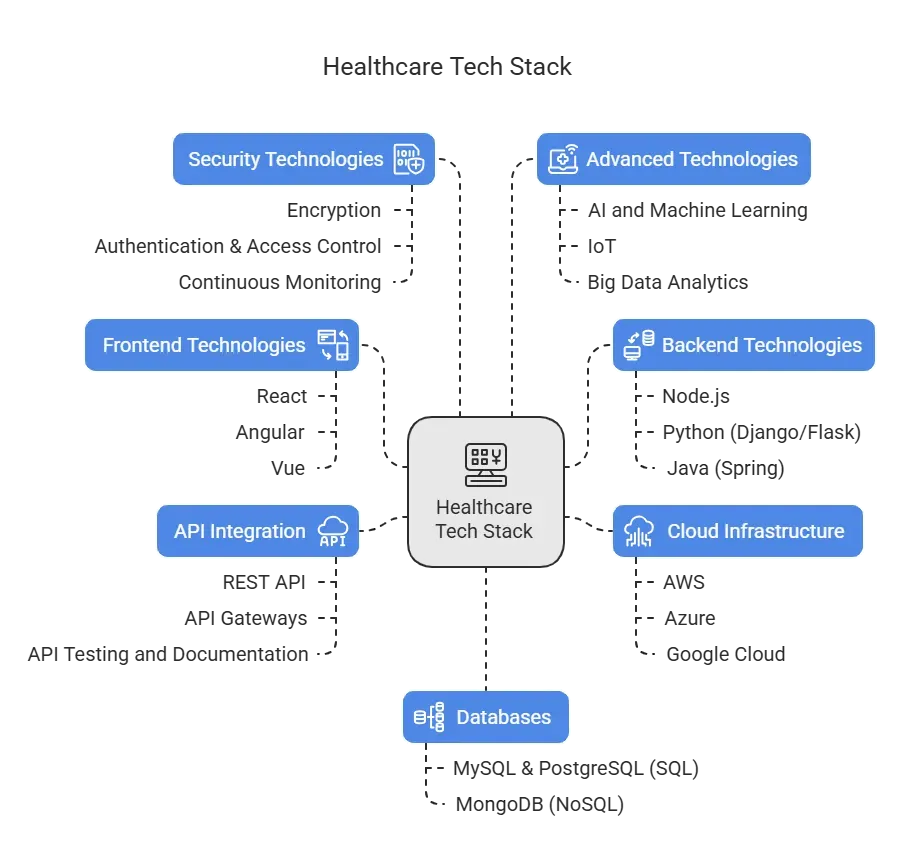
Frontend Technologies
- React
It is a component-based JavaScript library renowned for its speed and flexibility, making it an ideal choice for building interactive healthcare dashboards and patient portals. Its virtual DOM ensures fast updates and smooth user experiences, even with real-time data.
- Angular
It is a powerful framework that organizes code into modules and components, perfect for complex healthcare applications. Angular's structure makes it easier to manage big projects and maintain strict compliance.
- Vue
Vue is a lightweight, progressive framework that's easy to learn and integrate, making it great for quick healthcare app development. Its reactive data binding and virtual DOM enable fast, responsive interfaces. Vue is flexible, working well for both small and medium-sized healthcare projects.
- React
Backend Technologies
- Node.js
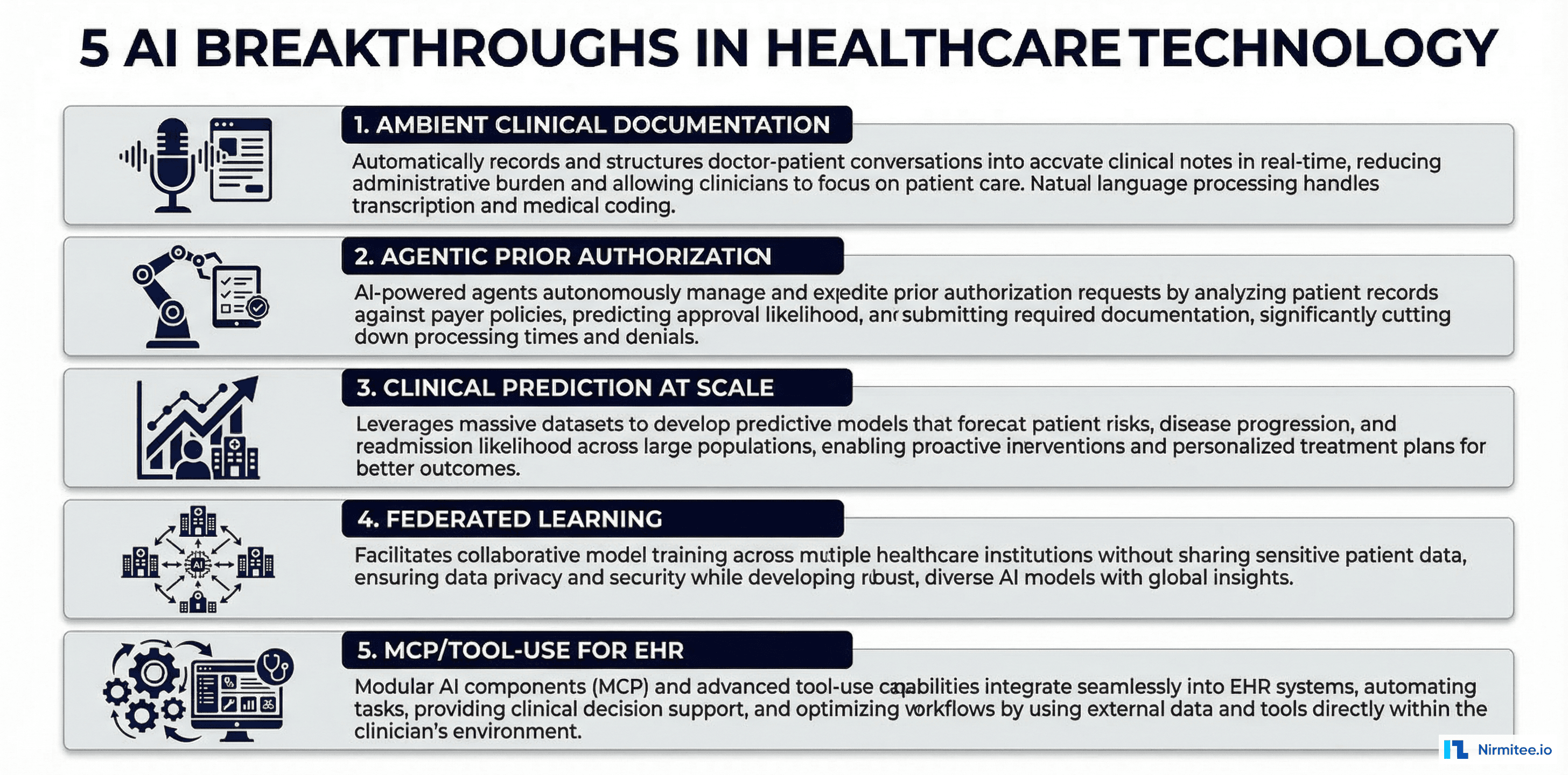
It uses JavaScript on the server side, supporting real-time features like live patient monitoring and chat in healthcare apps. Its event-driven, non-blocking architecture makes it fast and scalable, and it's a top pick for microservices-based healthcare systems.
- Python (Django/Flask)
Python, with frameworks like Django and Flask, is known for readable code and secure defaults, making it ideal for healthcare data processing and compliance. Django offers built-in authentication and database management, speeding up secure app development.
- Java (Spring)
Java's Spring framework is robust, scalable, and well-suited for enterprise healthcare apps that need to handle complex workflows and large data volumes. Spring offers strong security features and supports modular development, making it easier to maintain and update healthcare systems.
- Node.js
Databases
- MySQL & PostgreSQL (SQL)
MySQL and PostgreSQL are reliable, structured databases. It supports complex queries, data integrity, and robust backup features, ensuring data is always available. These databases are widely adopted for their security and compliance support.
- MongoDB (NoSQL)
MongoDB is a flexible, document-based NoSQL database. It scales easily and retrieves data quickly, even as records grow. MongoDB is great for apps that need to store unstructured or semi-structured health information.
- MySQL & PostgreSQL (SQL)
-
- Cloud Infrastructure
AWS, Azure, and Google Cloud provide scalable, secure hosting for healthcare apps, supporting compliance with healthcare regulations. They offer automatic backups, disaster recovery, and easy scaling as user numbers grow. Cloud services reduce maintenance overhead and allow rapid deployment of new features.
- Cloud Infrastructure
API Integration
- REST API
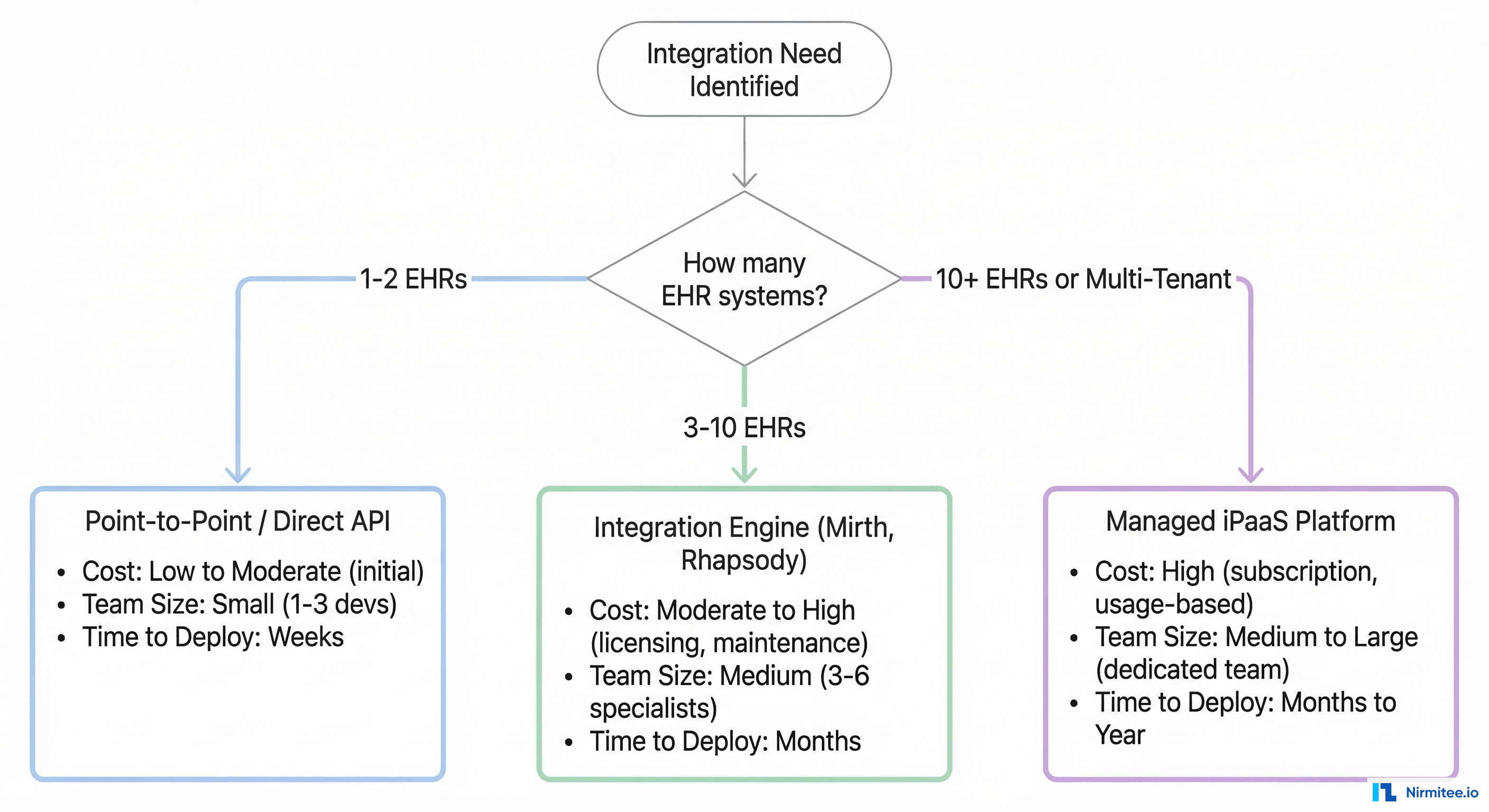
REST APIs are the standard for connecting healthcare apps with EHRs, labs, and insurance systems, enabling secure and efficient data exchange. They use simple web protocols, making integration straightforward and reliable. They're the backbone of interoperability in modern healthcare apps.
- API Gateways
API gateways like AWS API Gateway or Kong manage all API requests, handling routing, security, and load balancing in one place. They help enforce security policies and monitor API usage, making integrations safer and more reliable.
- API Testing and Documentation
Tools like Postman and Swagger allow developers to test APIs for correctness, security, and performance, while also generating clear documentation. Good testing ensures data flows smoothly and safely between systems. Documentation helps teams integrate faster and reduces errors.
- REST API
Security Technologies
- Encryption
SSL/TLS encryption protects patient data both during transmission and when stored, meeting strict healthcare privacy laws. It's a must-have for any healthcare app.
- Authentication & Access Control Multi-factor
Authentication and role-based access control ensure only authorized users can view or change sensitive health data. Solutions like Auth0 and Okta help manage identities and permissions across apps. These measures prevent data breaches and support regulatory compliance.
- Continuous Monitoring
Security platforms like Splunk or Datadog provide real-time monitoring, alerting teams to suspicious activity or vulnerabilities. Regular audits and monitoring catch issues before they become serious problems.
- Encryption
Advanced Technologies
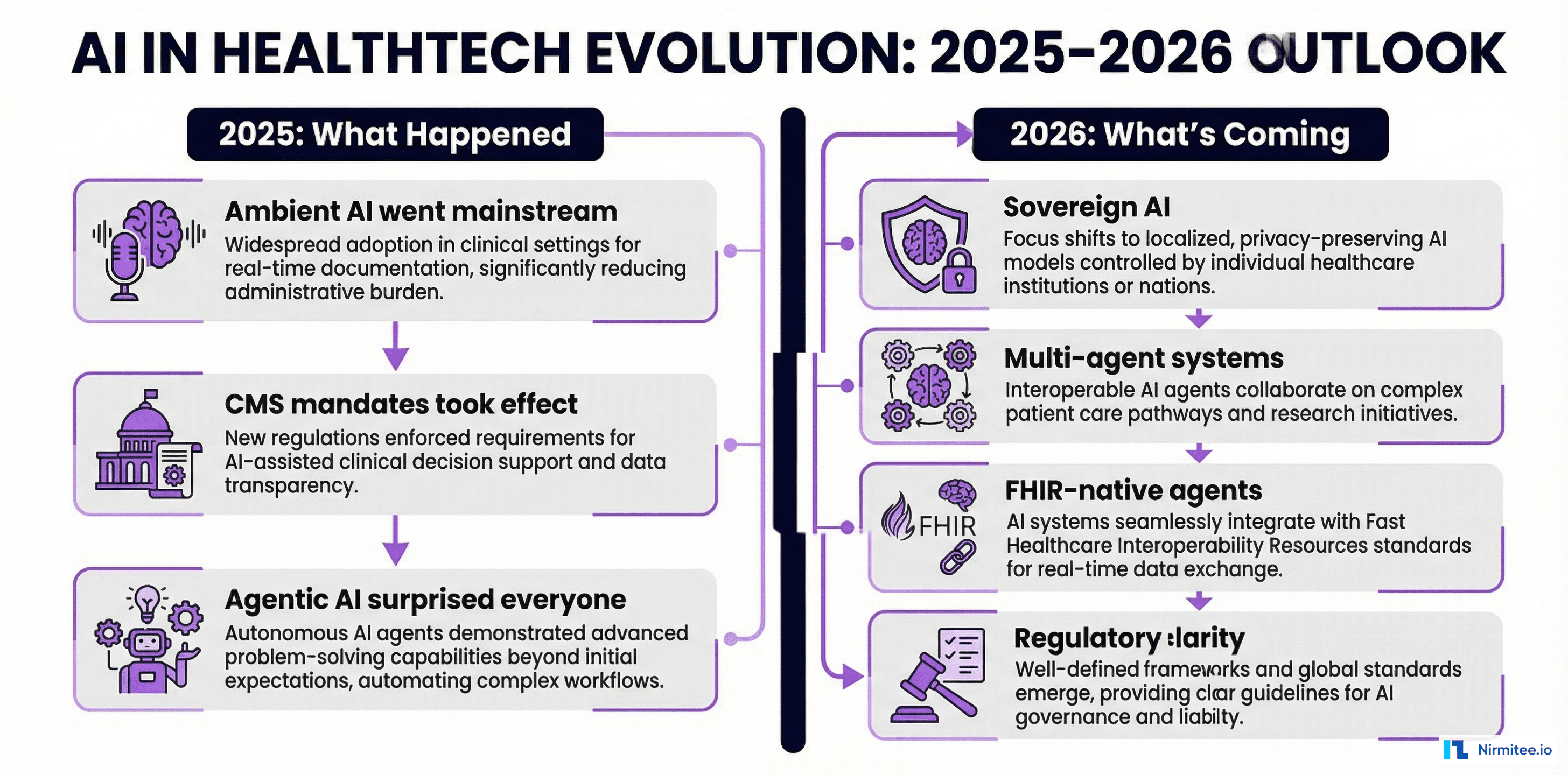
- AI and Machine Learning
Frameworks like TensorFlow and PyTorch enable predictive analytics and personalized care, helping doctors make better decisions. AI can analyze large datasets for early disease detection or treatment recommendations. These tools bring smarter, data-driven features to healthcare apps.
- IoT
Platforms like AWS IoT and Azure IoT Hub connect wearable devices and sensors for real-time health monitoring. IoT enables remote patient tracking and proactive care outside the clinic. These tools help collect and analyze health data continuously.
- Big Data Analytics
Tools like Apache Spark process massive healthcare datasets to uncover trends, improve care, and support research. Big data analytics helps hospitals optimize operations and predict patient needs. These technologies turn raw data into actionable insights.
- AI and Machine Learning
Key Points to Consider When Choosing the Right Tech Stack
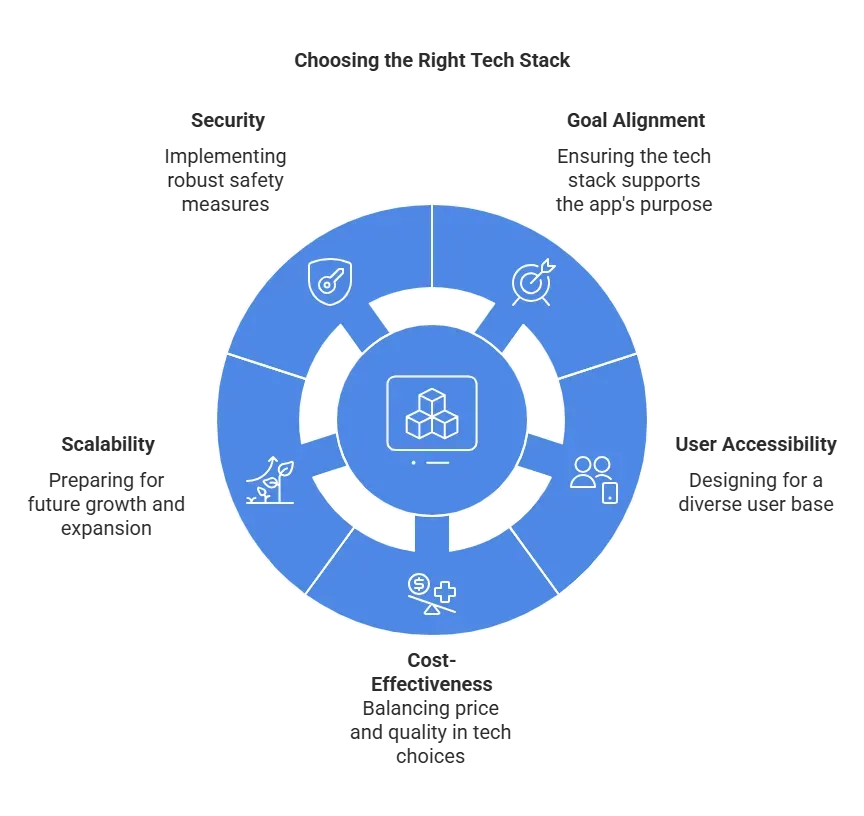
Choosing the best technology stack isn't just about picking the latest or most popular tools. It's about finding the right fit for your app's goals, users, and future growth. Here's how to make a smart choice:
Keep your Goal in mind
The first step is to get crystal clear about what your app is meant to do. Each type of app has its own requirements. For example, an app handling large amounts of patient data and analytics might benefit from Python for backend processing and a robust database like PostgreSQL or MongoDB. On the other hand, a simple appointment booking app could use lighter frameworks and databases.
Design for everyone
Healthcare apps are used by a wide range of people. The technology stack you choose should support a user interface that is clean, intuitive, and accessible to everyone, regardless of their tech skills. Frontend frameworks like React or Angular can help create responsive designs that work well on both computers and mobile devices.
Striking the Right Balance Between Price and Quality
Some technologies are open-source and free to use, while others require paid licenses or subscriptions. Cloud solutions, for example, often have lower upfront costs and can scale with your needs, but you'll pay ongoing fees. On-premises solutions might have higher initial costs but give you more control. Weigh the long-term costs against the benefits, and remember that investing in quality now can save you from expensive fixes later.
Build with Scalability in Mind
Your app may start small, but if it's successful, you'll need to handle more users, more data, and more features over time. The right tech stack should make it easy to grow without major headaches. Cloud infrastructure is great for this because you can add resources as you need them. Modular architectures and microservices also help, letting you add or update features without disrupting the whole system.
Safety and Security
Your tech stack must support strong security measures like encryption, secure authentication, and regular monitoring for vulnerabilities. It should also facilitate compliance with healthcare regulations, such as HIPAA, GDPR, or local laws. Choose databases and servers known for their security features.
Conclusion
By understanding your app's goals, knowing your users, and picking proven, compliant technologies, you can create healthcare solutions that truly make a difference in people's lives, just like Medisafe and Headspace do for Sarah.
Ready to build a healthcare app that's secure, scalable, and loved by users? Select your tech stack carefully and collaborate with experts who understand how to bring your vision to life. If you're looking for a development partner who understands healthcare, compliance, and the latest tech, let's connect and build the future of healthcare together.