Nirmitee.io

Automated Patient Communication Software

Automated Patient Communication Software

We build patient communication software that sends reminders, recalls, results notices and two-way SMS from your EHR's own appointment and result events, with TCPA consent and opt-out handling, minimum-necessary message content and delivery tracking.

EHR-triggered messagesTCPA consent and opt-outTwo-way SMS and voice
Automated Patient Communication Software
ENGINEERED FOR CONNECTED HEALTHCAREEHR-triggered messages
meets real-world engineering.
Evidence you can check
  • ISO 27001:2022 certified
  • HIPAA-enabled: we sign BAAs
  • Our team has built 350+ interfaces on Mirth Connect
  • SMART on FHIR app run against the Epic and Oracle Health developer sandboxes in one session

The challenge behind the brief

What automated patient communication software does

Updated September 2026.

Automated patient communication software sends the right message to the right patient when something happens in the EHR: an appointment is booked, moved or missed, a result is released, a patient is discharged or a recall comes due. We build it for provider groups, health systems, digital health companies and EHR vendors that need communication tied to their own scheduling and results data rather than a separate list that drifts out of date.

A production system is more than an SMS gateway. It listens to HL7 v2 SIU and ORU feeds or FHIR Appointment and DiagnosticReport events, decides who may be contacted on which channel under the patient's consent and the TCPA healthcare rules, writes each message to the minimum necessary standard, handles STOP and HELP replies, tracks carrier delivery receipts, and writes every outbound and inbound message back to the chart as a FHIR Communication so staff see one history. Patients reply to confirm, cancel or reschedule, and the change lands in the EHR schedule instead of a staff inbox.

Need a conversational assistant as well? See our AI virtual health assistant. Need the EHR connection alone? Start with EHR integration services or HL7 integration services, delivered on Interoply, our integration platform. Ready to scope it? Book a 30-minute scoping call.

Primary sources: FCC 2015 TCPA Declaratory Ruling and Order (healthcare exemption), FCC 2024 consent revocation order, FCC 2024 ruling on AI-generated voices, HHS minimum necessary guidance, 45 CFR 164.522 confidential communications, FHIR R4 Communication and The Campaign Registry for A2P 10DLC.

Talk through your requirements ↗

Define the right scope

Automated patient communication software we build

Each capability is tied to an EHR event, a consent rule and a delivery record, so every message can be explained afterwards.
01 / CAPABILITY

Appointment reminders and confirmations

Reminders at the intervals your clinics choose, triggered by HL7 SIU S12 (new), S13 (rescheduled), S14 (modified) and S15 (cancelled) messages or FHIR Appointment changes. Patients reply C to confirm or R to reschedule; confirmations update the appointment status in the EHR and cancellations release the slot for the waitlist.
02 / CAPABILITY

Recalls and care-gap outreach

Recall lists built from the EHR for overdue annual visits, screenings, immunizations and chronic care follow-ups, with outreach cadences that stop as soon as the patient books. Recall rules use the same data as your HEDIS and value-based care reporting, so outreach and measurement agree.

03 / CAPABILITY

Results-available notifications

When an ORU R01 or FHIR DiagnosticReport is released to the portal, the patient receives a notice that a result is ready, not the result itself. Timing rules respect the Cures Act expectation that results are available without delay and any clinician-review holds your organization sets for sensitive tests.

04 / CAPABILITY

Two-way SMS and shared inbox

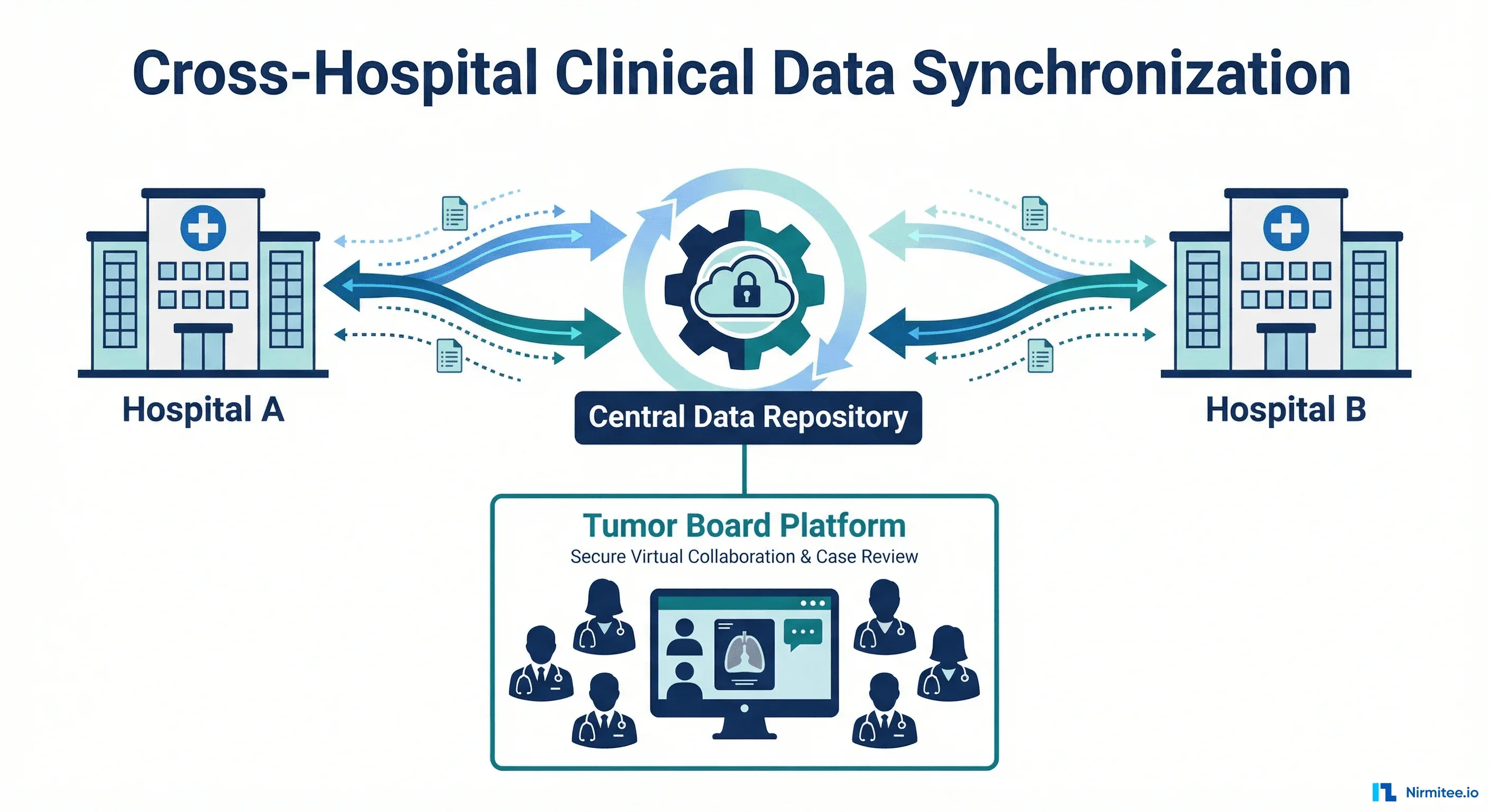
Free-text replies routed to the right team queue with the patient's context, templated responses, assignment and escalation timers. Every inbound and outbound message is stored as a FHIR Communication linked to the patient and encounter, so the conversation is part of the record.

05 / CAPABILITY

Pre-visit and post-discharge messages

Pre-visit instructions, intake and consent form links, insurance card capture and check-in, plus post-discharge follow-ups triggered by ADT A03 events to support readmission prevention programs.

06 / CAPABILITY

AI voice agents and automated calls

Voice agents that confirm, cancel and reschedule by phone, reading open slots through FHIR Slot and booking through Appointment, with a clear disclosure and hand-off to staff. Since the FCC's February 2024 ruling, AI-generated voices count as artificial voices under the TCPA, so the same consent rules apply as for prerecorded calls.

07 / CAPABILITY

Multilingual messaging

Templates in each patient's preferred language from Patient.communication or the EHR language field, with clinician-approved translations. Segment counts are planned per language: GSM-7 messages carry 160 characters per segment, while Unicode messages in scripts such as Chinese, Vietnamese or Arabic carry 70.

08 / CAPABILITY

Delivery tracking and channel fallback

Carrier delivery receipts (queued, sent, delivered, undelivered, failed) and error codes captured for every message, landline and invalid numbers detected before sending, and fallback from SMS to voice or email by rule. Failed reminders appear on a worklist instead of disappearing.

09 / CAPABILITY

Consent, preference and opt-out management

One consent record per patient and channel, capturing how and when consent was given, the purpose it covers and every revocation. STOP, QUIT, END, REVOKE, OPT OUT, CANCEL and UNSUBSCRIBE replies are processed automatically, and opt-outs requested by phone or at the front desk are recorded in the same place.

Explore the service in detail

Buyer decisions for automated patient communication software

Build, buy or extend

Off-the-shelf patient engagement platforms suit single-EHR practices with standard workflows. A custom build or extension fits when communication is part of your product or your workflows are not standard.

  • Buy
    One EHR the vendor already supports, standard reminder and recall flows, per-provider or per-message pricing you accept
  • Build
    A digital health product or EHR that needs messaging inside it, several EHRs, or specialty workflows such as behavioral health, dialysis or oncology
  • Extend
    Keep your current platform and add the missing layer: results notices, two-way inbox, voice agent, analytics or a second EHR
Explore custom healthcare software development ↗

TCPA and messaging rules the software must enforce

Consent and opt-out logic belongs in the platform, not in staff training.

  • Healthcare exemption conditions
    Under the FCC's 2015 ruling, exempt healthcare texts to wireless numbers are free to the patient, sent only to the number the patient provided, name the provider, carry no marketing or billing content, stay within 160 characters, and are limited to one per day and three per week with an opt-out in each
  • Revocation by any reasonable means
    Since 11 April 2025, opt-outs made by reply keyword, phone, email or in person must be honored within 10 business days
  • Marketing needs written consent
    Promotional or fundraising messages need prior express written consent and a separate consent record from care messages
  • Carrier registration
    A2P 10DLC brand and campaign registration through The Campaign Registry, or toll-free verification, before production volume

Integration boundaries

Each EHR exposes schedule and result events differently. We confirm the path per EHR during discovery.

  • Interface engine feeds
    HL7 v2 SIU, ADT and ORU from Epic, Oracle Health, MEDITECH and others through Mirth Connect or your existing engine
  • FHIR APIs
    Appointment, Slot, Patient, DiagnosticReport and Communication over FHIR R4, with topic-based Subscriptions where the EHR supports them and polling where it does not
  • Vendor APIs
    athenahealth changed-data subscriptions, eClinicalWorks and practice management APIs for smaller practices
  • Messaging vendors
    Twilio or another CPaaS under a BAA for SMS and voice, and your email provider for transactional mail
Explore EHR integration services ↗

Deliverables you own

Every engagement ends with software and documentation your team can run.

  • Event and template catalog
    Every trigger, audience rule, channel, template and language, approved by operations and compliance
  • Consent and opt-out service
    Consent records, revocation processing and audit reports
  • Integrations and message history
    EHR triggers, write-back as FHIR Communication, delivery receipts and a staff inbox
  • Runbooks and dashboards
    Delivery, confirmation and failure dashboards, carrier registration records and on-call runbooks

What drives the cost

Scope, not screen count, sets the budget. We estimate against these drivers after discovery.

  • Number of EHRs and trigger types
    Each EHR and each event source (SIU, ORU, ADT, FHIR, vendor API) is its own integration
  • Channels
    SMS, voice, AI voice agent, email and in-app each add delivery, consent and testing work
  • Two-way depth
    Keyword replies are simple; a staff inbox with routing and EHR write-back is a larger build
  • Languages and templates
    Translation review and per-language testing
  • Volume and hosting
    Message volume, carrier fees and the cloud environment under your BAA chain
Talk through your scope ↗

What to evaluate in your partner

Why healthcare teams choose Nirmitee for patient communication

Engineers who read SIU and ORU messages, a consent model designed with compliance in the room, and software your team owns.
01

Integration depth behind every message

+

Our team has built more than 350 interfaces on Mirth Connect, and we have run one SMART on FHIR app against the Epic and Oracle Health developer sandboxes in a single session. Reminders are only as reliable as the schedule feed behind them, so that is where we start.

02

Built for HIPAA-regulated workflows

+

We sign BAAs, and Nirmitee is ISO 27001:2022 certified. PHI stays out of message bodies unless the patient has chosen otherwise, data is encrypted in transit and at rest, and every message, consent change and staff action is logged.

03

Communication work we have delivered

+

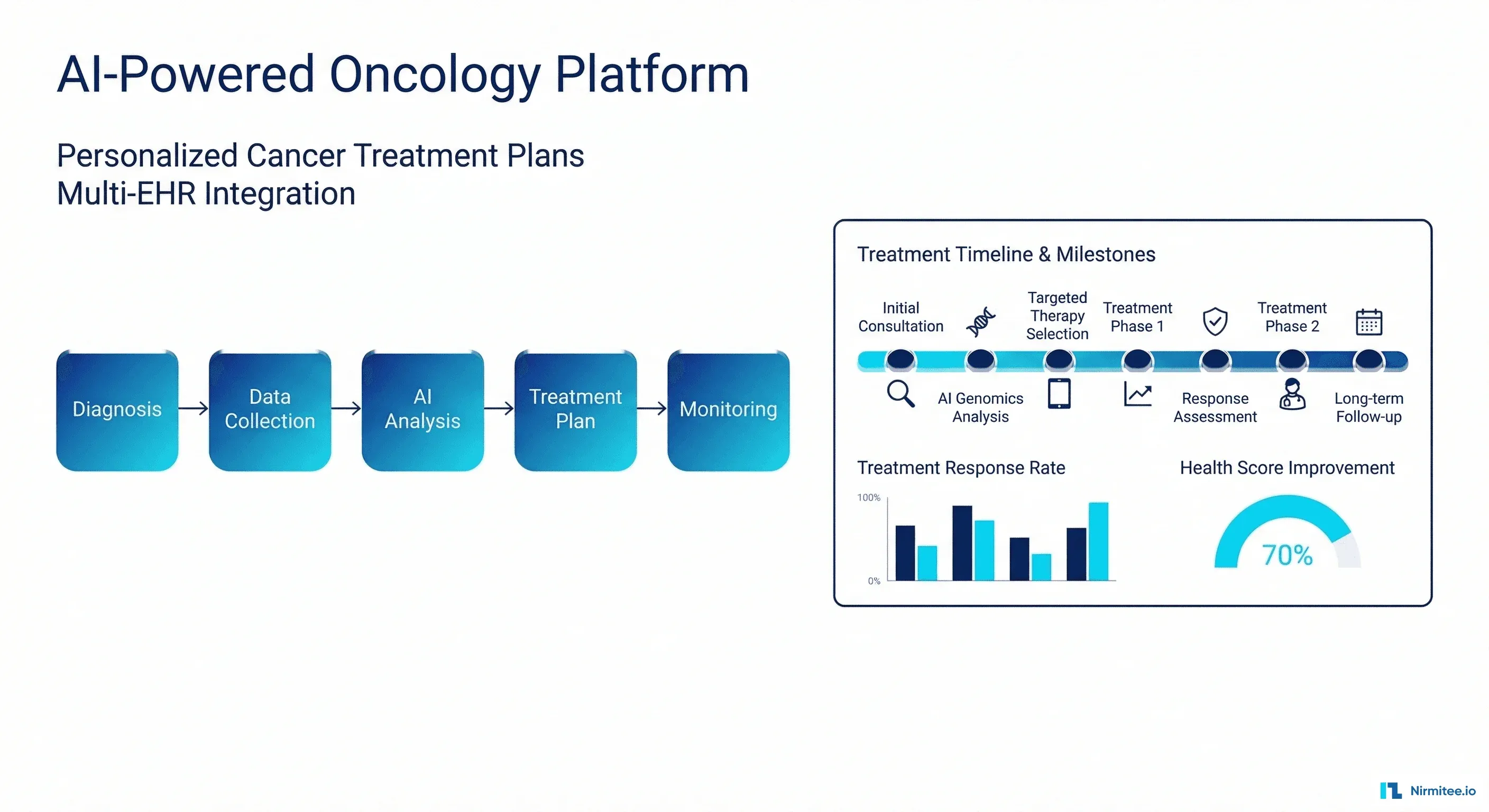
Client names are withheld; each is a real engagement. We built a chronic pain patient app and clinician portal that keeps patients reporting between visits, an oncology copilot that answers only from the patient's record and hands off to the care team, and dental practice software that runs scheduling, charting and billing in one system.

04

Consent and opt-out designed with your compliance team

+

We map your message types to TCPA, HIPAA and state rules with your compliance lead before the first template is written, and the platform enforces those rules rather than relying on staff memory.

05

You own the platform

+

Source code, infrastructure as code, templates and runbooks are delivered to your repositories and cloud account, and you choose the messaging vendor.

A reviewable delivery approach

How an automated patient communication project runs

Triggers and consent first, then channels, then two-way and voice.

  1. 01

    Discovery and message catalog

    Map every message type to its EHR trigger, audience, channel, consent basis and template.

    Explore this stage

    Deliverables: event and template catalog, consent model, EHR integration path per system, carrier registration plan.

  2. 02

    Triggers, reminders and consent

    Build the EHR event feeds, reminder engine, consent service and SMS channel, and complete A2P 10DLC or toll-free registration.

    Explore this stage

    Deliverables: live reminders and confirmations in one clinic, opt-out processing, delivery tracking and write-back to the EHR.

  3. 03

    Recalls, results and two-way messaging

    Add recall lists, results notices, the staff inbox and pre-visit and post-discharge messages, running in parallel with the pilot.

    Explore this stage

    Deliverables: recall and results workflows, shared inbox with routing, dashboards for confirmations and failures.

  4. 04

    Voice, languages and scale

    Roll out to more clinics and add AI voice agents, more languages and further EHRs.

    Explore this stage

    Deliverables: voice agent, translated templates, monitoring and an agreed support model.

A working model for your priorities

Start with a Milestone.
Build a Lasting Partnership.

Define the scope, ownership, and delivery responsibilities together. Commercial terms and team availability follow that conversation.

Prepare for the next conversation

Patient communication engineering guides

Explore all articles ↗
EHR Implementation

EHR Implementation Checklist (2026): Phases, Timeline, Resources and Go-Live

Read the article ↗
EHR Integration

EHR CRM Integration (2026): What to Sync, Patient Matching, HIPAA and Architecture

Read the article ↗
eClinicalWorks

eClinicalWorks Telehealth Integration for Third-Party Apps: One Visit, End to End

Read the article ↗

Before you choose a partner

Automated patient communication software: buyer questions

What is automated patient communication software?+

Automated patient communication software sends appointment reminders, recalls, results notices, pre-visit instructions and follow-ups automatically when events happen in the EHR, and handles patient replies by SMS, voice, email or app. It connects to scheduling and results data, enforces consent and opt-out rules, and records every message in the patient's history.

How does patient communication software integrate with the EHR?+

Through HL7 v2 feeds from the interface engine (SIU for appointments, ORU for results, ADT for admissions and discharges), FHIR R4 APIs for Appointment, Slot, Patient and DiagnosticReport, or vendor APIs such as athenahealth's changed-data subscriptions. Replies and delivery status are written back, typically as FHIR Communication resources or HL7 messages, so staff see them in the chart.

Do appointment reminder texts need patient consent under the TCPA?+

Healthcare messages about treatment, such as appointment reminders and results notices, generally rely on the consent a patient gives by providing their number to the provider. Texts to wireless numbers sent under the FCC's healthcare exemption must also be free to the patient, name the provider, avoid marketing and billing content, stay within 160 characters, be limited to one per day and three per week, and include an opt-out. Marketing messages need prior express written consent.

How must opt-outs be handled?+

Since 11 April 2025, FCC rules require that consent revoked by any reasonable means, including replies such as STOP, QUIT, END, REVOKE, OPT OUT, CANCEL or UNSUBSCRIBE, be honored within 10 business days. The software should process keyword replies automatically, record opt-outs made by phone or in person, and block further messages on that channel for that purpose.

Can patient reminders include PHI?+

Messages should carry only what the patient needs to act, following HIPAA's minimum necessary principle: the provider name, date, time and a link or reply option, not diagnoses or results. HHS guidance allows unencrypted text or email with PHI when the patient has been told the risks and prefers that channel, which the software records as a patient preference.

Can patients confirm, cancel or reschedule by text?+

Yes. Replies such as C to confirm or R to reschedule update the appointment status in the EHR, cancellations free the slot for the waitlist, and rescheduling offers open slots read from FHIR Slot or the EHR's scheduling API.

How do results-available notifications work?+

When a result is released to the patient portal, an ORU message or FHIR DiagnosticReport event triggers a notice that a new result is ready, with a link to the portal. The result itself stays behind portal login, and rules can hold notices for tests your clinicians review before release.

Can AI voice agents make reminder and rescheduling calls?+

Yes. Voice agents can confirm, cancel and reschedule appointments, answer routine questions and hand off to staff. The FCC ruled in February 2024 that AI-generated voices are artificial voices under the TCPA, so they need the same consent as prerecorded calls, and patients should be told they are speaking with an automated agent.

Does automated patient communication software support multiple languages?+

Yes. Templates are selected by the patient's preferred language from the EHR, translations are reviewed by your clinical and language services teams, and message length is planned per language, since Unicode scripts carry 70 characters per SMS segment instead of 160. Section 1557 of the Affordable Care Act requires covered entities to offer language assistance, which the messaging program should reflect.

How is message delivery tracked?+

Each message stores the carrier delivery receipt (queued, sent, delivered, undelivered or failed) and any error code. Numbers are checked for landlines and invalid lines before sending, failed messages fall back to another channel by rule, and a worklist shows patients who could not be reached.

Should we buy a patient engagement platform or build one?+

Buy when you run one supported EHR with standard reminder and recall workflows. Build or extend when messaging is part of your own product, when you connect to several EHRs, when your specialty workflows are not standard, or when you need data and message history you control. Many teams keep their platform and build the missing layer around it.

What drives the cost of automated patient communication software?+

The number of EHRs and trigger types, the channels (SMS, voice, AI voice agent, email, app), the depth of two-way messaging and the staff inbox, the number of languages, message volume and carrier fees, and the hosting environment. Discovery produces an estimate with these assumptions written down.

Let’s make the next step useful

Bring the Challenge.
We’Ll Bring the Engineering Questions.

Discuss your workflows, systems, and delivery priorities with the Nirmitee team.