
Product discovery and MVP scope
Map user roles, workflow exceptions and clinical review points. Agree the first release, acceptance criteria, dependencies and features to defer. Deliverables include a prioritized backlog and architecture proposal.
Healthcare Software Product Development
Healthcare software product development for HealthTech founders, product leaders and CTOs. Scope your MVP, connect clinical systems and prepare your next release with a delivery plan your team can review.
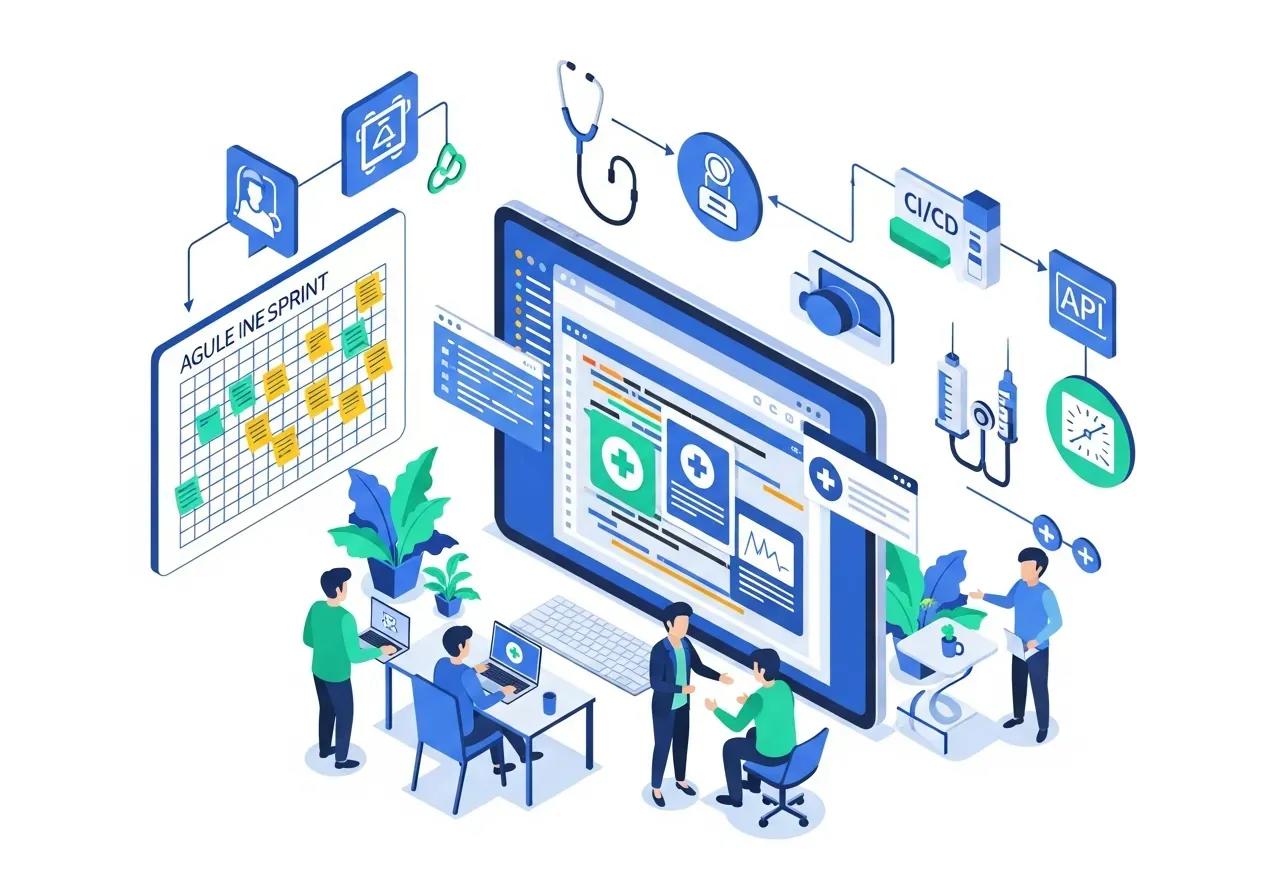
The challenge behind the brief
Healthcare software product development takes a clinical or operational idea through discovery, build, integration, validation and handover. A first release is planned at $30,000 to $120,000, with a fixed price after discovery.
For HealthTech founders, product leaders and CTOs building a new product or preparing an existing platform for its next customer. Start with the clinical or operational workflow, the people using it and the milestone your business needs to reach.
A pre-seed team may need a testable MVP and a realistic integration plan. A Series A or B team may need hospital onboarding, stronger access controls or a release process that supports more customers. We help define the engineering scope around that stage.
Built to sell to more than one customer
A healthcare product has two launches: the release that works, and the release a hospital's security team will approve. This shows how we would design for the second one from the start, using a reference design your discovery work will change.
Founder or product lead
Agree the pilot's success measureOne workflow, one site, and a number the customer's sponsor cares about.Customer security team
Send the security questionnaireAnswered from real evidence: access model, audit design, vendor list.If a control is missing: it goes on a dated remediation plan rather than being answered with a vague yes.
Customer legal
Review BAA and data termsYour BAA, your subprocessor list and your breach notice terms.Customer IT and EHR team
Approve the connectionSSO, EHR app or interface approval, usually with its own change window.If the EHR team queues the work: pilot starts on a limited data feed, with the limit written down.
Our engineers
Create the customer's tenantScripted setup, its own roles and its own audit view.Customer clinicians
Run the pilotUsage and failed tasks tracked, without patient data in analytics.Founder or product lead
Convert what you learnedEach customer-specific request becomes configuration or goes to the roadmap, so the code does not fork.Each customer's users
SAML or OIDC single sign-on per customer, mapped to product roles
Shared product
Every request carries a tenant ID that is checked at the data layer as well as in the screen
PHI boundary, split by tenant
Connectors are set up per tenant, so one customer's EHR outage or credentials never touch another's
Connector layer
Each customer's approved route out to its own systems
Running the product
Make these before the roadmap is final. We help you see the engineering impact. Regulatory counsel makes the determination.
PHI allowed
No PHI, by design
Needs a BAA before any PHI
Test the workflow with target users and map the buyers.
Decide tenancy, connectors, regulatory path and what to leave out.
One complete workflow, one connector and the audit trail.
SSO, tenant setup, audit export and security evidence.
Pilot feedback, second customer and support model.
Product companies are judged on what they own. Once paid, you own the custom code we write for you and all of your data. We keep our reusable tools and open-source parts. Check your agreement against this list.
Few of these are about code quality. Most are about building the wrong thing or being unable to sell it.
A CTO can read this code before any sales call. Each item has a clear limit.
A good partner should push back on your scope. Use these in your first technical call.
A first release is typically $30,000 to $120,000 as a planning range, and a fixed price is confirmed once it and its dependencies are scoped. We start from your users, your systems and your next milestone.
Discuss your product scopeDefine the right scope
Explore the service in detail
An API implementation is only part of onboarding. Confirm the customer EHR, credentials, permitted use, test environment and vendor fees before setting a production date.
Choose the workflow, review process and evaluation criteria before selecting a model. Include data handling and ongoing evaluation in the delivery plan.
What to evaluate in your partner
Review Nirmitee’s public healthcare engineering repositories and ask us to walk through the relevant implementation. Open-source code and sandbox work are evidence you can inspect; they do not establish production deployment, certification or suitability for your environment.
A reviewable delivery approach
Agree the commercial scope and acceptance criteria for each stage before implementation.
Workflow map, prioritized release scope, integration inventory, risk register and assumptions for estimating cost and timing.
Architecture decisions, interface contracts, working increments and a shared backlog reviewed against the agreed acceptance criteria.
Test evidence, integration reconciliation, security review findings, deployment and rollback plans, with clear release approval responsibilities.
Repository and environment handover, operating runbooks, known limitations and an agreed support or next-release scope.
Healthcare software product development covers very different products. These are the ones we build most often, each with its own service page.
Charting, orders, results and scheduling for a specialty or care setting.
Video visits, scheduling, intake and visit documentation.
Booking, messages, results, bills and education on web and mobile.
Device readings, alert rules, clinician review and RPM billing support.
Eligibility, claims, remittance and denial work queues.
Documentation, coding and decision support with human review and evaluation.
Intake, measurement-based care, therapy notes and telehealth for behavioral health.
FHIR, HL7 and X12 connections, data pipelines and analytics.
Scaling an existing platform instead of starting a new product? See our healthcare product engineering services.
Off-the-shelf tools are faster for standard needs. A custom product pays off when the workflow, the integrations or the business model are your advantage.
The product follows how your clinicians and staff actually work, instead of forcing them around a generic tool.
Once paid, you own the custom code we write for you and all of your data. We keep our reusable tools and open-source parts. Repository access is set in the contract, with third-party licenses listed, which matters for valuation and for selling to health systems.
You decide which EHR, payer and device connections come first, subject to each vendor's capabilities, permissions and access.
Audit logging, access control and PHI handling are designed for your use case from the first release.
We design AI into the product from the first release, with people reviewing its output and checks that keep running after launch.
Visit audio becomes a draft note that the clinician reviews, edits and signs before anything reaches the chart.
Agents gather intake details, suggest codes and assemble prior authorization packets, with a person approving each submission.
We design AI outputs that affect care or billing to go to a named reviewer, with a clear accept or edit step and an audit trail.
We build test cases from your real scenarios, including hard and unusual ones, and check each model change against them.
We set up checks on sampled cases, reviewer edits and drift, so the team can spot a drop in quality and act on it.
PHI is sent to a model provider only after a business associate agreement covering that service is signed, with data minimized and logged.
Where a feature could be software as a medical device or clinical decision support, we review the FDA guidance early with your regulatory advisor.
We design a manual step for when a model is down or unsure, so staff can carry on with the task by hand.
Adding AI to an existing system instead? See AI agents for healthcare and healthcare AI solutions.
These planning ranges help you budget before discovery. We confirm a fixed price and a dated plan once the first release and its dependencies are scoped.
| What you are building | Planning range | Note |
|---|---|---|
| First release of a custom healthcare product | $30,000 to $120,000 | Planning range; fixed price after discovery |
| Telemedicine app MVP | $40,000 to $120,000 | Planning range; fixed price after discovery |
| One EHR integration | $15,000 to $50,000 | Per integration; vendor fees separate |
| Dedicated product team | From $10,000 a month | For an ongoing roadmap |
The number of user roles and workflows in the first release moves the date more than any other choice.
Each EHR, lab, payer or device connection needs vendor access and a test environment, which often sets the critical path.
HIPAA safeguards, security questionnaires and, for regulated software, FDA documentation add review cycles.
Clinicians test the workflow with real scenarios before launch, and their availability shapes the schedule.
Moving records from an existing system needs mapping, cleaning and a reconciled cutover.
Web only is faster than web plus iOS and Android, so many teams launch on web and add mobile next.
Testing a healthcare product means testing the clinical workflow and every connection, not only the code.
Scenarios written with clinicians, including missing data, corrections and handoffs between roles.
Real test messages and sandbox calls for each EHR, lab, payer or device, with reconciliation checks.
Access control, audit logging, PHI exposure checks and dependency scanning before each release.
Keyboard use, screen readers and contrast for patient-facing screens.
Automated suites that run before every release so fixes do not break live workflows.
Response times under realistic clinic and patient load, including busy mornings and bulk data jobs.
A healthcare product keeps changing after launch because vendors, payers and regulations change around it.
Alerts for failed integrations, errors and slow pages, with an agreed response path.
Updates when EHR APIs, payer rules or federal requirements change.
New features released in planned increments against the product roadmap.
Documentation, runbooks and pairing so your engineers can take over when you are ready.
Each model works. The right one depends on your roadmap, funding and the specialist skills you already have.
| Model | Strength | Watch out for | Best for |
|---|---|---|---|
| In-house team | Full control and product knowledge stays inside | Hiring healthcare engineers takes time; specialist gaps are common | Companies with a funded long-term roadmap |
| Outsourced partner | Fast start and healthcare specialists from day one | Needs clear ownership, handover and code access in the contract | First product, MVP or a hard integration |
| Hybrid | Your product lead with a partner team for specialist work | Needs shared standards and one backlog | Teams scaling while hiring |
Evaluating an integration or product partner? Explore the systems, workflows, and technical decisions behind our work.
Explore all case studies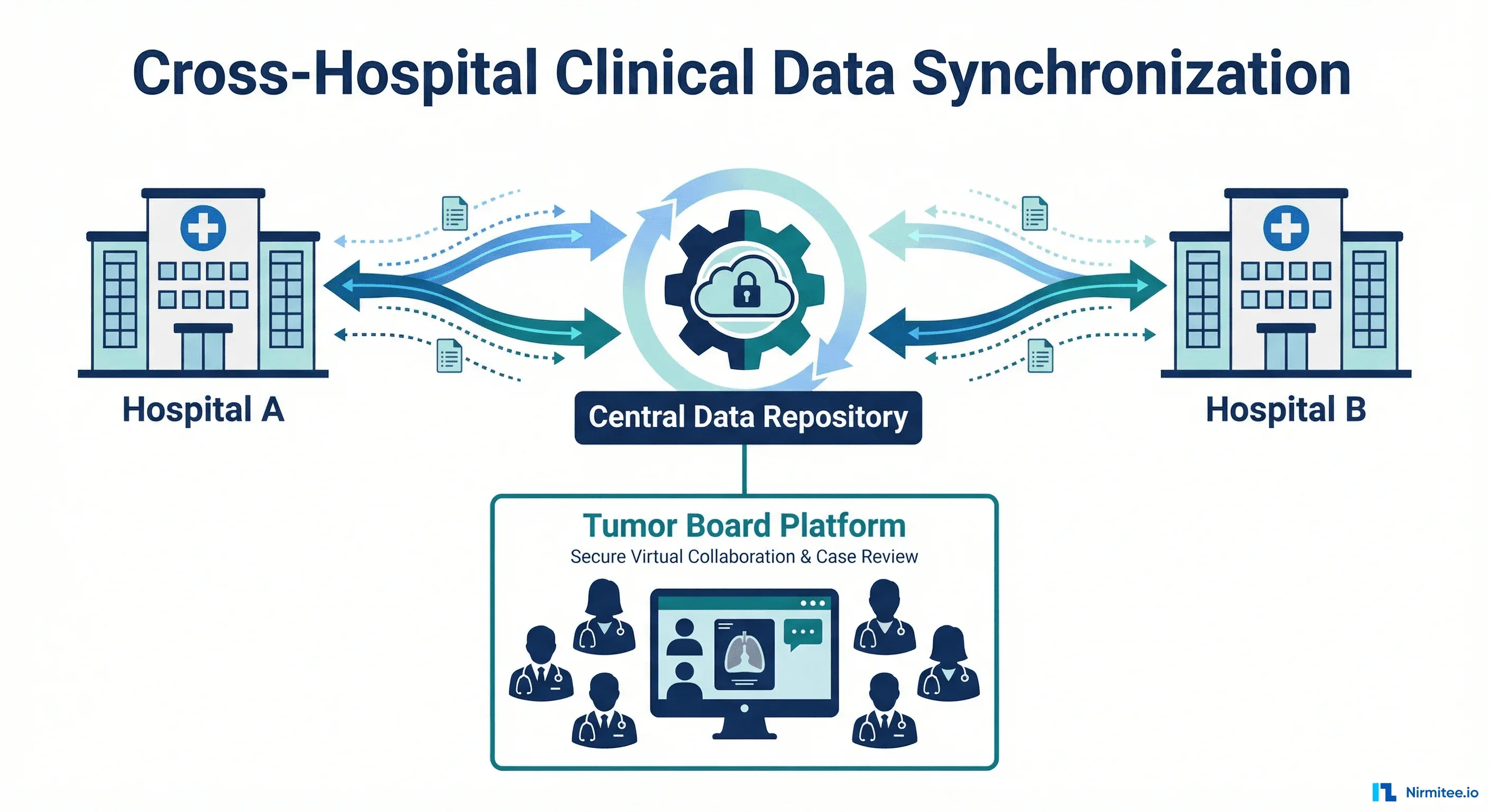
Discover how a regional telemedical network synchronized clinical data across hospitals to improve collaboration, continuity of care, and interoperability.
Explore the implementation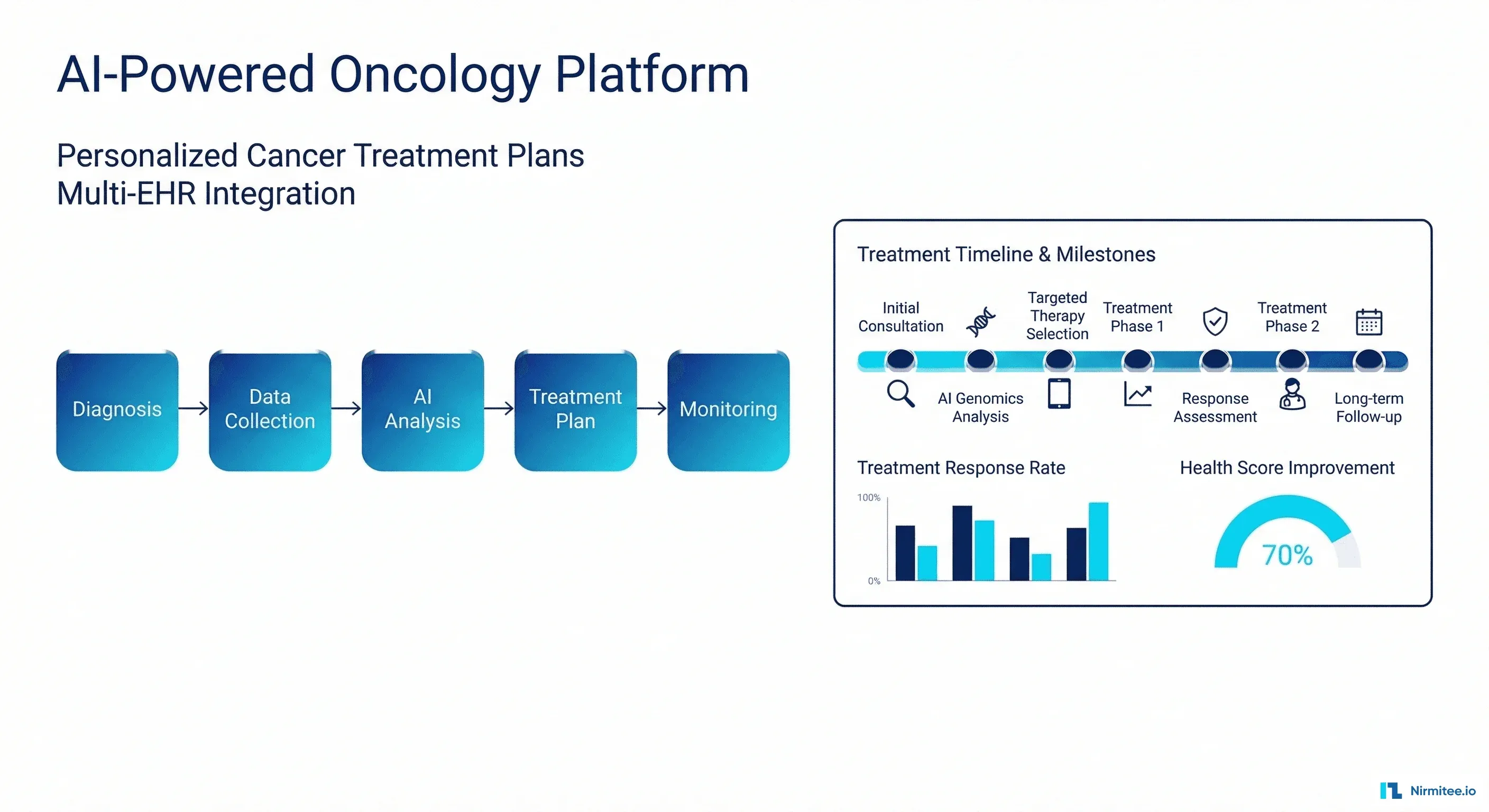
See how an AI powered oncology platform integrated multiple EHRs to improve care coordination, clinical workflows, and treatment decision support.
Explore the implementation
Discover how a patient health record platform integrated 12 EMR systems using FHIR to deliver seamless interoperability and unified patient data.
Explore the implementationA working model for your priorities
Define the scope, ownership, and delivery responsibilities together. Commercial terms and team availability follow that conversation.
Bring a product or integration milestone. Agree the dependencies, deliverables, and acceptance criteria before implementation.
Explore engineering, integration, design, and QA support that works with your existing product and technical leads.
Before you choose a partner
Let’s make the next step useful
Discuss your workflows, systems, and delivery priorities with the Nirmitee team.