Which electronic prior authorization vendors connect to EHRs?+
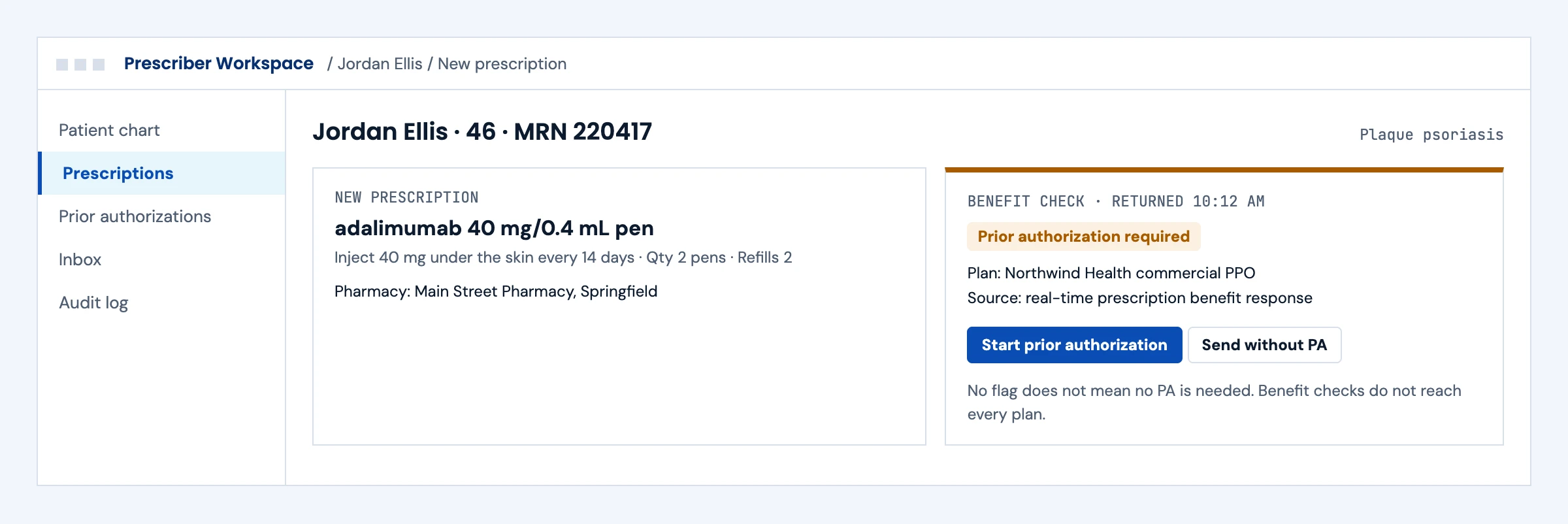
For pharmacy-benefit drugs, EHRs commonly connect through ePA networks such as Surescripts and CoverMyMeds, using NCPDP SCRIPT ePA transactions. E-prescribing vendors often include ePA for the products they power. For medical services, payers are building FHIR Da Vinci prior authorization APIs under CMS-0057-F. To compare software products rather than build an integration, see our prior authorization software buyer's guide.
How does ePA prior authorization work with NCPDP SCRIPT?+
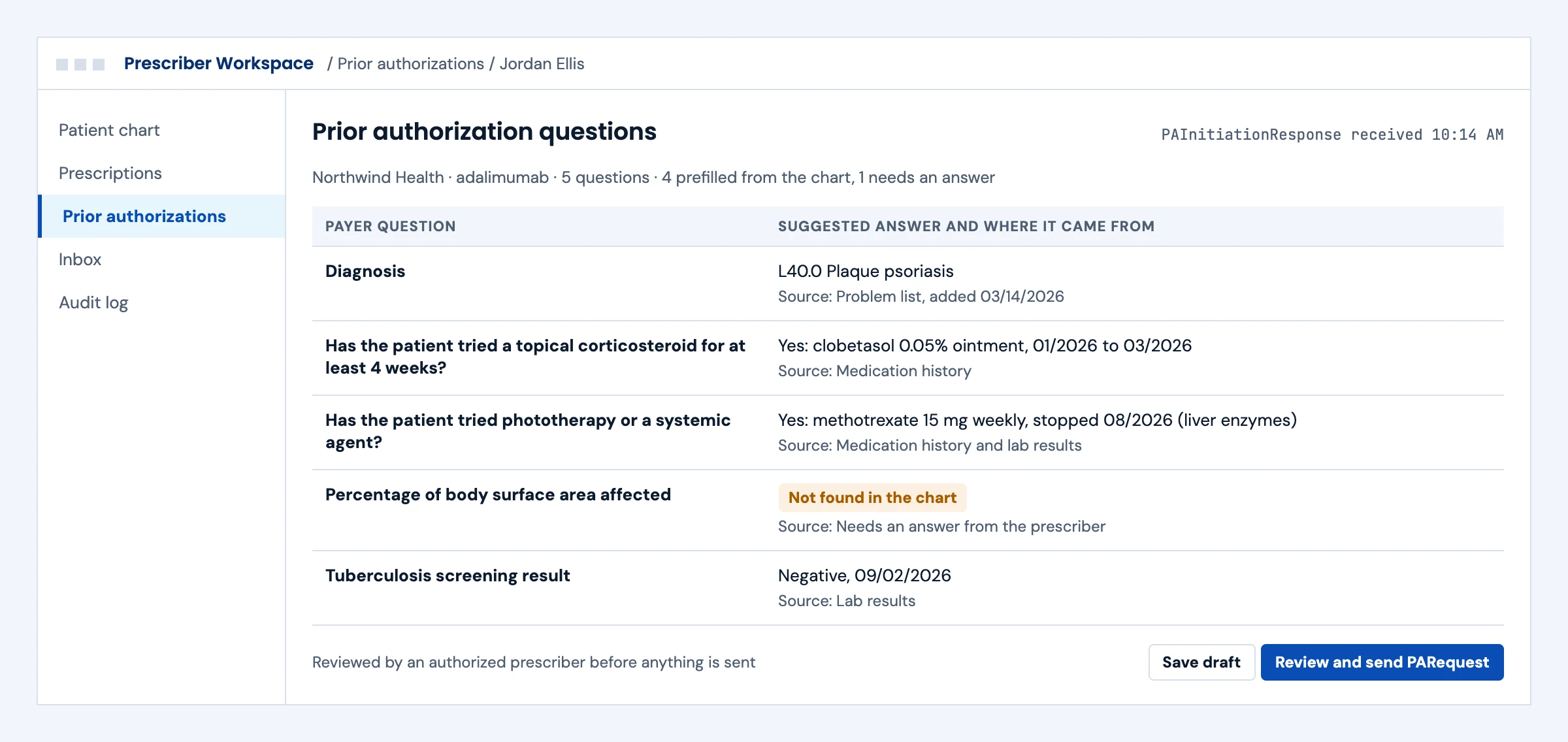
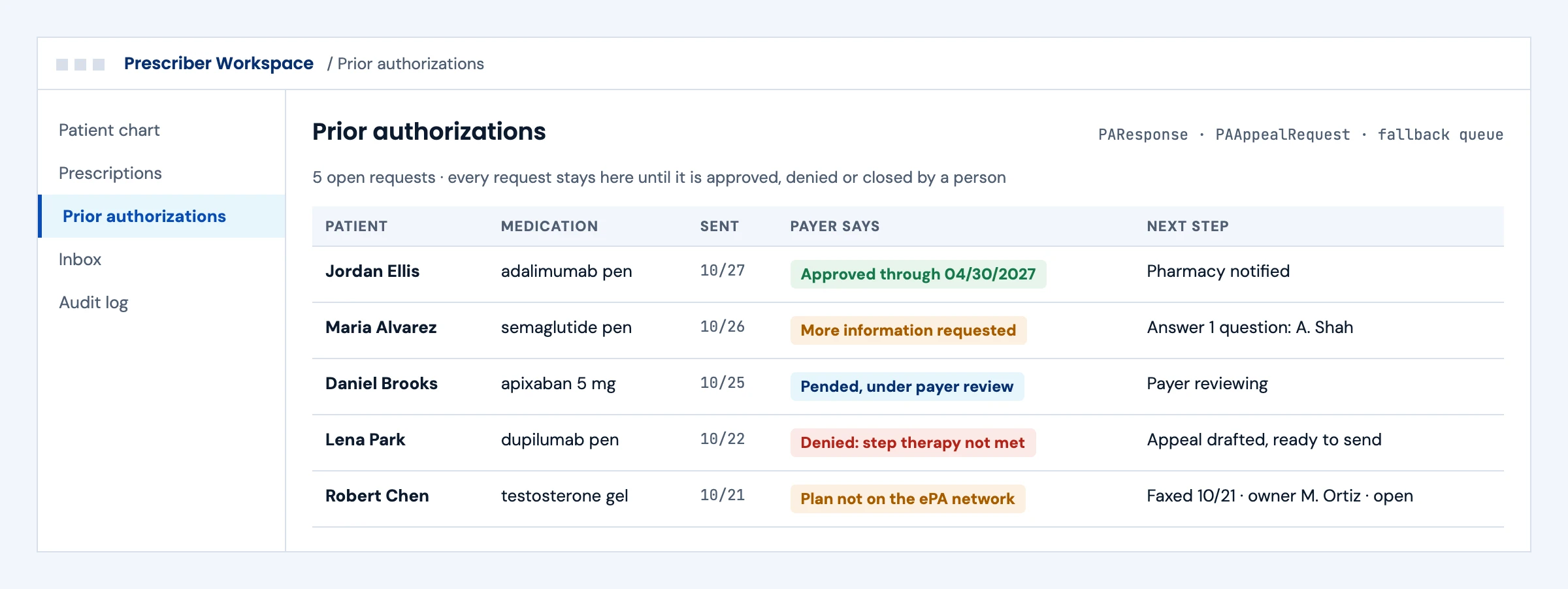
In the solicited model, the prescriber's system sends a PAInitiationRequest and the payer returns the questions in a PAInitiationResponse. The answers go back in a PARequest, and the payer's PAResponse approves, denies, pends or asks for more information. Separate transactions handle appeals and cancellations.
What is the difference between pharmacy ePA and medical prior authorization?+
Pharmacy ePA covers drugs under the pharmacy benefit and uses NCPDP SCRIPT through ePA networks. Medical prior authorization covers procedures and other non-drug items, which CMS-0057-F moves to FHIR prior authorization APIs; medical-benefit drugs would join only if CMS-0062-P is finalized. Many products need both, with one status view for staff.
Does HTI-4 require electronic prior authorization in certified EHRs?+
For e-prescribing certification, yes. ONC's HTI-4 rule, finalized in July 2025, updates e-prescribing to NCPDP SCRIPT 2023011 and makes the ePA transactions required in that criterion. Developers may use version 2017071 or 2023011 through December 31, 2027, and only 2023011 from January 1, 2028.
What is the CMS proposed rule on prior authorization for drugs?+
In April 2026, CMS proposed extending electronic prior authorization requirements to drugs for Medicaid, CHIP and plans on the federal exchanges. Pharmacy-benefit drugs would use NCPDP standards and medical-benefit drugs would use the FHIR prior authorization API, with a proposed compliance date of October 1, 2027. It is a proposal, not a final rule.
Can we integrate with CoverMyMeds?+
Yes, through CoverMyMeds' access process. Its developer page describes a Provider API based on the NCPDP ePA standard and a Pharmacy API using the NCPDP Telecom Claim standard, and access is approved by CoverMyMeds rather than through self-serve keys. We help you choose between a direct ePA network connection, the right CoverMyMeds interface and the ePA features of your e-prescribing vendor.
Do we need Surescripts for electronic prior authorization?+
Not always, but it is a common route for EHRs that already send e-prescriptions through Surescripts. The choice depends on your prescribing engine, the payers and PBMs your users see most and your certification plans.
Can answers be prefilled from the chart?+
Many can, such as diagnoses, prior medications and recent lab results. We prefill only from data the chart actually holds, show the source of each suggestion, and an authorized user reviews every answer before it is sent. Prefilled answers are never submitted without that review.
How long does ePA integration take?+
Our initial planning estimate is 10 to 16 weeks to a first live prescriber group. Network access, vendor testing and certification usually set the date, so we start them in the first week.
How much does electronic prior authorization integration cost?+
Cost depends on the routes you need, whether you are certifying health IT, how deep the question set handling goes, your prescribing engine and the staff workflow around status and appeals. After a scoping call we send a scoped proposal with the access dependencies listed.
Does ePA return an immediate approval?+
Sometimes, but not reliably. The payer's PAResponse can approve, deny, pend for review or ask for more information, and pended requests can take time. We design the status queue for every outcome rather than promising an instant answer.
Can pharmacy staff start a prior authorization?+
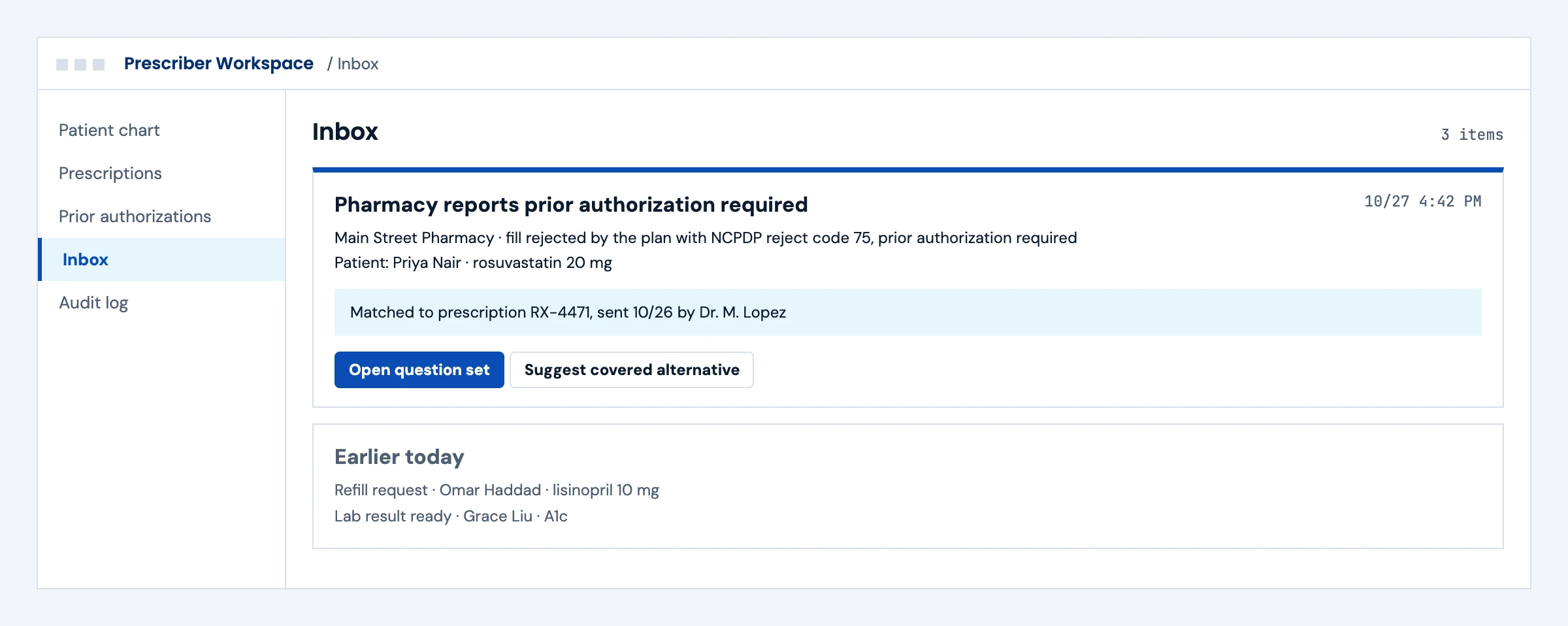
Yes. When a fill is rejected for prior authorization, the pharmacy can start a request through its own system, for example with the CoverMyMeds Pharmacy API. The prescriber's team then needs it to arrive against the right prescription, which is part of what we build.