Executive Summary
Overview:
On March 19, 2025, NextGen Healthcare announced a fundamental shift in Mirth Connect's licensing model, transitioning from a dual-license approach (open-source and commercial) to a single commercial and proprietary licensing structure beginning with version 4.6. This change represents the end of an era for the world's most widely used healthcare integration engine's open-source availability.
Key Implications:
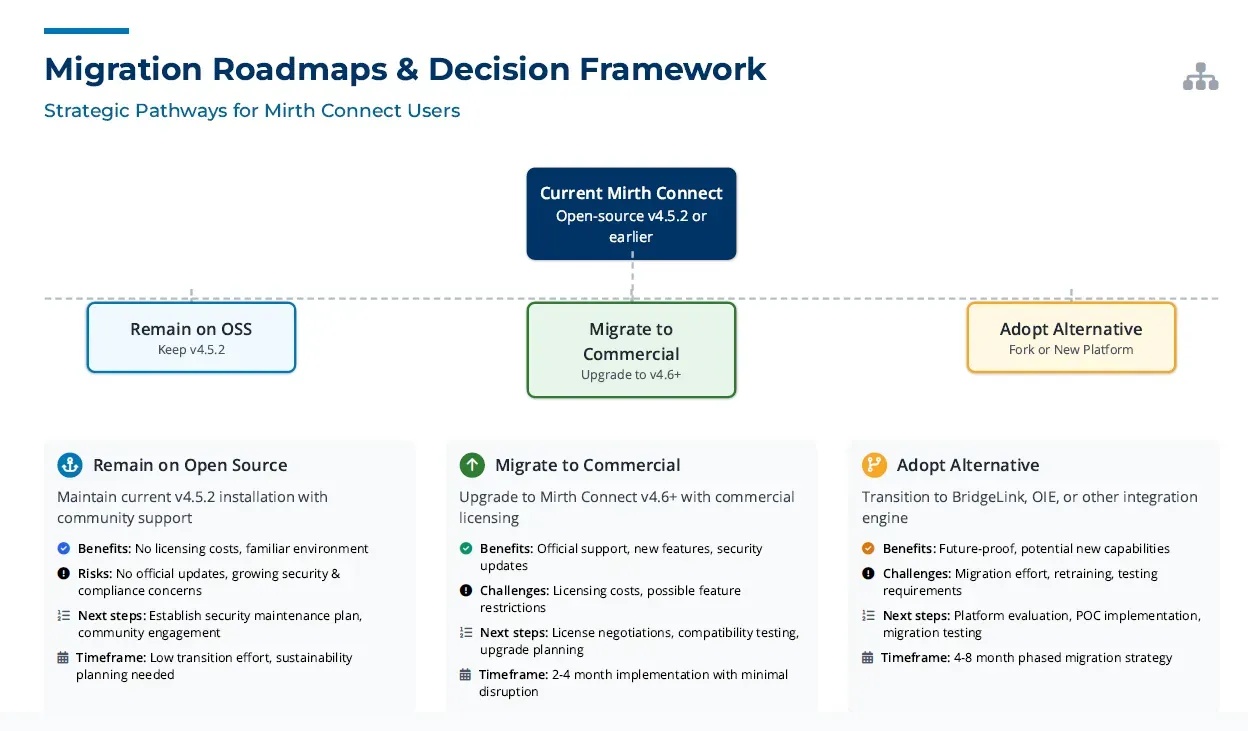
Current open-source users face three primary options: remain on version 4.5.2 (the final open-source release), upgrade to the commercial 4.6+ versions, or migrate to alternative solutions. Each path carries distinct technical, financial, and strategic implications that require careful evaluation.
Strategic Recommendations by Organization Type:
-
- Enterprise Organizations (500+ beds):
Evaluate commercial upgrade costs against migration alternatives; consider negotiating enterprise licensing agreements.
-
- Small-Medium Healthcare Organizations:
Explore open-source alternatives like BridgeLink or Open Integration Engine to maintain cost-effectiveness
-
- Research Institutions:
Leverage NextGen's new "Mirth Connect for Research" program or transition to community-supported forks
-
- Development/Testing Environments:
Migrate to open-source forks to maintain development flexibility and cost control.
Understanding the Transition
Timeline and Announcement Details
The transition announcement came on March 19, 2025, coinciding with the release of Mirth Connect 4.6. This strategic move was positioned by NextGenHealthcare as necessary to "secure the future of Mirth Connect and its global partners, streamline the licensing process, and maintain compliance with industry standards."
Technical Differences: 4.5.2 vs 4.6
Mirth Connect 4.6 introduces several enterprise-focused features previously available only in commercial tiers:
- SSL Manager:
Enhanced certificate management and security configuration
- Channel History:
Comprehensive audit trails and version control for integration channels
- Message Generator:
Advanced testing and simulation capabilities
- Mirth Command Center:
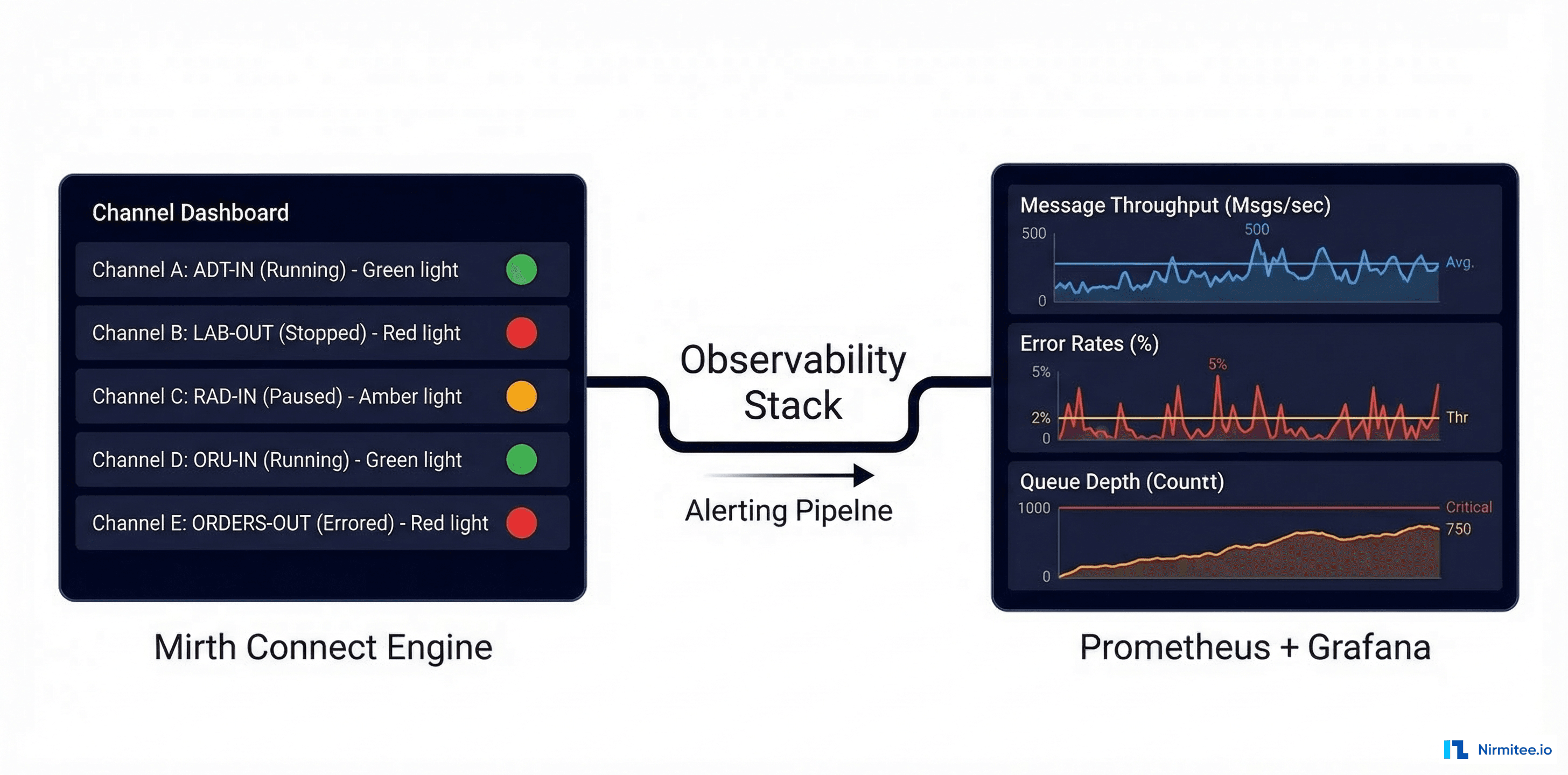
Centralized monitoring and analytics dashboard for multiple instances
| Feature | Version 4.5.2 (Open Source) | Version 4.6+ (Commercial) |
|---|---|---|
| Core Integration Engine | Full functionality | Enhanced performance optimizations |
| SSL Management | Basic configuration | Advanced SSL Manager included |
| Channel Analytics | Limited reporting | Full analytics suite with Command Center |
| Security Updates | Community-dependent | Regular commercial support |
| Technical Support | Community forums only | Direct NextGen support included |
Impact Assessment Framework
User Categorization and Risk Assessment
| Organization Type | Current Usage Pattern | Risk Level | Primary Concerns |
|---|---|---|---|
| Large Health Systems | Mission-critical integration hub | High | Operational continuity, compliance requirements |
| Mid-size Hospitals | Core EMR integration | Medium | Budget constraints, limited IT resources |
| Clinics/Small Practices | Basic interface needs | Medium | Cost sensitivity, technical expertise |
| Research Institutions | Data extraction and analysis | Low | Funding limitations, research continuity |
| Vendors/ISVs | Product integration | High | Licensing costs, product roadmap impact |
Compliance and Regulatory Implications
Healthcare organizations must consider several regulatory factors when evaluating their migration strategy:
-
- HIPAA Compliance:
All alternatives must maintain equivalent security and audit capabilities
- FDA Validation:
Medical device integrations may require re-validation with alternative platforms
- State Reporting Requirements:
Interface changes could impact automated reporting compliance
- Audit Trail Continuity:
Migration must preserve historical integration logs and audit trails
- HIPAA Compliance:
Open-Source Alternatives Deep Dive
BridgeLink by Innovar Healthcare
BridgeLink represents the most mature enterprise-focused fork of the original Mirth Connect open-source codebase. Released in July 2025 as version 4.5.4 BridgeLink positions itself as "the only enterprise-grade open-source interface engine."
Key Features:
- Dynamic Channel Loading capabilities
- Enhanced security features
- Enterprise-grade performance optimizations
- Active development and support from Innovar Healthcare
- Comprehensive protocol support inherited from Mirth Connect
Enterprise Readiness Assessment:
| Criteria | Rating | Notes |
|---|---|---|
| Feature Completeness | High | Full Mirth Connect 4.5.2 feature parity |
| Support Availability | Medium-High | Commercial support available from Innovar |
| Development Velocity | Medium | Regular updates but smaller team than NextGen |
| Community Adoption | Growing | Increasing adoption since Mirth transition |
Open Integration Engine
The Open Integration Engine represents a community-driven initiative to maintain vendor-neutral, open-source healthcare integration capabilities. Launched shortly after the Mirth Connect transition announcement, it focuses on collaborative development and community governance.
Governance Model:
- Community steering committee
- Open contribution process
- Transparent roadmap development
- Vendor-neutral oversight
Development Approach:
- Fork of Mirth Connect 4.5.2 codebase
- Focus on security updates and bug fixes
- Gradual introduction of new features
- Emphasis on standards compliance
Medplum: Cloud-Native Alternative
Medplum offers a modern, cloud-native approach to healthcare integration, licensed under Apache 2.0. While not a direct Mirth Connect replacement, it provides
compelling advantages for organizations seeking to modernize their integration architecture.
Key Differentiators:
- Cloud-native architecture with on-premises protocol support
- Modern development stack and APIs
- Strong FHIR implementation
- Active open-source community
- Scalable infrastructure design
Feature Comparison Matrix
| Feature | Mirth 4.5.2 | BridgeLink | Open Integration Engine | Medplum |
|---|---|---|---|---|
| HL7 v2 Support | Full | Full | Full | Full |
| FHIR Support | Basic | Basic | Basic | Advanced |
| Web-based Administration | Yes | Enhanced | Yes | Modern UI |
| JavaScript Transformations | Rhino Engine | Rhino Engine | Rhino Engine | TypeScript/JavaScript |
| Database Connectivity | JDBC | JDBC | JDBC | SQL/NoSQL |
| Cloud Deployment | Manual | Manual | Manual | Native |
| Commercial Support | None | Available | Community | Available |

Migration Strategies and Roadmaps
Strategy 1: Remain on Mirth Connect 4.5.2
Strategy 2: Upgrade to Commercial Mirth Connect 4.6+
Strategy 3: Migrate to Open-Source Alternatives
Strategy 4: Hybrid Approaches
Legal and Compliance Framework
Intellectual Property Considerations
Organizations must carefully evaluate intellectual property implications when transitioning from Mirth Connect:
- Open Source Licensing:
The Mozilla Public License 2.0 governing MirthConnect 4.5.2 remains in effect for that version
- Custom Modifications:
Any modifications to open-source versions remain under the original license terms
- Commercial Code:
Mirth Connect 4.6+ code cannot be used in open-source alternatives
- Fork Legitimacy:
BridgeLink and Open Integration Engine are legal forks of the open-source codebase
HIPAA and Healthcare Compliance
Compliance requirements remain consistent regardless of the chosen platform:
| Compliance Area | Requirements | Platform Considerations |
|---|---|---|
| Data Encryption | In-transit and at-rest encryption | All platforms support required encryption |
| Audit Logging | Comprehensive access and modification logs | Varies by platform and configuration |
| Access Controls | Role-based access and authentication | Standard across platforms |
| Business Associate Agreements | Required for commercial platforms | Not applicable for self-hosted open source |
Organization-Specific Recommendations
Large Health Systems (500+ beds):
Primary recommendation: Evaluate commercial Mirth Connect 4.6+ with enterprise licensing negotiation
Alternative: BridgeLink with commercial support for cost-sensitive implementations
Migration timeline: 12-18 months with a?? phased approach
Mid-size Healthcare Organizations (100-500 beds):
Primary recommendation: BridgeLink with optional commercial support
Alternative: Open Integration Engine for organizations with strong technical teams
Migration timeline: 6-12 months
Small Healthcare Organizations (<100 beds):
Primary recommendation: Open Integration Engine with community support
Alternative: Remain on Mirth Connect 4.5.2 for 2-3 years while evaluating options
Migration timeline: 3-6 months for simple implementations
Research Institutions:
Primary recommendation: Apply for NextGen's "Mirth Connect for Research "program
Alternative: Open Integration Engine for maximum flexibility
Consider: Medplum for modern FHIR-focused research applications
Healthcare Technology Vendors:
Primary recommendation: Evaluate BridgeLink or develop proprietary solutions
Alternative: Partner with commercial integration platform providers
Strategic consideration: Build cloud-native integration capabilities
Final Strategic Recommendations
The transition of Mirth Connect to a commercial-only model represents a significant shift in the healthcare integration landscape. Organizations should approach this change strategically, considering not just immediate cost implications but long-term sustainability, security, and innovation needs.
Key success factors for any migration strategy include:
- Thorough assessment of current integration requirements
- Realistic evaluation of internal technical capabilities
- Comprehensive cost-benefit analysis, including hidden costs
- Robust testing and validation procedures
- Effective change management and stakeholder communication
Organizations that proactively address this transition with careful planning and stakeholder engagement will be best positioned to maintain operational excellence while controlling costs and preserving integration flexibility for future healthcare technology evolution.
Frequently Asked Questions
What is Mirth Connect 4.6?
Mirth Connect 4.6 is the latest version of the healthcare integration engine by NextGen Healthcare. It enables secure and efficient data exchange between different healthcare applications, systems, and EHRs.
Why is Mirth Connect 4.6 now commercial?
Mirth Connect will only be available under a commercial license. This change aims to enhance product security, compliance, and enterprise-level support.
Is the open-source version of Mirth Connect still supported?
No. The open-source version (4.5.2) is no longer officially supported. While you can still use it, there will be no new updates, bug fixes, or security patches from NextGen.
What are the new features in Mirth Connect 4.6?
Mirth Connect 4.6 includes advanced capabilities like an SSL Manager, Channel History, Message Generator, and Mirth Command Center for better monitoring, analytics, and security.
What are my options after the licensing change?
You can either upgrade to the commercial Mirth Connect 4.6, continue using the old open-source version at your own risk, or migrate to open-source alternatives such as BridgeLink or Open Integration Engine.
Mirth Connect 4.6 is the latest version of the healthcare integration engine by NextGen Healthcare. It enables secure and efficient data exchange between different healthcare applications, systems, and EHRs. Mirth Connect will only be available under a commercial license. This change aims to enhance product security, compliance, and enterprise-level support.
Mirth Connect 4.6 includes advanced capabilities like an SSL Manager, Channel History, Message Generator, and Mirth Command Center for better monitoring, analytics, and security.
You can either upgrade to the commercial Mirth Connect 4.6, continue using the old open-source version at your own risk, or migrate to open-source alternatives such as BridgeLink or Open Integration Engine.