
Discover how AI agents transform software development by automating workflows and enhancing security. Explore the different types of AI agents, learn how they integrate into development environments, and see real-world examples of their impact. Learn best practices for using AI agents and get a glimpse into the future of AI in development and security.
What are AI agents?
AI agents are autonomous software tools that perform tasks, make decisions, and interact with their environment in an intelligent and rational manner. They use artificial intelligence to learn, adapt, and take action based on real-time feedback and changing conditions. AI agents can operate independently or as part of a larger system, learning and adapting based on the data they process.
For a deeper understanding of how intelligent automation is changing digital workflows, explore Healthcare AI Solutions.
What makes AI agents different from other AI technologies?
AI agents differ from other AI technologies in their ability to act autonomously. Unlike other AI models that require constant human input, intelligent agents can initiate actions, make decisions based on predefined goals, and adapt to new information in real time. This ability to operate independently makes intelligent agents highly valuable in complex, dynamic environments such as software development.
Learn how autonomy and scalability work hand-in-hand in AI development in our blog 5 Tech Decisions That Define a Scalable AI Health App.
How AI Agents Work
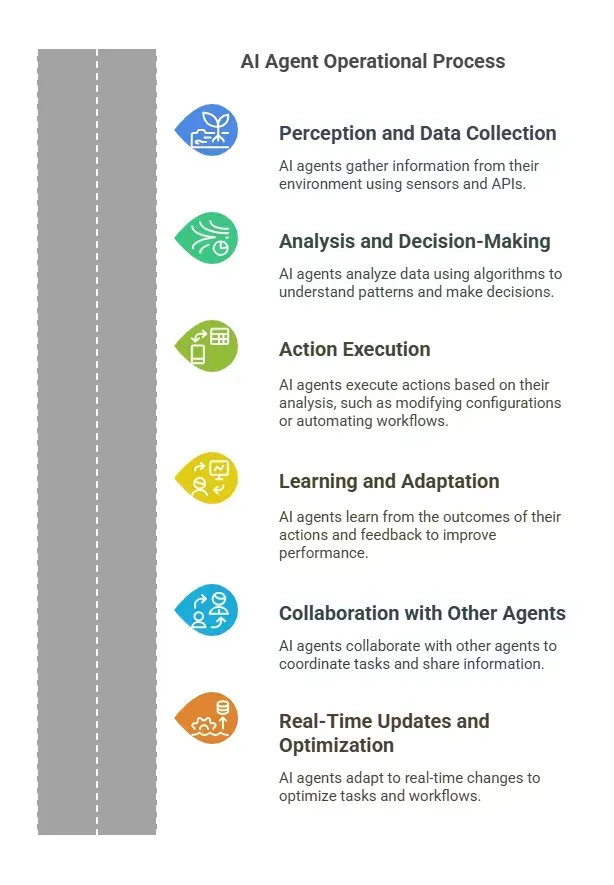
AI agents operate by following a structured process that allows them to perform tasks autonomously, make decisions, and learn from real-time data. Here's a breakdown of how AI agents work, point by point:
-
- Perception and Data Collection
AI agents first gather information from their environment using sensors, APIs, or direct inputs. This data can be anything from user interactions, system logs, or external data sources. The agent uses this information to build an understanding of the current situation. - Analysis and Decision-Making
Once the data is collected, the AI agent analyzes it using algorithms and machine learning models. This analysis helps the agent understand patterns, predict outcomes, and make decisions based on predefined goals or learned behaviors. - Action Execution
Based on the analysis, the AI agent takes the appropriate action. This could involve modifying software configurations, automating a workflow, responding to user queries, or managing system processes. The ability to act autonomously sets AI agents apart from traditional systems. - Learning and Adaptation
AI agents continuously learn from the results of their actions and feedback from their environment. Machine learning techniques enable them to adjust their behavior over time, improving performance and accuracy with each interaction. - Collaboration with Other Agents
In complex systems, AI agents can work collaboratively with other AI agents or components, coordinating tasks and sharing information to achieve broader goals. This multi-agent system enables seamless integration and efficient problem-solving across various functions. - Real-Time Updates and Optimization
AI agents can adapt to real-time changes in their environment, allowing them to optimize tasks, improve security measures, or adjust workflows on the go. This dynamic adaptability ensures that the system remains efficient and effective in evolving conditions.
- Perception and Data Collection
For examples of how similar automation is applied in healthcare software, check out Inside the Engine: How AI-Powered Healthcare Apps Are Built (and Why It Matters).
Types of AI agents
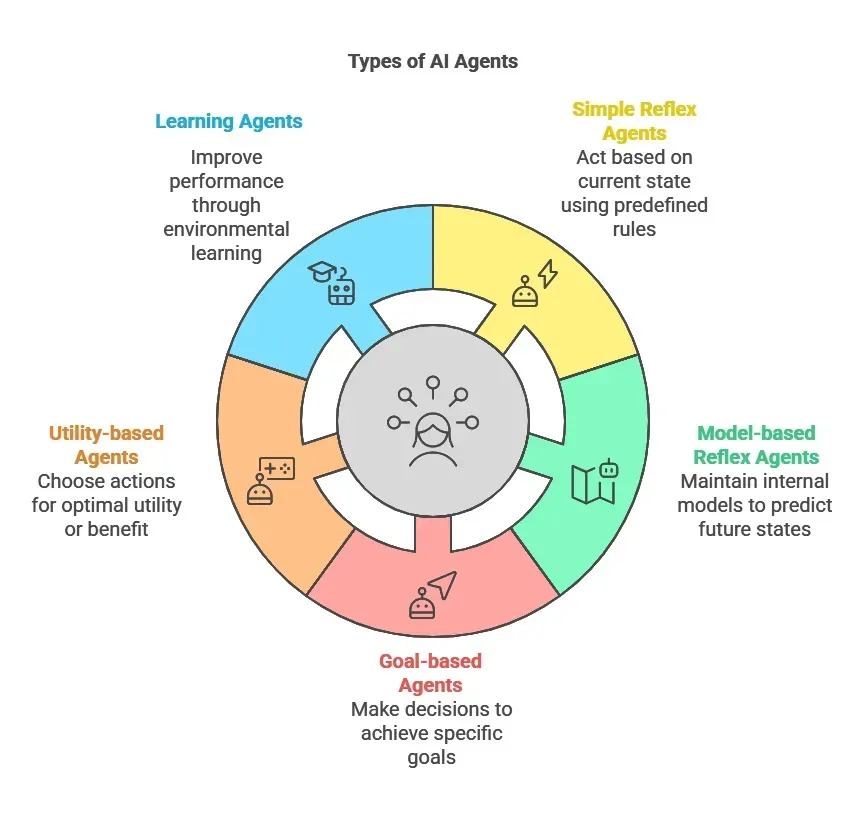
- Simple reflex agents
These agents act solely based on the current environment's state, making decisions through a set of predefined rules. - Model-based reflex agents
Unlike simple reflex agents, these agents maintain an internal model of the world, allowing them to consider past actions and predict future states. - Goal-based agents
These agents work with specific goals in mind, making decisions that move them closer to achieving these goals. - Utility-based agents
These agents consider different outcomes and how likely they are to happen, ultimately choosing to take the actions that will make the most of their utility or benefit. - Learning agents
These agents can improve their performance over time by learning from their environment and experiences.
Multiple AI agents can be deployed together to tackle complex tasks. Working together makes AI agents even more effective in software development and other industries.
AI Agents In Software Development
AI agents offer many advantages for developers and organizations, including:
- Enhanced efficiency
AI agents streamline development tasks, reducing the time and effort required to complete them. This leads to faster deployment cycles and more efficient use of resources.
See related best practices in Choosing the Right Technology Stack for Healthcare Software Development. - Improved code quality
By automating repetitive tasks and providing intelligent recommendations, AI agents help developers write cleaner, more reliable code. - Security enhancements
AI agents work to improve security by proactively detecting and mitigating threats, helping reduce the risk of vulnerabilities, and ensuring stronger security. - Improved business outcomes
Using AI agents can lead to significant cost savings, increased productivity, and enhanced customer experiences, making them an asset to any organization. AI agents have become essential in modern software development, particularly in supporting development workflows and enhancing security processes.
- Code reviews
AI agents can automatically review code, identify potential issues, and suggest improvements, streamlining the code review process. This is often called AI code review, where AI-powered tools help improve code quality and follow best practices. By automating this crucial step, developers can catch errors early, reducing the time spent on manual code reviews. - Automated testing
By running automated tests, AI agents help ensure software performs as expected without requiring constant human oversight. - Continuous integration/continuous deployment (CI/CD)
AI agents help get code changes into production quickly, reducing the time and effort required to release updates. This is part of the broader trend of software development workflow automation, where AI-powered tools help streamline complex workflows to allow developers to focus more on coding and less on managing processes.
To explore how modular CI/CD principles work in practice, read Custom AI Solutions in Healthcare: Why One-Size-Fits-All Software Fails. - Vulnerability detection
AI agents can proactively identify and address security vulnerabilities, helping to protect software from potential threats.
Coding agents are a subset of AI agents specifically designed to help developers with coding tasks. A coding agent is like an AI code assistant. It can generate code, debug existing code, and rework code to improve performance. AI code generation involves using AI-powered tools to automatically generate code based on certain inputs or requirements.
There are many other AI coding tools available that make the development process easier. By automating repetitive tasks, coding agents and AI coding tools significantly enhance developer productivity and software quality.
AI agents are also instrumental in identifying and mitigating security threats. By integrating with security tools and processes, they provide real-time analysis and responses to potential vulnerabilities, helping to ensure that software remains secure throughout its lifecycle.
One common application is code security automation: AI agents automate the detection and remediation of security issues in code, helping to reduce the risk of vulnerabilities and improve the overall security posture of software applications.
Examples of AI agents in action
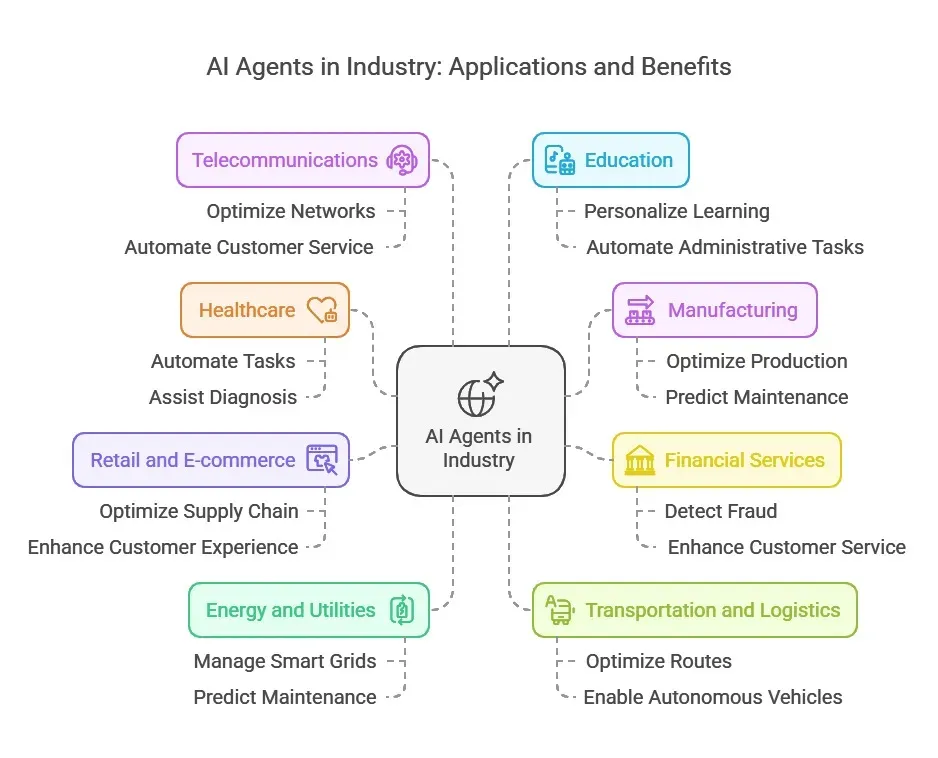
- Healthcare
AI agents are revolutionizing healthcare by automating repetitive tasks, analyzing complex medical data, and enhancing clinical decision-making. From streamlining medical coding and billing to supporting accurate diagnoses through data-driven insights, AI agents reduce manual workload and improve care efficiency.
They're also integral to remote patient monitoring, where they continuously track vitals from wearable devices and alert providers to critical changes in real time.
Additionally, AI agents help personalize treatment plans by analyzing patient history and outcomes, while virtual assistants handle appointment scheduling, medication reminders, and patient queries, improving engagement and freeing up valuable staff time.
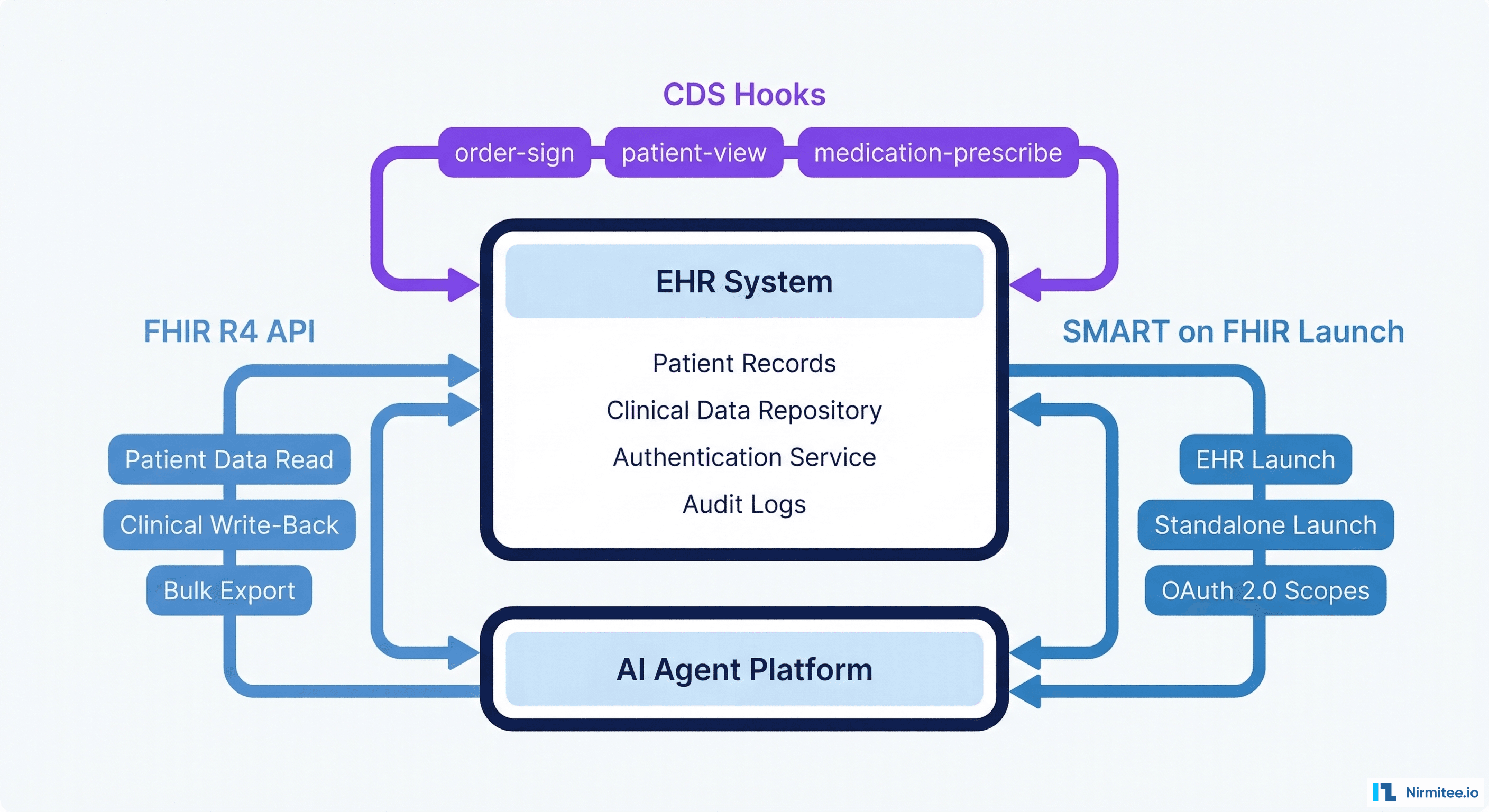
Related Solutions: EHR Integration and Epic Integration.
- Manufacturing
AI agents optimize production processes, monitor equipment health, and predict maintenance needs, reducing downtime and improving efficiency. Learn more about AI in manufacturing. - Financial services
AI agents help financial institutions detect fraudulent activities, automate transactions, and enhance customer service through personalized interactions. Discover AI solutions for financial services. - Retail and e-commerce
AI agents are transforming the retail and e-commerce industries by optimizing supply chains, managing inventory, and enhancing customer experiences. For instance, AI agents can predict demand trends, personalize marketing campaigns, and automate customer service interactions through chatbots. These capabilities help retailers reduce costs, improve efficiency, and better meet customer needs. - Energy and utilities
AI agents are used to optimize the generation and distribution of electricity, manage smart grids, and predict equipment maintenance needs. They also play a role in energy trading and demand forecasting, helping utilities balance supply and demand more effectively and reduce operational costs. -
Transportation and logistics
AI agents can optimize routes, manage fleet operations, and predict maintenance for vehicles. They are also used in autonomous vehicles, where they enable self-driving cars to make real-time decisions on the road. In logistics, AI agents improve warehouse management and streamline supply chain operations. - Telecommunications
AI agents are used for network optimization, customer service automation, and predictive maintenance of infrastructure. They help telecom companies manage large-scale networks more efficiently, reduce downtime, and provide personalized customer experiences through AI-powered service agents. - Education
AI agents are becoming increasingly important in education, where they are used to personalize learning experiences, automate administrative tasks, and provide real-time feedback to students. AI-powered tutoring systems can adapt to individual learning styles and paces, offering customized support to improve student outcomes.
Best practices for using AI agents
AI agents have many benefits, but it's important to use them responsibly. Here are some best practices:
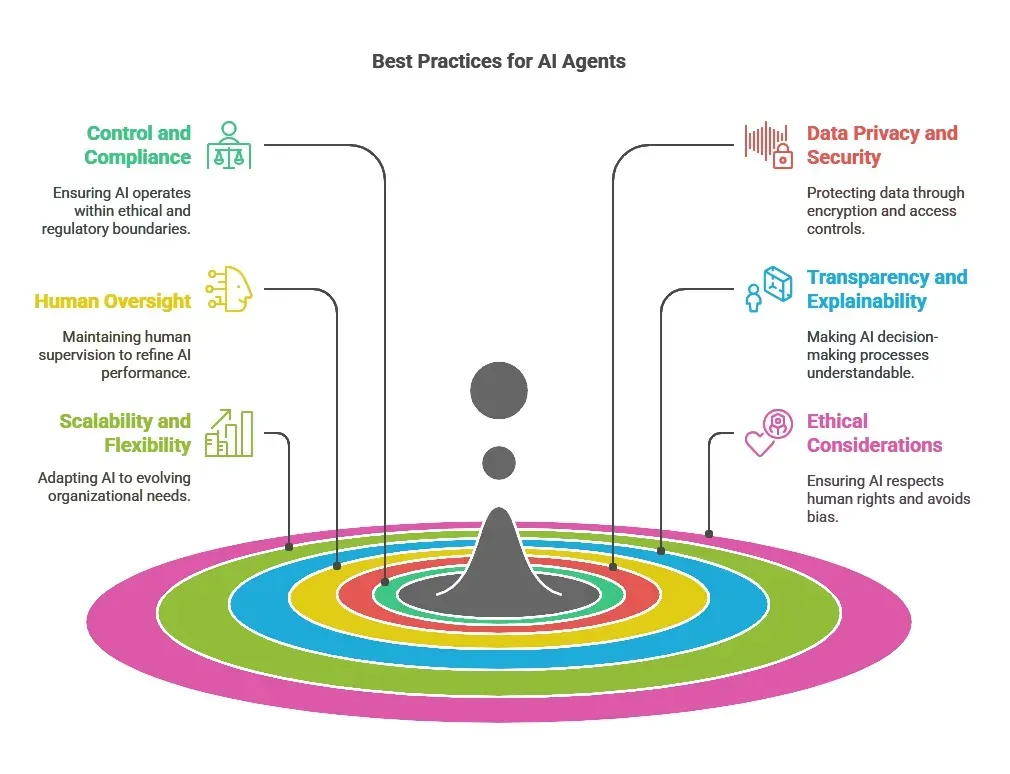
- Maintain control and compliance
Ensure that AI agents are governed by transparent and ethical guidelines. Compliance with regulations and industry standards is crucial to maintaining trust and integrity in AI processes. - Ensure data privacy and security
When deploying AI agents, especially in sensitive environments like software development, it's critical to make sure that the data used by these agents is handled securely.
Implement encryption and access controls to protect both the data the AI agents process and the models themselves from unauthorized access or tampering. This is particularly important in scenarios involving customer data, proprietary code, or security-related tasks. - Keep humans in the loop
Despite their autonomy, AI agents should operate under human supervision. Feedback from human users is vital for refining AI agents' performance and ensuring that they align with organizational goals.
Regularly monitor agents performance to ensure they are functioning as expected. This includes evaluating the quality of their output, the relevance of their decisions, and their impact on the overall workflow. Continuous evaluation helps in identifying any drift in performance or unintended consequences, allowing for timely adjustments. - Ensure transparency and explainability
It's important to make sure that AI agents operate transparently, meaning that their decision-making processes should be understandable and explainable to humans.
This helps in building trust with stakeholders and ensures that the AI agents actions align with the organization's goals and ethical standards. Developing clear documentation and using explainable AI techniques can aid in making these processes more transparent. - Focus on scalability and flexibility
As your organization's needs evolve, so too should your AI agents. Implement AI solutions that are scalable and flexible, allowing them to adapt to changing demands and integrate with new tools or workflows.
This ensures that your AI agents can continue to provide value as your development processes grow in complexity. - Keep ethical considerations at the forefront
Ethics play a critical role in the deployment of AI agents. Ensure that your AI systems are designed and used in ways that respect human rights, avoid bias, and contribute positively to society.
Establish ethical guidelines for the development and deployment of AI agents and regularly review these guidelines to ensure they remain relevant as technology advances.
Future trends in AI agent usage
The capabilities of AI agents are continuously evolving. As advancements in AI and machine learning progress, we can expect AI agents to play an even more significant role in software development and security.
Future trends may include more sophisticated decision-making processes, greater integration with existing tools, and enhanced collaboration between AI agents and human developers.
Explore how automation and interoperability converge in Healthcare Interoperability Solutions.
Building production-grade healthcare AI agents requires careful architecture. Our Agentic AI for Healthcare team ships agents that meet clinical and compliance standards. We also offer specialized Healthcare AI Solutions services. Talk to our team to get started.