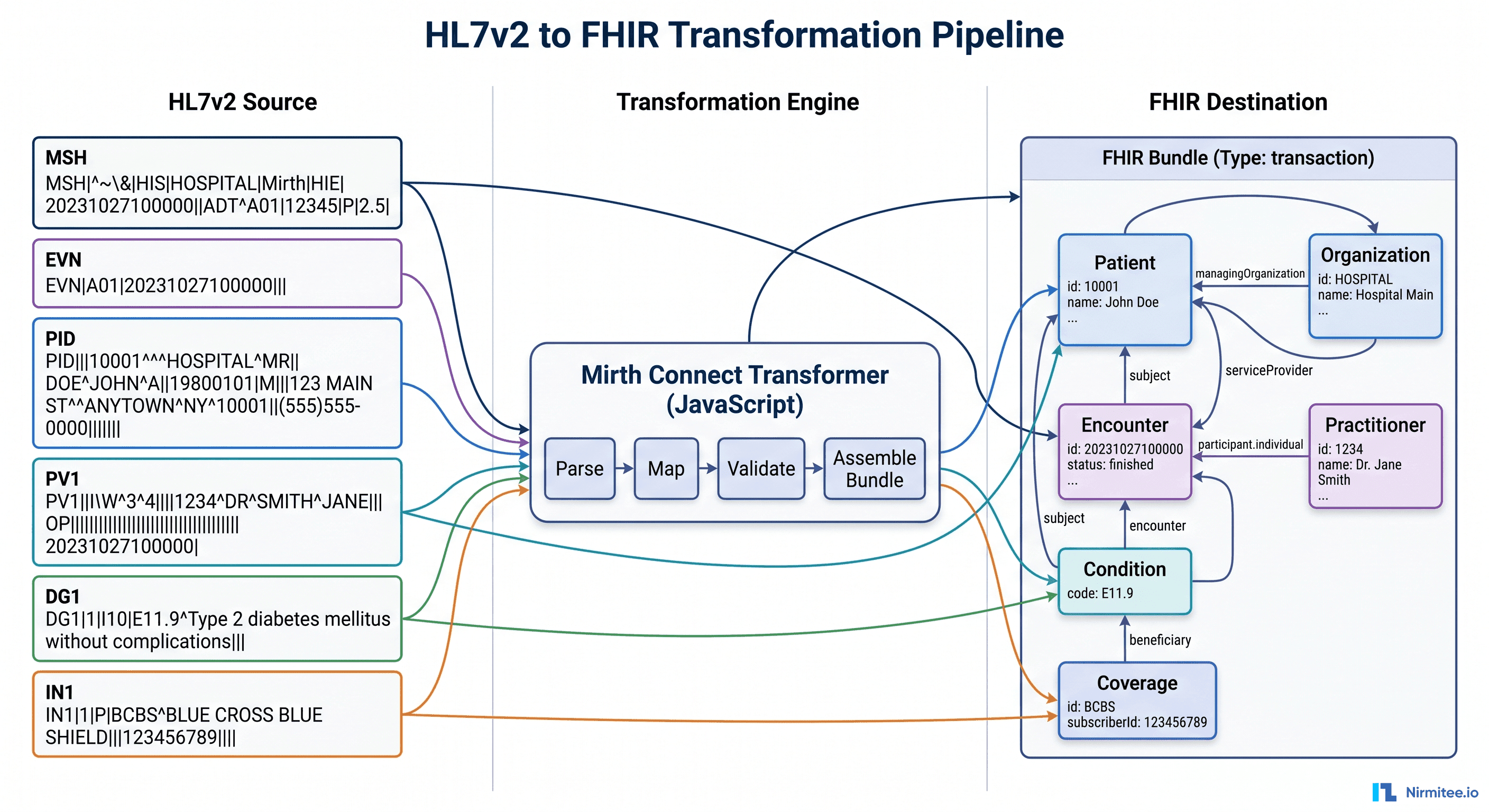
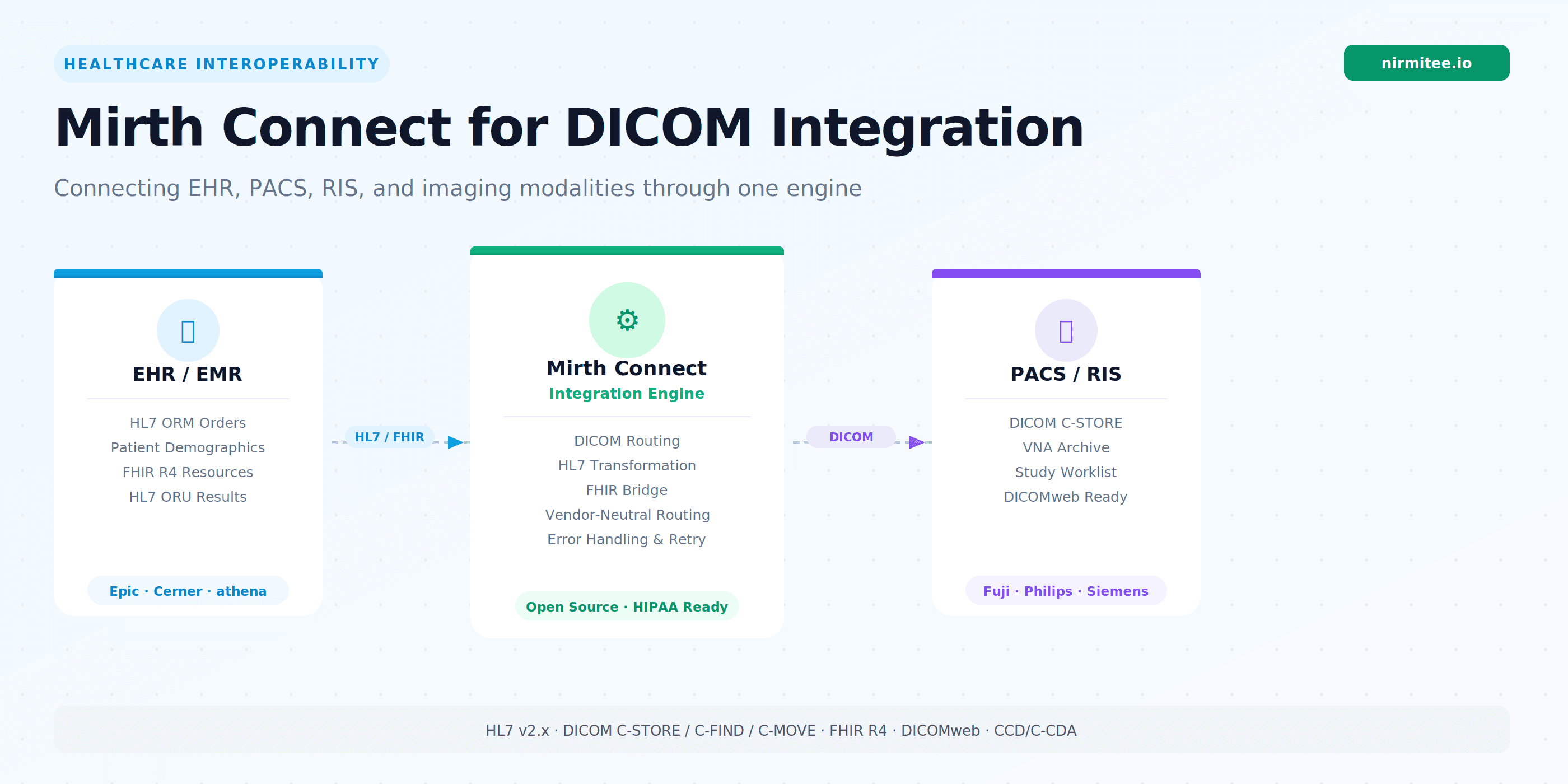
In March 2025, NextGen Healthcare made one of the most consequential decisions in the healthcare integration market: Mirth Connect version 4.6 and all future releases became commercial-only software. The last open-source version, 4.5.2, would receive no further updates, no security patches, and no bug fixes. For thousands of healthcare organizations that had built their entire integration infrastructure on Mirth's open-source foundation, this was not just a licensing change. It was a strategic inflection point that demanded a response.
If you are reading this in 2026, you are likely in one of two positions. You are still running Mirth Connect 4.5.2 open-source and wondering how long that can last. Or you are actively evaluating alternatives and trying to make sense of a market that has more options than clear guidance. This guide provides the analysis your team needs to make a confident decision. We cover every viable path forward, with honest assessments of cost, risk, implementation effort, and long-term viability.
According to a 2025 Black Book Research survey, 68% of healthcare IT leaders reported that the Mirth licensing change prompted them to formally evaluate their integration strategy for the first time in over three years. The change forced a conversation that was overdue: whether the integration engine you chose five or ten years ago is still the right choice for the next five.
What Happened: The March 2025 Licensing Change
To make an informed decision, you need to understand exactly what changed and what did not. NextGen Healthcare acquired Mirth Connect when it purchased Mirth Corporation in 2013. For years, NextGen maintained the open-source Community edition alongside its commercial offerings. The Community edition was free to download, use, and modify under the Mozilla Public License. Hospitals, clinics, health information exchanges, and integration vendors worldwide built production infrastructure on this free edition.
In March 2025, NextGen announced that Mirth Connect 4.6 would be available only under commercial licensing. Version 4.5.2 remains the last open-source release. It still works. You can still download it. But it is frozen in time. No new features, no security patches, no HL7 FHIR R5 support, no performance improvements, no compatibility updates for newer Java versions or operating systems.
The business rationale was straightforward. NextGen reported that supporting the open-source edition while competing against it commercially was unsustainable. They estimated that over 70% of production Mirth installations used the free edition, creating a support burden without corresponding revenue. The commercial transition followed a pattern seen across open-source infrastructure software: Redis, HashiCorp Terraform, and Elasticsearch all made similar moves in the 2023-2024 period.
Your Options Landscape: Six Paths Forward
After analyzing the market, talking to dozens of integration teams, and evaluating the technical merits of each approach, we have identified six viable paths forward. None of them is universally best. Each one is optimal for a specific combination of organization size, budget, team skills, and strategic priorities.
Option 1: Stay on Mirth Connect 4.5.2 Open-Source
What this means
You continue running Mirth Connect 4.5.2 exactly as you are today. You maintain it internally, apply your own workarounds for any issues, and accept that no official updates will come.
The honest assessment
This is the path of least immediate effort and the path of greatest long-term risk. Your channels keep running. Your interfaces keep processing messages. Nothing breaks on day one. The problems accumulate gradually:
- Security vulnerabilities. Java dependencies in Mirth 4.5.2 will accumulate known CVEs. The underlying Jetty web server, database drivers, and JavaScript engine will all develop known vulnerabilities that will never be patched in 4.5.2. For HIPAA-covered entities, running software with known unpatched vulnerabilities creates audit risk.
- Java compatibility. Mirth 4.5.2 runs on Java 17. When Java 17 reaches the end of its life, you will need to run Mirth on an unsupported Java version or attempt an untested upgrade to a newer JDK. Oracle's Java SE support roadmap shows Java 17 premier support ending in September 2026.
- Community fork risk. Several community forks of Mirth Connect have been proposed. None has achieved critical mass. The original repository still has active discussions, but pull requests are not being merged into official releases. Betting on a community fork means betting on volunteer maintainers for production healthcare infrastructure.
- Feature stagnation. FHIR R5, SMART on FHIR 2.0, and TEFCA requirements are evolving. Mirth 4.5.2 has solid FHIR R4 support, but will not keep pace with the specification evolution that CMS and ONC are mandating.
Best for
Organizations with fewer than 10 interfaces, no regulatory audit pressure, and a 12-18 month runway to plan a proper migration. This buys time, but it is not a permanent strategy.
Estimated cost
$0 in licensing. $15,000-$40,000/year in additional internal maintenance effort as workarounds accumulate. Unknown security incident cost exposure.
Option 2: Upgrade to NextGen Commercial Mirth Connect
What this means
You license Mirth Connect commercially from NextGen Healthcare. Your existing channels, configurations, and customizations carry forward with minimal modification. You get official support, security patches, and access to new features.
The honest assessment
This is the lowest-risk migration path. Your team already knows Mirth. Your channels already work. The upgrade from 4.5.2 to 4.6+ is well-documented, and NextGen provides migration assistance. The primary consideration is cost.
NextGen offers several licensing tiers:
- Mirth Connect Standard: Per-server licensing with basic support. Suitable for smaller deployments. Estimated $15,000-$30,000/year per production server.
- Mirth Connect Enterprise: Per-server with premium support, additional connectors, and compliance features. Estimated $30,000-$60,000/year per production server.
- Mirth Fully Managed: NextGen hosts and manages the infrastructure. You focus on channel development. Pricing varies by volume but typically starts at $50,000/year for small deployments.
NextGen also offers certification training courses and professional services to assist with the commercial transition. The investment in training typically takes 2-4 weeks per engineer and costs $3,000-$5,000 per certification.
Best for
Organizations with 20+ interfaces, existing Mirth expertise on staff, and a budget for commercial licensing. If Mirth works for you today, the commercial version is more of the same with better support.
Estimated cost
$30,000-$120,000/year depending on deployment size and tier. Migration effort: 2-4 weeks for the upgrade, minimal channel changes.
Option 3: Rhapsody by Rhapsody Health (formerly InterOperability Bidco)
What this means
You migrate to Rhapsody, the enterprise integration engine that has won Best in KLAS for Integration Engines for 17 consecutive years. Rhapsody is a commercial product with a fundamentally different architecture than Mirth, but the same core purpose: routing, transforming, and delivering healthcare messages.
The honest assessment
Rhapsody is the gold standard in enterprise healthcare integration. It has capabilities that Mirth does not: native FHIR repository, built-in terminology services, visual mapping tools, and an enterprise-grade management console. Organizations that outgrow Mirth typically move to Rhapsody.
The downsides are real. Rhapsody licensing is significantly more expensive than commercial Mirth. The learning curve for engineers moving from Mirth to Rhapsody is 3-6 months. Channel migration is not automated; you are rebuilding your interfaces in a new tool, not importing them. Rhapsody uses JavaScript for scripting (like Mirth), but the API surface, configuration model, and deployment workflow are all different.
According to KLAS Research data from 2025, Rhapsody achieves an overall performance score of 91.2 out of 100, with particularly strong marks for reliability (93.8) and vendor support (92.1). Organizations report an average of 4.2 months to achieve full productivity after migrating from other integration engines.
Best for
Organizations with 50+ interfaces, enterprise budgets, and a need for features that Mirth does not offer (built-in FHIR server, advanced terminology mapping, multi-tenant management). Health information exchanges and large health systems are typical Rhapsody customers.
Estimated cost
$75,000-$250,000+/year depending on volume and deployment model. Migration effort: 6-12 months for a complete migration of 50+ interfaces. Budget $200,000-$500,000 for migration professional services.
Option 4: Iguana by Interfaceware
What this means
You migrate to Iguana, an integration engine that emphasizes simplicity, performance, and a modern developer experience. Iguana uses Lua for scripting instead of JavaScript, has a clean web-based interface, and is known for high throughput with low resource consumption.
The honest assessment
Iguana is the alternative that Mirth teams find most approachable. The visual interface designer is intuitive, the documentation is excellent, and Interfaceware's support team is responsive. Iguana handles HL7 v2, FHIR, X12, CSV, and database integrations well.
The scripting language difference matters. Your team knows JavaScript from Mirth. Iguana uses Lua. Lua is a simpler language than JavaScript and most engineers pick it up in 2-4 weeks, but all your existing Mirth transformer code needs to be rewritten. Code template libraries, custom functions, and complex business logic all need translation.
Iguana's licensing model is more straightforward than Rhapsody's. Pricing is typically per-server with reasonable thresholds. Interfaceware has been privately held and profitable for over 20 years, which provides stability assurance that some newer market entrants cannot match.
Best for
Organizations with 10-50 interfaces that value simplicity and clean tooling. Teams that found Mirth's Java/JavaScript stack overly complex will appreciate Iguana's lighter approach. Strong choice for community hospitals and mid-size health systems.
Estimated cost
$25,000-$75,000/year, depending on deployment size. Migration effort: 4-8 months for 20-50 interfaces. Lua learning curve: 2-4 weeks per engineer.
Option 5: Managed Platforms — Redox, Health Gorilla, 1upHealth
What this means
Instead of running an integration engine yourself, you outsource integration to a managed platform. Redox, Health Gorilla, and 1upHealth maintain the infrastructure, manage the connections, and provide standardized APIs for your applications to consume healthcare data.
The honest assessment
Managed platforms are the "buy instead of build" option. You do not manage servers, patch software, or troubleshoot MLLP connections at 2 AM. The platform handles all of that. You connect your applications to their APIs and let them worry about the HL7 plumbing.
The pricing model is fundamentally different. Instead of per-server licensing, managed platforms charge per connection or per transaction:
- Redox: Approximately $500-$2,000 per connection per month. For 50 connections, that is $25,000-$100,000/month ($300,000-$1,200,000/year).
- Health Gorilla: Transaction-based pricing. Lower per-unit cost but scales with volume. Focused on lab results, referrals, and clinical data exchange.
- 1upHealth: FHIR-native platform. Strong for payer and patient access use cases. Pricing varies by use case and volume.
The trade-off is control. With a managed platform, you cannot customize message routing logic, write complex transformations, or handle edge cases that the platform does not support. You are dependent on the platform's roadmap, uptime, and pricing decisions. For organizations that process high message volumes, the per-transaction cost can exceed the cost of running your own engine by a significant margin.
Best for
Digital health startups, small clinics, and organizations that need 5-15 standard connections and do not want to hire integration engineers. Fast time-to-value if the platform supports your specific use cases.
Estimated cost
$60,000-$500,000+/year depending on connection count and volume. No migration effort for the engine itself, but you still need to reconfigure each interface on the new platform (2-4 weeks per connection).
Option 6: Build Custom with HAPI FHIR + Open-Source Tools
What this means
You build a custom integration stack using open-source components. HAPI FHIR provides a FHIR server and client libraries. Apache Camel or Apache Kafka provides message routing. Custom code handles HL7 v2 parsing and transformation. You own the entire stack.
The honest assessment
This is the maximum-flexibility, maximum-effort option. You get exactly what you need, nothing you do not, and complete control over every aspect of the system. You also get complete responsibility for every aspect of the system.
HAPI FHIR is excellent for FHIR-only use cases. If your integration needs are entirely FHIR R4 (patient access APIs, payer-to-payer exchange, CDS Hooks), HAPI FHIR is a strong foundation. The challenge is that most healthcare organizations still have significant HL7 v2 traffic. Handling HL7 v2 in a custom stack means building or integrating an HL7 parser, writing routing logic, managing MLLP connections, and handling all the edge cases that mature integration engines handle out of the box.
Organizations that succeed with this approach typically have strong software engineering teams (5+ developers), DevOps maturity (Kubernetes, CI/CD, monitoring), and a narrow set of integration use cases. Organizations that struggle are those that start building a custom engine and gradually realize they are rebuilding Mirth Connect from scratch.
Best for
Technology companies building healthcare products (not healthcare organizations running clinical operations). FHIR-native use cases where HL7 v2 is minimal or absent. Organizations with strong engineering teams and a DevOps culture.
Estimated cost
$0 in licensing. $300,000-$600,000+/year in engineering salary for a 2-3 person team to build and maintain. 6-18 months to production readiness. Ongoing maintenance is 100% your responsibility.
Side-by-Side Comparison Matrix
The following table summarizes the key decision factors across all six options. We rate each factor on a scale where green indicates favorable, yellow indicates moderate concern, and red indicates significant concern.
| Factor | Stay on v4.5.2 | NextGen Commercial | Rhapsody | Iguana | Managed Platform | HAPI FHIR Custom |
|---|---|---|---|---|---|---|
| Annual Cost | $0 + internal | $30K-$120K | $75K-$250K+ | $25K-$75K | $60K-$500K+ | $300K-$600K+ (staff) |
| Migration Effort | None | 2-4 weeks | 6-12 months | 4-8 months | 2-6 months | 6-18 months |
| Security Risk | High (unpatched) | Low | Low | Low | Low | Medium (your code) |
| Vendor Lock-in | None | Medium | High | Medium | High | None |
| Team Retraining | None | Minimal | 3-6 months | 2-4 months | 1-2 months | Varies |
| HL7 v2 Support | Strong | Strong | Excellent | Strong | Limited | Build it yourself |
| FHIR R4/R5 | R4 only | R4 + R5 | R4 + R5 | R4 | R4 + R5 | R4 + R5 (HAPI) |
| Long-term Viability | Declining | Strong | Very Strong | Strong | Growing | Depends on team |
Decision Framework: Which Path Fits Your Organization?
By organization size
- Small practice or clinic (1-10 interfaces): Managed platform or stay on v4.5.2 short-term while evaluating Iguana.
- Community hospital (10-50 interfaces): NextGen Commercial Mirth or Iguana, depending on budget and appetite for change.
- Large health system (50-200 interfaces): NextGen Commercial Mirth or Rhapsody, based on whether the current Mirth meets your needs.
- Health information exchange (100+ participants): Rhapsody. The enterprise management and multi-tenant features justify the premium.
- Digital health startup (API-first): Managed platform for speed-to-market, or HAPI FHIR custom if your team has the engineering depth.
By team skill profile
- Strong Mirth team: NextGen Commercial is the obvious first choice. Your expertise carries forward completely.
- Strong general engineering team: HAPI FHIR custom or Iguana, depending on whether you want to build or buy.
- Limited integration expertise: Managed platform or Rhapsody with professional services engagement.
By budget reality
- Zero additional budget: Stay on v4.5.2 and build a business case for funding. Document the security risks to escalate urgency.
- $25,000-$75,000/year: Iguana or NextGen Commercial Standard.
- $75,000-$250,000/year: NextGen Commercial Enterprise or Rhapsody.
- $250,000+/year: Any option. Choose based on strategic fit rather than cost constraints.
Migration Planning: A Practical Approach
Regardless of which option you choose, the migration follows a predictable pattern. Organizations that skip steps pay for it later in production incidents and budget overruns.
Phase 1: Assessment (4-6 weeks)
- Inventory every interface: source system, destination, message types, volume, criticality.
- Document undocumented channels. Every organization has channels that "just work," and nobody remembers why. Documented channels resolve issues 3x faster than undocumented ones.
- Assess team skills and capacity for migration work alongside ongoing operations.
- Calculate the total cost of ownership for each option over 3-5 years, not just licensing.
Phase 2: Proof of Concept (4-8 weeks)
- Select 2-3 representative interfaces (one simple, one complex, one high-volume).
- Implement them on the target platform.
- Measure: How long did it take? What was hard? What worked well?
- Extrapolate to the full migration. If 3 interfaces took 6 weeks, 50 interfaces will not take 100 weeks, but they will take more than 6.
Phase 3: Migration Execution (timeline varies by option)
- Migrate in waves, grouped by clinical domain or source system.
- Run old and new in parallel during transition. High availability principles apply during the cutover period.
- Validate message-by-message that the new platform produces identical output.
- Cut over one wave at a time with rollback capability.
Phase 4: Decommission (2-4 weeks per wave)
- Verify no traffic is flowing through old interfaces.
- Archive old channel configurations for reference.
- Decommission old Mirth servers.
- Update documentation, runbooks, and on-call procedures.
What We Recommend by Scenario
After helping healthcare organizations navigate this decision, here are our recommendations for the most common scenarios:
If you are happy with Mirth and have a budget, upgrade to NextGen Commercial. Do not fix what is not broken. The licensing cost is a fraction of the migration cost to any other platform.
If you are unhappy with Mirth and this is a catalyst for change, evaluate Rhapsody and Iguana. Run a 6-week proof of concept with both. The KLAS data favors Rhapsody for large enterprises; Iguana wins on simplicity and cost for mid-size organizations.
If you are a startup building a new product: Start with a managed platform (Redox if you need broad EHR connectivity, Health Gorilla if lab/clinical data is primary). Build custom only if your engineering team has healthcare integration experience.
If you have no budget and no timeline pressure, stay on 4.5.2 but begin the assessment phase now. Document your interfaces, calculate your risk exposure, and build the business case for funding. The longer you wait, the more expensive the eventual migration becomes.
The healthcare integration market in 2026 has more options than ever. The Mirth licensing change, while disruptive, has the side effect of forcing organizations to evaluate their integration strategy with fresh eyes. Whatever you choose, choose deliberately. The worst outcome is drifting on an unsupported platform because nobody made a decision.
Related guides
This article is part of our complete guide to Mirth Connect: What Is Mirth Connect? Complete 2026 Guide for Healthcare Leaders. Related deep-dives:
- Mirth Connect vs Rhapsody vs Iguana: Best Healthcare Interface Engine in 2026
- Mirth Connect License Change 2026: Migration Options, Risks, and Cost Impact
- BridgeLink: The Open-Source Mirth Connect Fork (2026 Migration Guide)
Need production-grade Mirth Connect help? See our Mirth Connect integration services.