Cache-Augmented Generation (CAG) in Healthtech

Digital Growth Lead
Writes about healthcare technology, interoperability, and AI-driven transformation across modern care systems.

In the current healthcare landscape, artificial intelligence (AI) in Healthcare is not only advancing. But it's also transforming how healthcare providers manage, analyze, and use vast amounts of data. One advanced technology that's making waves is Cache-Augmented Generation (CAG).
This AI technique is revolutionizing the healthtech domain by greatly improving the efficiency, speed, and accuracy of AI applications, particularly in managing healthcare data. But what exactly is CAG, and how does it stand apart from similar methods like Retrieval-Augmented Generation (RAG)?
Simplifying Cache-Augmented Generation (CAG)
Healthcare professionals often need fast, reliable information to make critical decisions, whether it's responding to patient queries, reviewing medical histories, or following clinical protocols. Traditionally, retrieving real-time, contextually relevant data can be slow, especially in high-pressure situations where every second counts.
Cache-Augmented Generation (CAG) addresses this by acting like a digital knowledge cache that preloads essential information before it's needed. Imagine a pre-packed toolbox: all the tools you might need are organized and within reach, so you don't waste time searching for them mid-task.
In healthcare, it's essential to keep users — patients, doctors, or administrators — at the center of your product development efforts.
Agile encourages regular testing with users. That keeps the product user-friendly, effective, and scalable.
How CAG Works:
The mechanics of CAG involve three key phases:
Preloading Phase:
Healthcare teams preprocess and store a carefully curated collection of essential documents, guidelines, or patient data in the model's extended memory. This acts like a library of frequently used information.The system stores the data as a key-value (KV) cache, assigning 'keys' to triggers (like a query or symptom) and 'values' to the corresponding responses (e.g., treatment guidelines).
- Inference Phase:
When a query comes in (e.g., a chatbot is asked about drug interactions), the AI uses the preloaded cache to instantly pull relevant data and generate a response. No more waiting for real-time retrieval. Everything is already stored and ready to go.
- Cache Reset:
Regular cache refreshes ensure up-to-date information, enabling the system to efficiently handle new queries without reprocessing all data from scratch.
For example, in a healthcare chatbot setting, CAG preloads drug information, including dosages, side effects, and interactions. When a patient asks about a specific drug, the chatbot quickly provides a well-informed, accurate response by referencing its preloaded cache rather than searching external databases in real-time.
CAG vs. RAG: Key Differences
While Retrieval-Augmented Generation (RAG) shares similarities with CAG, there are critical differences between the two:
- Real-time Retrieval: RAG relies on fetching information from external databases or sources in real-time during a conversation or query. In contrast, CAG preloads all essential data in advance, bypassing real-time retrieval and cutting down latency.
- Latency: RAG systems can experience noticeable delays because they depend on external data retrieval. CAG eliminates this problem by delivering preloaded information, leading to faster, more responsive AI-driven conversations.
- Complexity: RAG systems require complex architecture to integrate retrieval components, whereas CAG simplifies the process by focusing on preloading and caching data. This simplification reduces system complexity and makes it easier to manage and scale.
Why CAG is Better Than RAG
CAG's advantages over RAG become clear when we look at performance and usability:
- Speed: With preloaded data, CAG ensures lightning-fast responses, perfect for time-sensitive healthcare environments. There's no waiting for external data sources.
- Accuracy: CAG processes data holistically, pulling from a well-curated set of documents, which results in more contextually accurate responses. In contrast, RAG may retrieve incomplete or fragmented information during real-time queries.
- Efficiency: The more complex and context-rich the query, the more CAG shines. It handles long reference texts more efficiently, ensuring that even with large datasets, it maintains quick response times.
- Simplicity: CAG reduces the complexity of managing multiple retrieval systems. Everything is streamlined through preloaded caches, making the system easier to maintain and deploy in healthcare software.
Revolutionizing the Healthtech Domain with CAG
CAG's potential impact on healthtech is immense. Here are a few ways it's revolutionizing the field:
- Faster, Smarter Healthcare Chatbots: Healthcare chatbots using CAG can respond to patient inquiries about symptoms, medications, or health guidelines in real time, providing accurate and timely information. This can reduce the workload of healthcare professionals and enhance patient engagement.
- Clinical Decision Support: In hospitals, where doctors rely on quick access to clinical data, CAG can preload essential treatment protocols, drug interactions, or patient records, enabling quicker decision-making. This can directly improve patient outcomes by speeding up diagnosis and treatment.
- Streamlined Medical Research: With CAG, researchers can quickly access large volumes of medical literature and research findings. Preloading relevant studies and data into the cache helps researchers navigate through dense medical texts faster, accelerating discoveries and innovations.
- Personalized Care Recommendations: Recommendation systems in healthcare can now use preloaded caches of patient preferences, genetic information, and treatment history to generate personalized healthcare plans without delay. This means patients receive tailored care faster, improving their experience and health outcomes.
Technical Enhancements and Innovations in CAG
Dynamic cache management relies on eviction policies to decide which data to remove. These policies prioritize frequently accessed information, like commonly used drug guidelines, while discarding outdated or rarely used records to maintain system efficiency.
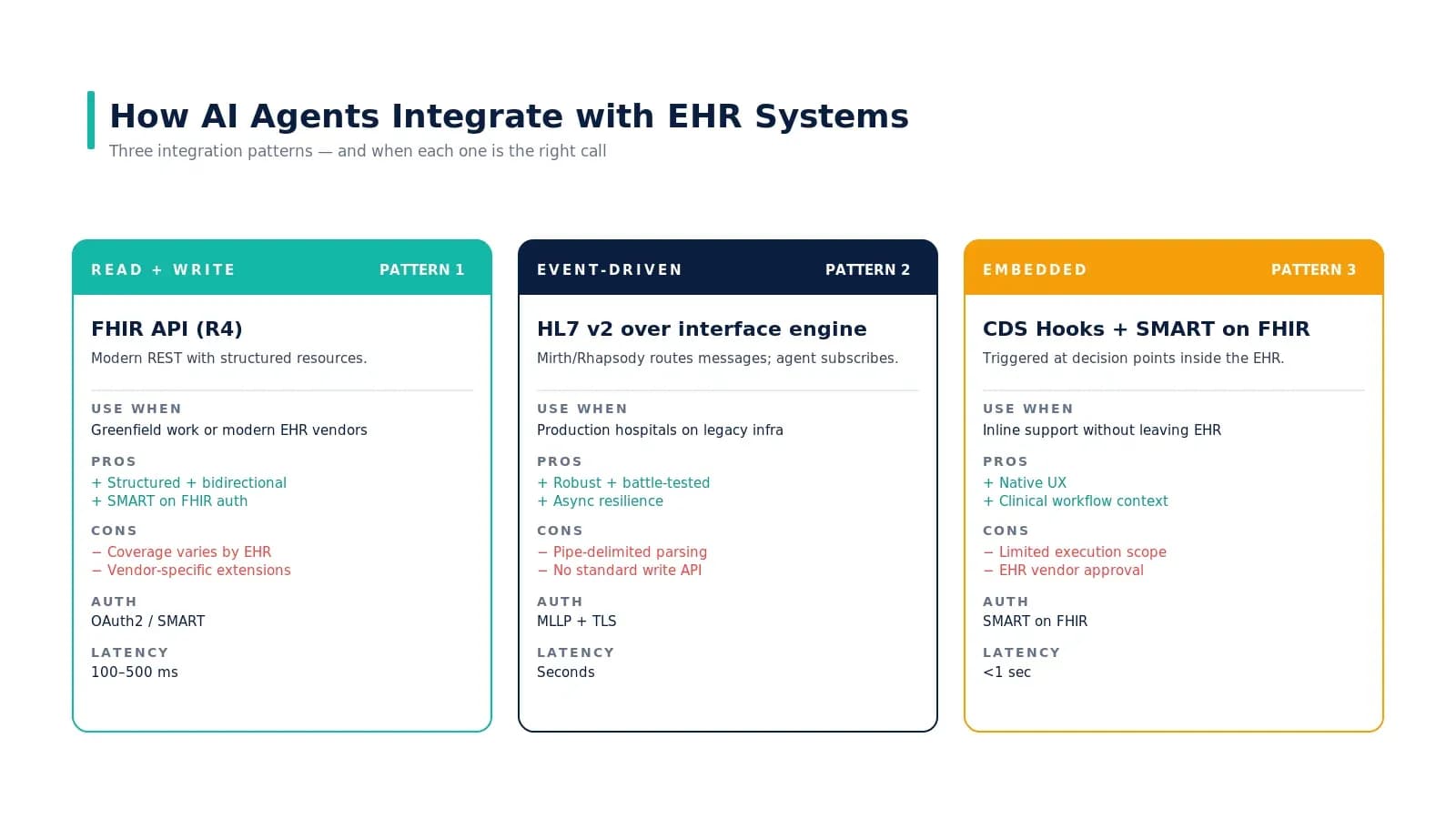
Also, integrating CAG into legacy systems like electronic health records (EHRs) doesn't require scrapping existing infrastructure. For example, say a healthcare startup wants to add a new feature like AI-powered diagnostics. Agile lets the development team build that feature separately and integrate it into the existing app without disrupting the core functionalities.
Challenges and Mitigation Strategies
Cache-Augmented Generation (CAG) brings major advantages but also faces hurdles like storage limits and slower retrieval as data grows. For example, a healthcare system preloading thousands of patient records may struggle with space or response time.
To fix this, optimized caching algorithms can prioritize frequently used data and remove less relevant entries. Distributed caching across multiple servers can also balance the load and speed up access.
Keeping cached data fresh is another big challenge. If a chatbot uses outdated medical guidelines, it could cause errors. Regular cache refresh cycles or real-time updates triggered by new clinical data help maintain accuracy and reliability in healthcare systems.
Regulatory Compliance in CAG Implementation
Healthcare AI systems like CAG must comply with regulations such as HIPAA in the U.S. These regulations govern how patient data is stored, shared, and protected.
Agile methodology enables teams to integrate compliance checks early in the development cycle. That reduces the risk of regulatory issues later on.
When security and privacy standards are met from the start, healthcare solutions can scale while remaining legally compliant.
CAG achieves this by encrypting cached data and regularly auditing its use to ensure compliance. Audit trails play a vital role here. Cloud platforms let healthcare systems store large datasets, handle traffic spikes, and offer remote access to healthcare professionals — all without big upfront infrastructure investment.
Agile development teams can continuously integrate and test cloud infrastructure to keep the solution scalable.
By meeting these regulatory standards, CAG not only protects patient privacy but also builds trust among healthcare providers and patients
Conclusion
As the healthcare industry continues to evolve and embrace AI-driven technologies, CAG stands out as a significant advantage. It enhances the speed, accuracy, and efficiency of healthtech solutions, reducing complexity while improving outcomes for both patients and healthcare providers.
This iterative process enables developers to improve the product's performance, usability, and scalability in response to real-world needs.
For example, user feedback might highlight a need for faster data processing or a better user interface.
AI in healthcare demands both technical depth and domain expertise. See how our Healthcare AI Solutions team can help you ship responsibly. We also offer specialized Custom Healthcare Software Development services.
Ready to scale?
Talk to our healthcare engineering team about building, integrating, and shipping faster.
Frequently Asked Questions
What is Cache-Augmented Generation (CAG)?
How is CAG different from RAG?
Is CAG HIPAA-compliant for healthcare data?
When should a healthcare team choose CAG over RAG?
What are the main limitations of CAG?
How does Nirmitee.io approach healthcare software development?