Rave EDC Integration: Medidata Rave API Guide (2026)

CTO & Co-Founder
CTO & Co-Founder at Nirmitee.io. Architects healthcare integrations across FHIR, SMART on FHIR, ABDM and NHCX, writing from production experience taking hospital software from sandbox to go-live.
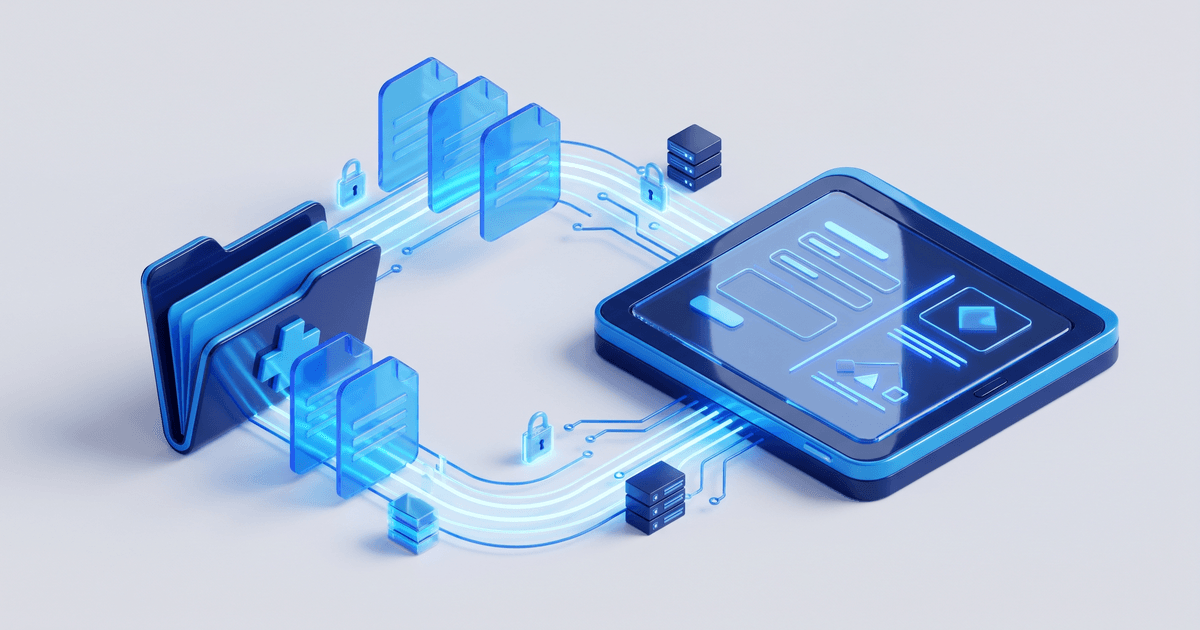
Medidata Rave EDC is the system study teams use to collect clinical trial data. Outside systems connect to it through Rave Web Services (RWS). RWS is a REST API that exchanges data in CDISC ODM, the standard XML format for clinical trial data. [M9]
This guide is for a sponsor, CRO or product team that has to move data in or out of Rave EDC. It is also for the engineer who builds it. It covers how to get access, the RWS calls, ODM, Medidata's own EHR-to-EDC products, the Rave CTMS link, and what Medidata does not publish. If you want a team to build it, see our EHR and EMR integration services. Last checked Nov 21, 2026.
Medidata Rave EDC integration at a glance
| Question | Short answer |
|---|---|
| Who grants access? | Medidata. You apply to Developer Central, and Medidata reviews the request. Data access in a live study comes from the study's Rave account. [M1] [M6] |
| Who signs? | Medidata does not publish a contract path for RWS. In practice the sponsor or CRO that owns the Rave study gives the account. Ask Medidata. |
| Are there public documents? | No full reference. Developer Central offers RWS documentation to members. Medidata's open-source rwslib library shows the call paths. [M8] [M10] [M11] |
| Which routes exist? | RWS with ODM XML, Clinical View datasets, Rave Companion with Health Record Connect for EHR data, and Medidata's own CTMS link. [M12] [M14] [M18] |
| What does it cost? | Developer Central is free. RWS, Rave Companion and CTMS prices are not published. [M2] [M14] |
| How long does it take? | Not published. Medidata says requests are reviewed "in a timely manner". [M6] |
| What is the biggest limit? | The reference is gated, and every call runs as a Rave user, so data is limited to what that user can see in the study. [M10] [M12] |
What is Medidata Rave EDC, and what does it connect to?
Rave EDC is Medidata's electronic data capture (EDC) system. Medidata describes it as the system that "supports the capture, management, cleaning" of clinical trial data, and its page lists 1.8M+ users and 38K+ studies. Medidata is a Dassault Systemes company. [M16] [M17] [M22]
The Rave name covers several products, and each one changes the integration plan:
| Product | What Medidata says it is | Integration impact |
|---|---|---|
| Rave EDC | The EDC at "the heart of the Medidata platform". [M22] | The study data you read or write through RWS. |
| Rave Lite | "a cost-effective and focused version of Rave tailored for Phase I, Phase IV, and medical device post-market studies". [M22] | Ask Medidata whether RWS access matches full Rave for your study. |
| Coder+ | "Automated medical coding". [M22] | If you need coded terms, ask Medidata how Coder+ results reach RWS. |
| Medidata Designer | "Central study build hub". [M22] | The form and item OIDs you map to come from the study build. |
| Clinical Data Studio | "Data quality management", with EDC data flowing in "for centralized oversight". [M22] | Medidata's own route for cross-source review. |
| Rave Companion | Fills EDC forms with EHR data. [M14] | No custom build for EHR prefill at sites. |
What can you build on a Medidata Rave EDC integration?
Each use case below rests on a call or product in "What can you read and write with Rave Web Services?". Build complexity and the estimates are our own rating, kept low.
1. Pull study data into a sponsor data warehouse
- Who it is for: sponsors, CROs, biostatistics teams.
- The value: one copy of Rave data next to other trial sources, refreshed on a schedule.
- Build complexity: Medium.
- How well it works: good. RWS returns study, subject and version datasets as ODM, with a start date for incremental pulls. [M12] [M13]
- Typical build estimate (our estimate): 4 to 8 weeks for one study design.
2. Load lab or device results into Rave forms
- Who it is for: central labs, device makers, ePRO and sensor vendors.
- The value: no re-keying of results at the site.
- Build complexity: High.
- How well it works: possible. RWS accepts ODM clinical data posts, but each field must match the study's form and item OIDs. [M12]
- Typical build estimate (our estimate): 6 to 10 weeks, plus study-by-study mapping.
3. Sync subjects to a CTMS that is not Medidata's
- Who it is for: CROs and sponsors running another CTMS.
- The value: enrollment counts and subject lists without manual export.
- Build complexity: Medium.
- How well it works: good for reads. RWS lists subjects per study and environment. [M12]
- Typical build estimate (our estimate): 3 to 6 weeks.
4. Feed the audit trail to a review or compliance tool
- Who it is for: quality teams, risk-based monitoring vendors.
- The value: who changed what, and when, outside Rave.
- Build complexity: Medium.
- How well it works: good. The audit records dataset is paged by a start ID, 100 records a page by default in rwslib. [M12]
- Typical build estimate (our estimate): 3 to 5 weeks.
5. Read study build metadata for a spec or study build tool
- Who it is for: study build teams, standards groups.
- The value: compare form designs across studies and keep specs current.
- Build complexity: Low to medium.
- How well it works: good. RWS returns metadata studies, versions and global library versions as ODM. [M12]
- Typical build estimate (our estimate): 2 to 4 weeks.
6. Prefill Rave forms from the hospital EHR
- Who it is for: research sites and sponsors that want less transcription.
- The value: labs, vitals and medicines arrive in the form for the site to check and save.
- Build complexity: Low.
- How well it works: this is Medidata's own product, Rave Companion with Health Record Connect. It is for interventional trials only, and users must be employed by the institution whose data they access. [M14] [M15]
- Typical build estimate (our estimate): no custom build. Time goes to setup and site training. For sites outside Rave Companion's scope, see how EHR integration works.
7. Show site and subject status in a portal
- Who it is for: site networks, patient recruitment vendors.
- The value: one view of study progress across sites.
- Build complexity: Low to medium.
- How well it works: good. RWS returns the studies a user can see, their subjects, and site metadata. [M12]
- Typical build estimate (our estimate): 2 to 4 weeks.
8. Archive study data in a standard format
- Who it is for: sponsors closing studies, data archive vendors.
- The value: a vendor-neutral copy with metadata and audit data.
- Build complexity: Medium.
- How well it works: good. RWS speaks ODM, which CDISC defines for both exchange and archiving. [M12] [M20]
- Typical build estimate (our estimate): 3 to 6 weeks.
The eight Rave EDC use cases compared
| Use case | Who it is for | Complexity |
|---|---|---|
| 1. Pull study data into a data warehouse | Sponsors, CROs | Medium |
| 2. Load lab or device results into Rave | Labs, device makers | High |
| 3. Sync subjects to another CTMS | CROs, sponsors | Medium |
| 4. Feed the audit trail to a review tool | Quality teams | Medium |
| 5. Read study build metadata | Study build teams | Low to medium |
| 6. Prefill forms from the EHR | Research sites | Low |
| 7. Show site and subject status | Site networks | Low to medium |
| 8. Archive study data in ODM | Sponsors, archives | Medium |
How do you get access to the Medidata Rave API?
You apply to Medidata Developer Central, and then you need a Rave account in each study you connect to. [M1]
Join Developer Central
Developer Central is Medidata's online community for users of the Rave Web Services API. Medidata names technology providers, ISVs, service providers and CROs among its members. You fill in the "Apply to Join" form, and Medidata reviews it. Joining is free. Members are not certified partners. [M1] [M2] [M4] [M6] [M7]
Get a Rave account for each study
Every RWS call runs as a Rave user. The rwslib library sends a user name and password with each call. Medidata's 2014 engineering post also names MAuth, a signed-request scheme, as a second option. The user sees only the studies and data that its Rave role allows. [M9] [M12]
The Partner Program is a separate track
Medidata's Partner Program, as its October 2023 fact sheet shows, is aimed at CROs. It is not the API route. [M19]
What does Medidata Rave access give you?
Developer Central gives you documentation and a Rave test environment. A study account gives you that study's data and metadata. [M3] [M8]
| Stage | What opens up |
|---|---|
| Developer Central member | RWS documentation and a Rave test environment to build and test against. [M3] [M8] |
| Rave account in a study | Study list, subjects, Clinical View datasets, metadata, audit records, and posting of clinical data, as far as the role allows. [M12] |
| Rave Companion enabled | EHR values offered in Rave forms at the site, through Health Record Connect. [M14] |
What are the ways to integrate with Medidata Rave EDC?
There are four routes: RWS, Clinical View datasets through RWS, Rave Companion for EHR data, and the built-in links between Medidata products.
| Route | What it is | Fits when |
|---|---|---|
| Rave Web Services | REST API over HTTPS that sends and receives CDISC ODM XML. [M9] | You read data out of Rave or post data in. |
| Clinical View datasets | RWS calls that return a study, subject or version dataset from Rave's Clinical Views. [M13] | You need bulk or incremental extracts. |
| Rave Companion and Health Record Connect | Medidata's own EHR-to-EDC product, using HIEs and FHIR, CCDA, DICOM and HL7. [M14] [M15] | A site wants EHR values in Rave forms. |
| Medidata Platform links | Rave links to eConsent, eCOA, RTSM, Imaging, Clinical Data Studio and Medidata CTMS. [M17] [M18] | You already buy those Medidata products. |
| A vendor's ready-made connector | Some vendors ship their own Rave link. Examples are below. | Your vendor already has one. |
How do other vendors connect their products to Rave EDC?
Some vendors describe their own Rave links in public. Two examples, in their words:
- SimpleTrials (a CTMS). SimpleTrials documents an "API-based integration" that syncs "subject and site data from Medidata RAVE" into its CTMS, including screens, screen failures, enrollments and visit dates. Its team "configures a secure, study-specific API integration". The data flows one way, into SimpleTrials. [M23]
- Eclipse (a medical coding tool). Eclipse describes "a robust two-way data exchange" with Rave over "REST web services", carrying coded adverse events and concomitant medications, and passing queries back and forth. [M24]
SimpleTrials sets its link up per study, which fits how RWS works: a Rave account and a mapping in each study. [M12]
For open-source clients, Medidata publishes rwslib for Python. [M11] A separate .NET library, Medidata.RWS.NET, is published by Memorial Sloan Kettering on GitHub and describes itself as a "fluent .NET API library for Medidata RAVE Web Services". [M25]
What can you read and write with Rave Web Services?
RWS reads study data, metadata and audit records, and writes clinical data as ODM. The paths below are as coded in Medidata's open-source rwslib library, under https://{your-subdomain}.mdsol.com/RaveWebServices. [M11] [M12]
| Function | Read or write | Path |
|---|---|---|
| Service version | Read | GET /version |
| Studies the user can see | Read | GET /studies |
| Subjects in a study | Read | GET /studies/{Study}({Env})/subjects |
| Study dataset (regular or raw) | Read | GET /studies/{Study}({Env})/datasets/regular |
| One form's dataset | Read | GET /studies/{Study}({Env})/datasets/regular/{FormOID} |
| Dataset for one study version | Read | GET /studies/{Study}({Env})/versions/{VersionOID}/datasets/regular |
| Study build metadata | Read | GET /metadata/studies, GET /metadata/studies/{Study}/versions/{VersionOID} |
| Global library metadata | Read | GET /metadata/libraries |
| Audit records | Read | GET /datasets/ClinicalAuditRecords.odm?studyoid={Study}({Env})&startid=1&per_page=100 |
| Sites | Read | GET /datasets/Sites.odm |
| Post clinical data | Write | POST /webservice.aspx?PostODMClinicalData |
What is CDISC ODM, and which version matters?
ODM is CDISC's "vendor-neutral, platform-independent format for exchanging and archiving clinical and translational research data". It carries metadata, clinical data, administrative data, reference data and audit data. ODM-XML v1.3.2 came out on Dec 1, 2013, and ODM v2.0 on Aug 23, 2023. Medidata does not state publicly which ODM version RWS uses today, so check it in the Developer Central documents. [M20]
What is not possible with Medidata Rave EDC integration?
Medidata publishes no route for the items below, so each needs a workaround.
- No public reference. You cannot read the full RWS documentation before you join Developer Central. [M10]
- No published push or webhook. We found no Medidata source for events sent out of Rave. The usual workaround is polling datasets or audit records with a start date or start ID. [M12]
- No API for Rave Companion. The Health Record Connect page describes no API, and the site saves the form before anything reaches Rave. [M15]
- No use outside interventional trials for Health Record Connect. Medidata says it is "for interventional trials only". [M15]
- No access beyond the Rave role. A call returns only what its Rave user can see. [M12]
What are the Rave Web Services limits?
Medidata does not publish rate limits, record caps or payload sizes for RWS. Known shape limits:
- Audit records come in pages. rwslib starts at ID 1 with 100 records a page by default. [M12]
- Clinical View datasets need Clinical Views to be active for the study. [M13]
- Every field you post must match an OID in the study's metadata version.
Ask Medidata for the rate limits, the largest dataset a call can return, and the time-outs.
How much does Medidata Rave integration cost?
Developer Central is free to join. Medidata does not publish a price for RWS use, Rave Companion, Health Record Connect or Medidata CTMS. The Rave Companion page says a specialist will discuss pricing. [M2] [M14] [M18]
Ask three questions. Is RWS use in the sponsor's Rave license? Is there a charge per study or per call? What does Rave Companion cost per site or per study?
How long does a Rave EDC integration take?
Medidata publishes no time for Developer Central approval or for setting up RWS accounts in a study. It says only that requests are reviewed "in a timely manner". Our build estimates sit with each use case above and are our own. [M6]
How do you build a Rave Web Services integration, step by step?
The steps are: join, get a study account, read metadata, then read or post ODM.
Stage 1. Join Developer Central and build in the test environment
Apply, wait for review, and develop against the Rave test environment that members get. [M3] [M6]
Stage 2. Get a dedicated Rave account in each study
Ask the study owner for a Rave user with only the roles your integration needs. [M12]
Stage 3. Read the study metadata
Call GET /metadata/studies/{Study}/versions/{VersionOID} to get the forms, item groups and item OIDs. Your mapping is built on these OIDs. [M12]
Stage 4. Read or post clinical data
To read, call the dataset paths with a start date for incremental pulls. To write, post ODM to /webservice.aspx?PostODMClinicalData. This synthetic example adds one vital sign for one subject. All names and values are made up.
<ODM xmlns="http://www.cdisc.org/ns/odm/v1.3" FileType="Transactional" FileOID="example-0001" CreationDateTime="2026-11-19T10:00:00" ODMVersion="1.3">
  <ClinicalData StudyOID="DEMO-STUDY(DEV)" MetaDataVersionOID="1">
    <SubjectData SubjectKey="SUBJ-001" TransactionType="Update">
      <SiteRef LocationOID="SITE-01"/>
      <StudyEventData StudyEventOID="SCREENING">
        <FormData FormOID="VS" FormRepeatKey="1">
          <ItemGroupData ItemGroupOID="VS_LOG_LINE">
            <ItemData ItemOID="VS.SYSBP" Value="122"/>
          </ItemGroupData>
        </FormData>
      </StudyEventData>
    </SubjectData>
  </ClinicalData>
</ODM>
Check every response. rwslib treats a 401 as an authorization failure and raises an error with the RWS text. [M12]
Which Medidata Rave EDC quirks should you know?
The study name carries the environment
Paths use {Study}({Env}), for example a study with its DEV or PROD environment in brackets. [M12]
The virtual directory can change
rwslib defaults to RaveWebServices but lets you set another. [M12]
Posting uses an older style path
Reads are REST paths, and the post goes to webservice.aspx?PostODMClinicalData. [M12]
Datasets come regular or raw
The dataset type is part of the path. [M12]
The public help site is gone
The 2014 link to the RWS help on Amazon S3 now returns 403. [M9] [M10]
Medidata's own client is open source
rwslib is MIT-licensed and was last updated on Nov 4, 2026. [M11]
Rave Companion waits for the site
Nothing goes into Rave until the site saves the form. [M15]
What should you check before you sign for a Rave EDC integration?
Security and accounts
Use a dedicated Rave user for each integration, with the smallest role that works. Keep its password in a secret store, or ask about MAuth. [M9]
Compliance
Rave Companion audits every fill: who, when and how. Your own integration needs its own audit trail for data you post. [M14]
Testing
Build and test in the Developer Central test environment, then in the study's non-production environment, before PROD. [M3]
Questions to ask Medidata before you sign
- Is RWS use included in the sponsor's Rave license?
- What are the rate limits and largest dataset sizes?
- Which ODM version does RWS return and accept?
- Is MAuth available to us, or only user name and password?
- How long does Developer Central review take?
- Is there any event or push option, or only polling?
- What do Rave Companion and Health Record Connect cost, and in which countries do they run?
What is the next step for a Rave EDC integration?
Ready to scale?
Talk to our healthcare engineering team about building, integrating, and shipping faster.
Frequently Asked Questions
What is Rave EDC?
Does Medidata Rave EDC have an API?
Is the Rave Web Services documentation public?
How do I get access to Rave Web Services?
What is Rave Lite?
Can I write data into Rave EDC?
How does Medidata move EHR data into Rave EDC?
Does Medidata CTMS connect to Rave EDC?
What does Rave Web Services cost?
Does Rave EDC send webhooks?