Health Dashboards for Patients – Clinical Decisions Made Easier

Founder & CEO
15+ years building healthcare technology. Led 100+ EHR integrations, FHIR implementations, and clinical AI deployments.
Overview
We collaborated with a hospital chain to build advanced patient health dashboards aimed at improving clinical decision-making. These dashboards provided healthcare professionals with real-time insights into patient health, supporting faster and more informed decisions.
Explore our healthcare interoperability solutions for seamless health data exchange.
Challenges
The healthcare provider faced multiple hurdles:
Our AI-powered healthcare solutions bring intelligence to clinical workflows.
- Overwhelming Data: Clinicians were often buried under vast amounts of raw, unstructured data, slowing down the decision-making process.
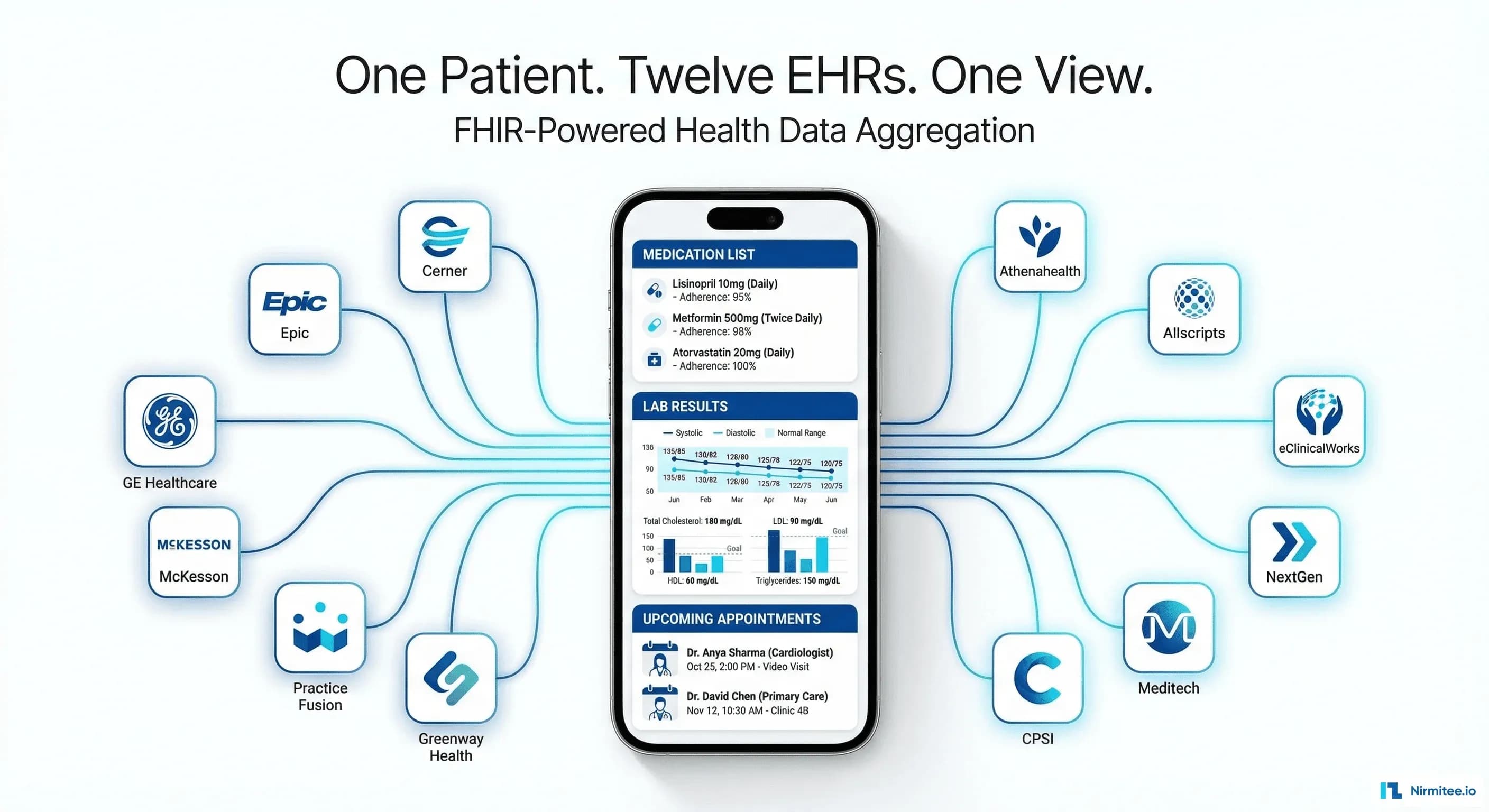
- Fragmented Systems: Data came from various sources (EMRs, lab reports, patient monitoring devices), making it difficult to aggregate and visualize in one place.
- Timely Decisions: Clinicians required quicker access to critical health indicators to provide timely care.
- Visualising Key Metrics: Making sure health data was presented clearly to avoid confusion or missed insights.
Our Approach & Solution
We took a strategic approach to tackle these problems:
- Data Aggregation: Integrated patient data from multiple sources, including EMRs and wearable devices, to provide a comprehensive view of patient health in a single dashboard.
- Customizable Dashboards: Built customizable dashboards that allowed healthcare providers to tailor the data view based on patient needs, such as vitals, lab results, or medication history.
- Real-Time Updates: Implemented real-time data syncing to ensure clinicians were always viewing the most up-to-date information.
- Data Visualization: Utilized advanced visualization tools like graphs, charts, and heat maps to make complex health data easy to interpret.
What Difference We Made
- Improved Clinical Workflow: Clinicians could access and understand key health metrics faster, leading to quicker, more informed decisions.
- Faster Diagnosis: The streamlined dashboards reduced the time required to analyze patient data, expediting diagnosis and treatment plans.
- Personalized Insights: The customizable nature of the dashboards allowed healthcare providers to focus on the most critical metrics for each patient, personalizing care.
Impact of Delivery
- 30% reduction in time spent analysing patient data.
- 20% improvement in patient outcomes due to faster and more accurate diagnoses.
- 40% increase in clinician satisfaction with the ease of accessing data.
Conclusion
Our health dashboards revolutionized the decision-making process for clinicians by providing real-time, actionable insights. This improvement led to better patient outcomes and enhanced the overall efficiency of the hospital's clinical operations.