NexHealth Synchronizer API Integration Guide (2026)

CTO & Co-Founder
CTO & Co-Founder at Nirmitee.io. Architects healthcare integrations across FHIR, SMART on FHIR, ABDM and NHCX, writing from production experience taking hospital software from sandbox to go-live.
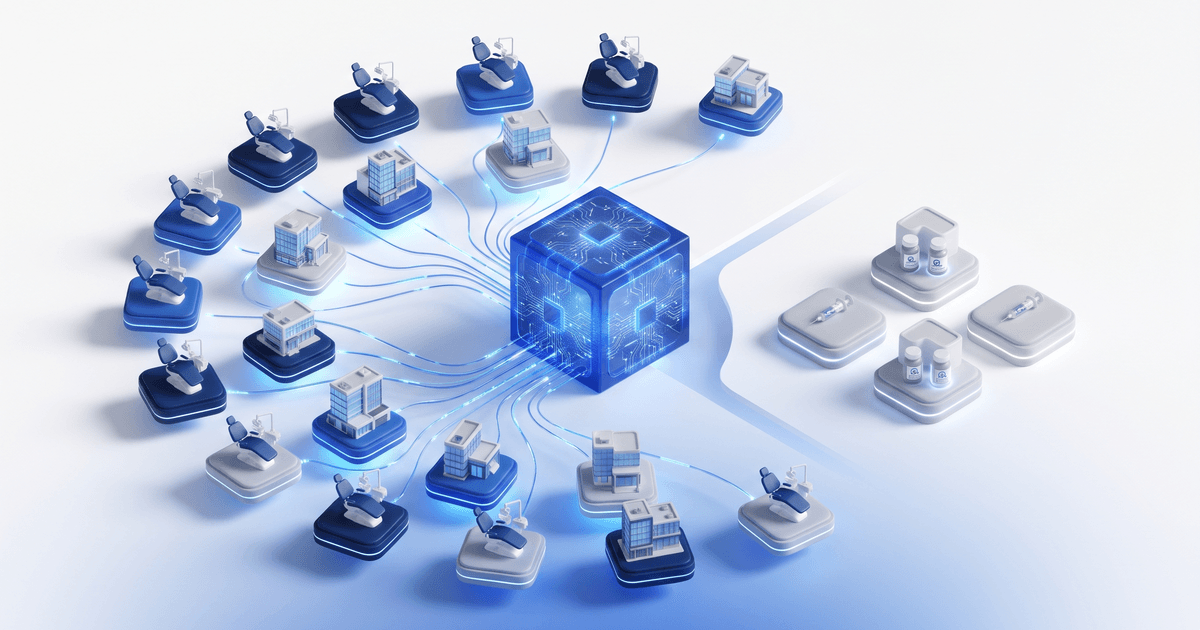
The NexHealth Synchronizer API is one API that reads and writes data in 15 dental and medical health record systems. NexHealth keeps a copy of each practice's data, and your app reads from that copy. Writes go to NexHealth first and into the record system afterwards. [S2] [S3] The name Synchronizer also covers the installer that runs on a practice's server for server-based systems. The address synchronizer.io now redirects to synchronizer.nexhealth.com. [S1] [S5]
This guide answers a question we hear from prescribing platforms that serve med spa, GLP-1 and wellness clinics: can Synchronizer reach the EHRs our clinics use? It covers the published system list, every data object, auth, the sandbox, pricing, limits and webhooks. It also compares that list with the direct routes we documented for five EHRs in this market. Where an EHR is not on the list, the route is a direct build, which is what our EHR integration services cover. Last checked: Nov 18, 2026.
NexHealth Synchronizer API at a glance
| Question | Short answer |
|---|---|
| Who grants access? | You sign up yourself in the NexHealth Developer Portal. Each practice then connects through an install, a login it creates for NexHealth, or a consent email. [S13] [S19] [S20] |
| Who signs? | The Scale plan lists "SOC 2, BAAs, audit logging". The Builder plan does not list a BAA. [S53] [S57] |
| Are there public documents? | Yes. Guides, an API reference, an OpenAPI file and a Postman collection. [S2] [S27] |
| Which routes exist? | One REST API with webhooks. No FHIR or HL7 interface is documented. [S28] [S29] |
| What does it cost? | Free sandbox, then $0.10 per API call and $0.05 per webhook delivery. Scale is a custom price. [S51] [S52] [S53] |
| How long does it take? | The sandbox is ready the same day. Cloud system setup can take up to 72 business hours per practice. [S20] |
| What is the biggest limit? | 15 listed systems, none of them a med spa EHR, and no prescription object. [S8] [S11] [S32] |
What can you build with the NexHealth Synchronizer API?
Eight use cases follow. They come from NexHealth's own list of what developers build. Each one points to a row in the read and write table in section 6 (rows R1 to R9). [S34] Build complexity is our own rating. NexHealth publishes no build times, so this guide gives no build estimate.
1. Book real appointments from an AI voice receptionist
- Who it is for: AI phone agent and call answering products for dental and medical practices.
- The value: a caller gets a real open time and the booking lands in the practice's own calendar.
- Build complexity: medium.
- How well it works: well on all 15 systems for new bookings. Open times come from
GET /available_slots, andPOST /appointmentswrites to every system once the location allows it. [S35] The write lands later. Do not keep the caller waiting for the webhook. [S48] See rows R2 and R3.
2. Let patients book online
- Who it is for: booking widgets, practice websites and patient apps.
- The value: patients book without a phone call, into the same calendar staff use.
- Build complexity: medium.
- How well it works: well for new bookings. Rescheduling is weaker, because a time change writes only on some systems and returns
400on the others. [S36] See rows R2 and R3.
3. Send reminders and review requests
- Who it is for: patient messaging and reputation products.
- The value: staff stop sending reminders by hand.
- Build complexity: low.
- How well it works: well. Appointment change webhooks drive the messages. On server-based systems they arrive in bursts every 10 to 15 minutes. [S42] See rows R2 and R8.
4. Collect payments and post them to the ledger
- Who it is for: patient payment and text-to-pay products.
- The value: a payment taken in your product shows up in the practice's ledger.
- Build complexity: medium.
- How well it works: only on Dentrix, Dentrix Enterprise, Eaglesoft and Open Dental with ledger sync. On any other system the payment never reaches the ledger. [S38] See row R5.
5. Read claims and balances for billing work
- Who it is for: claim tools and revenue cycle analytics.
- The value: one read path for charges, claims, balances and insurance across many systems.
- Build complexity: medium.
- How well it works: reads only on v3.0.0. Claims, charges, balances and insurance plans are read endpoints. [S28] See row R5.
6. Send intake forms and file them in the chart
- Who it is for: digital forms and intake products.
- The value: forms are done before the visit and filed in the record system.
- Build complexity: medium.
- How well it works: patient documents reach the record system on seven named systems. For athenahealth, eClinicalWorks and OrthoTrac, NexHealth says to ask its support. [S39] See row R6.
7. Bring back overdue patients with recall campaigns
- Who it is for: practice marketing products.
- The value: overdue patients get a nudge based on the practice's own recall data.
- Build complexity: low.
- How well it works: well for reads. Patient recalls and recall types are read endpoints. [S28] See rows R1 and R7.
8. Read a patient's medication list (beta)
- Who it is for: clinical and prescribing products that need context on a patient.
- The value: your product sees the medications, allergies and conditions recorded for a patient.
- Build complexity: medium.
- How well it works: limited. It is a beta endpoint on v3.1.0, open only to approved partner institutions. Each item carries a name, a note and an active flag, with no dose or prescriber field. [S30] [S31] See row R9.
The eight NexHealth Synchronizer use cases compared
| Use case | Who it is for | Complexity | Rows |
|---|---|---|---|
| 1. AI receptionist booking | AI phone agents | Medium | R2, R3 |
| 2. Online booking | Booking and patient apps | Medium | R2, R3 |
| 3. Reminders and review requests | Messaging products | Low | R2, R8 |
| 4. Payments posted to the ledger | Payment products | Medium | R5 |
| 5. Claims and balances | Billing and RCM tools | Medium | R5 |
| 6. Intake forms filed in the chart | Forms products | Medium | R6 |
| 7. Recall campaigns | Marketing products | Low | R1, R7 |
| 8. Medication list (beta) | Clinical and prescribing products | Medium | R9 |
How do you get access to the NexHealth Synchronizer API?
You create a developer account yourself and get a sandbox key the same day. Production needs an account upgrade with a credit card, and then each practice is connected one at a time. [S13] [S17]
Your developer account
Sign up at the Developer Portal and generate a test API key. Each organization has one sandbox key and one production key, and the portal shows each key only once. [S13] [S14] To go live, upgrade the account (a credit card is required), switch the "Test mode" toggle and generate the production key. [S17]
Each practice you connect
Each practice becomes an institution with a sync in the portal. What the practice must do depends on its system. [S18] [S20]
- Dentrix, Eaglesoft and Open Dental: the practice runs the installer on its server and enters a product key from your portal.
- Other server-based systems: NexHealth's installation team does the install with the practice's IT.
- Cloud systems: the practice creates a dedicated user for NexHealth, and you submit the system URL and that login. Most cloud systems also need the NexHealth Chrome extension on every workstation that changes the schedule.
- Practices that already use NexHealth: you click "Request access", and the practice consents by replying to an email or in the NexHealth web app. Nothing is installed. [S19]
A practice with server-based software needs one sync for each server. Many practices can be onboarded at once with a CSV upload. [S21]
Auth
Send POST /authenticates with your API key in the Authorization header. The response holds a bearer token, a JSON Web Token, that lasts one hour. Send it as Bearer <token> on every other call. [S15] No OAuth flow is documented. [S22]
What does NexHealth Synchronizer API access give you?
| Stage | What you get |
|---|---|
| Sandbox | A demo practice with one location and sample data. Every read works and bookings return 201. No record system sits behind it, so nothing is written, sync webhooks do not fire and most appointment edits return 400. [S23] [S24] |
| Sandbox with an Open Dental demo | Install the free Open Dental demo and connect it with a sync. Writes then land for real and appointment_insertion fires. [S25] |
| Production | One production key, the same base URL https://nexhealth.info, and 10,000 free API calls and 10,000 free webhook deliveries with the upgrade. [S16] [S55] |
| Beta (v3.1.0) | Medical history items, direct patient writes to four dental systems, insurance coverage writes and communication logs. Approved partner institutions only. [S6] |
What are the ways to integrate with NexHealth Synchronizer?
| Route | What it is | When it fits |
|---|---|---|
| REST API v3.0.0 | The stable API, with every call sending Nex-Api-Version: v3.0.0. [S7] | Every new build. |
| Webhooks | Signed event messages for changes, write results and sync status. [S40] [S41] | Anything that must react to a change or confirm a write. |
| REST API v3.1.0 (beta) | Extra endpoints, including medical history items. [S6] [S30] | Approved partners who need those endpoints. |
| FHIR or HL7 v2 | Not documented. The words "FHIR" and "HL7" do not appear in the API file. [S29] | Not available through Synchronizer. |
What can you read and write with the NexHealth Synchronizer API?
The stable v3.0.0 file lists 85 operations on 67 paths. [S27] The rows below group them. Each row names the systems where a write actually lands, because a 2xx response only means NexHealth accepted the record. [S3]
| Row | Resource | Read | Write | Where a write lands |
|---|---|---|---|---|
| R1 | Patients | GET /patients, GET /patients/{id} | POST /patients | No system on v3.0.0. On 12 named systems, the first booking creates the patient. [S37] |
| R2 | Appointments | GET /appointments | POST /appointments, PATCH /appointments/{id} | New bookings: every system. Time or note changes: some systems only. [S35] [S36] |
| R3 | Scheduling set-up | GET /available_slots, GET /appointment_types, GET /working_hours, providers, operatories | Appointment types, working hours | NexHealth side. [S28] |
| R4 | Practice structure | GET /institutions, GET /locations, GET /sync_status | None | Read only. [S28] |
| R5 | Money | Charges, payments, adjustments, balances, claims, insurance plans and coverages, fee schedules, payment plans | POST /payments, POST /adjustments | Dentrix, Dentrix Enterprise, Eaglesoft and Open Dental with ledger sync. [S38] |
| R6 | Documents and alerts | GET /patients/{id}/documents, patient alerts | POST /patients/{id}/documents, patient alerts | Documents on seven named systems. [S39] |
| R7 | Clinical reads | GET /clinical_notes, treatment plans, procedures, patient recalls | None | Read only. Clinical notes need a filter such as patient_id. [S33] |
| R8 | Webhooks | Endpoints and subscriptions | Create, edit and delete | Not a record system write. [S40] |
| R9 | Medical history (beta) | GET /medical_history/patient_items (allergies, conditions, medications) | POST /medical_history/patient_items | v3.1.0, approved partners only. [S30] |
What is not possible with the NexHealth Synchronizer API?
The gaps that matter most to a prescribing platform are the system list and the missing prescription object. [S11] [S32]
- No prescription object and no e-prescribing. The stable API file has no medication, prescription, eRx, drug, allergy or pharmacy term. The published reference has no prescription endpoint in stable or beta. [S29] [S32] For a prescribing product, that means sending prescriptions through your own e-prescribing connection and reading patient context from each EHR's own route.
- Medications are a list item, and beta. The beta medical history item has
item_id,item_name,noteandactive. No dose, strength, directions, pharmacy or prescriber field is in the published schema. [S31] - No med spa or wellness EHRs. The 15 systems are dental, orthodontic and four medical EHRs. OptiMantra, Aesthetic Record, Prospyr, Lobbie and OpenEMR do not appear in NexHealth's pages. [S8] [S11] NexHealth asks developers to email for systems it does not list, and publishes no fee or time for adding one. [S10] [S58]
- No FHIR or HL7. Neither is documented. [S29]
- No clinical note writes on v3.0.0. Clinical notes are read only. [S33]
- Payments reach only four ledgers. On other systems a payment write stays in NexHealth. [S38]
- No eClinicalWorks on-premises. Only the cloud version from v11.53 is listed. [S12]
Which med spa EHRs does Synchronizer reach, and what do they offer directly?
None of the five. The table compares NexHealth's own list with what we found in each vendor's documents for our live guides.
| EHR | On Synchronizer's list? | Direct route, from our guide | Prescriptions, from our guide |
|---|---|---|---|
| OptiMantra | No [S11] | No developer portal, API reference or sandbox. Webhooks and partner set-ups. [N1] | Prescribing runs in MDToolbox through Surescripts. No published way for an outside app to read prescriptions. [N1] |
| Aesthetic Record | No [S11] | No public API reference. A Leads API, a read-only Zapier app and export files. [N2] | ScriptSure eRx inside the product. [N2] |
| Prospyr | No [S11] | Public REST API with an OpenAPI file. [N3] | No prescription endpoints. ScriptSure and DoseSpot run as Prospyr partner integrations. [N3] |
| Lobbie | No [S11] | Public API for intake. [N4] | No prescribing endpoints. [N4] |
| OpenEMR | No [S11] | FHIR, REST and HL7. [N5] | The Standard API has prescription write endpoints. [N5] |
Our dental guide covers the same choice for dental practices, with Open Dental's published position on NexHealth. Read our dental practice management API guide. [N6] For aggregators and unified APIs beyond NexHealth, see our EHR integration companies comparison.
What are the NexHealth Synchronizer API limits?
NexHealth publishes rate limits per API key and answers with 429 and a Retry-After header when you go over. [S49]
| Limit | Applies to |
|---|---|
| 2,000 requests a minute | All endpoints together |
| 1,000 requests a minute | GET /appointments, and separately GET /patients |
| 50 requests a second | All endpoints together |
| 8 requests a second | GET /procedures |
| 10 requests a second | Booking and slot calls sent without the v3 version header |
NexHealth says limits can be raised for a key by email. [S50] Other limits are in the data itself. Server-based systems are read every 10 to 15 minutes, so the copy you read can be minutes old. [S42] A bearer token lasts one hour. [S15]
How much does NexHealth Synchronizer cost?
NexHealth publishes its pricing. [S51] [S52] [S53]
| Plan | Price | What it lists |
|---|---|---|
| Starter | Free | Sandbox with every endpoint |
| Builder | $0.10 per API call, $0.05 per webhook delivery | No minimums, no setup fee, 99.9% uptime SLA |
| Scale | Custom | SOC 2, BAAs, audit logging, a dedicated solutions engineer |
NexHealth's own calculator shows one location at 130 calls and 35 webhook deliveries a month for $14.75, about $0.49 a booking. [S54] The production upgrade includes 10,000 free API calls and 10,000 free webhook deliveries. [S55] Some plans bill on active locations. [S56] NexHealth does not publish whether a Builder account gets a BAA, or the price of adding an unlisted system. [S57] [S58]
How long does a NexHealth Synchronizer integration take?
The sandbox is ready the day you sign up. [S13] For each practice, cloud system setup can take up to 72 business hours. [S20] NexHealth publishes no time for server installs, for approval to use the beta, or for adding a system it does not list. [S58] A single write has no fixed time either. It waits while the practice's sync is offline. [S48]
How do you build a NexHealth Synchronizer API integration, step by step?
The order below follows NexHealth's Quickstart and go-live checklist. [S59] [S60]
Stage 1. Get a token
curl --request POST \
  --url "https://nexhealth.info/authenticates" \
  --header "Nex-Api-Version: v3.0.0" \
  --header "Authorization: $NEX_API_KEY"
{
  "code": true,
  "description": "Authenticated",
  "error": null,
  "data": { "token": "YOUR_BEARER_TOKEN" },
  "count": null
}
Stage 2. Find the practice and its ids
Call GET /institutions to read the subdomain and the location_id. They are different numbers, and calls take both. [S18] Then read patients, providers and operatories for that location.
Stage 3. Subscribe to write results first
Register an HTTPS endpoint with POST /webhook_endpoints and save its secret_key. Subscribe to appointment_insertion with resource_type set to Appointment, with a capital A. [S40] Check the HMAC signature on every message. [S41]
Stage 4. Book an appointment
curl --request POST \
--url "https://nexhealth.info/appointments?subdomain=$NEX_SUBDOMAIN&location_id=$NEX_LOCATION_ID¬ify_patient=false" \
--header "Nex-Api-Version: v3.0.0" \
--header "Authorization: Bearer $NEX_TOKEN" \
--header "Content-Type: application/json" \
--data '{"appt": {"patient_id": 415, "provider_id": 104, "operatory_id": 181,
"start_time": "2026-12-01T15:00:00Z", "end_time": "2026-12-01T15:30:00Z"}}'
{
  "code": true,
  "data": {
    "appt": {
      "id": 1822,
      "patient_id": 415,
      "provider_id": 104,
      "operatory_id": 181,
      "start_time": "2026-12-01T15:00:00.000Z",
      "end_time": "2026-12-01T15:30:00.000Z",
      "foreign_id": null,
      "last_sync_time": null
    }
  }
}
The ids are NexHealth's sample values. foreign_id is null because the appointment is accepted but not yet in the record system. [S60]
Stage 5. Confirm the write landed
Wait for appointment_insertion.complete. A .failed or .timed_out event means the write did not land, and the reason is not in the payload. [S43] NexHealth does not retry a failed write, so read the record and check foreign_id is still null before you send it again. [S47]
Stage 6. Go live, one practice at a time
Upgrade the account and create the institution and sync. The practice then connects its system. Check GET /sync_status, book one real test appointment and ask the office to check it is on the schedule. [S17] [S20]
Which NexHealth Synchronizer quirks should you know?
A 2xx is not a write
A successful response means NexHealth accepted the record. A webhook tells you when it is in the record system. [S3]
No version header, no v3
A call without Nex-Api-Version returns 404 or runs as the retired v2. New accounts get 403 on v2. [S7]
Webhooks have no event ID
Each event is sent once unless your endpoint fails, so deduplicate on your side. [S44]
A paused endpoint loses events
After more than 10 failures in a row, the endpoint is paused for an hour and events due in that hour are skipped for good. [S45]
Duplicate patients are possible
The same POST /patients sent twice at once can create two records, because the check runs on a search index. [S26]
The sandbox looks live but is not
The demo location looks like a Dentrix location, but no sync runs behind it. [S24]
Cloud syncs need someone logged in
A cloud sync goes offline when nobody at the office is logged in to the Chrome extension and the record system. [S48]
Case matters on subscriptions
resource_type must be Appointment, not appointment, and subdomain goes in the query string. [S40]
What should you check before you sign with NexHealth Synchronizer?
Security and compliance
Webhook messages may contain patient data, so NexHealth requires an HTTPS endpoint and signs each message. [S40] [S41] The Scale plan lists SOC 2, BAAs and audit logging. [S53] Get the BAA in writing before any production patient data flows.
Testing
The demo practice cannot show real writes. Connect the free Open Dental demo to test them, and test each write on the systems your customers run, because write support differs by system. [S25] [S36] [S38]
Questions to ask NexHealth before you sign
- Do we get a BAA on the Builder plan, or only on Scale?
- Will you add our clinics' EHRs, and on what timeline and fee?
- How do we get approved for v3.1.0, and does that include medical history items?
- Are there plans for a prescription or medication order object?
- Which plan bills on active locations, and how is a location counted?
What is the next step for a NexHealth Synchronizer integration?
If your clinics run EHRs that Synchronizer does not list, the work is a direct integration per EHR. Start at our EHR integration service, or read our guide on how to choose a healthcare integration platform.
Ready to scale?
Talk to our healthcare engineering team about building, integrating, and shipping faster.
Frequently Asked Questions
What is the NexHealth Synchronizer API?
Is synchronizer.io the same as NexHealth?
Which EHRs does NexHealth Synchronizer support?
Does NexHealth Synchronizer support med spa EHRs?
Can the NexHealth API send or read prescriptions?
How much does the NexHealth Synchronizer API cost?
Does NexHealth have a sandbox?
How does NexHealth API authentication work?
What are the NexHealth API rate limits?
Does NexHealth Synchronizer support FHIR?