RTLS Healthcare Vendors Compared (2026): 9 Hospital RTLS Companies

CTO & Co-Founder
CTO & Co-Founder at Nirmitee.io. Architects healthcare integrations across FHIR, SMART on FHIR, ABDM and NHCX, writing from production experience taking hospital software from sandbox to go-live.
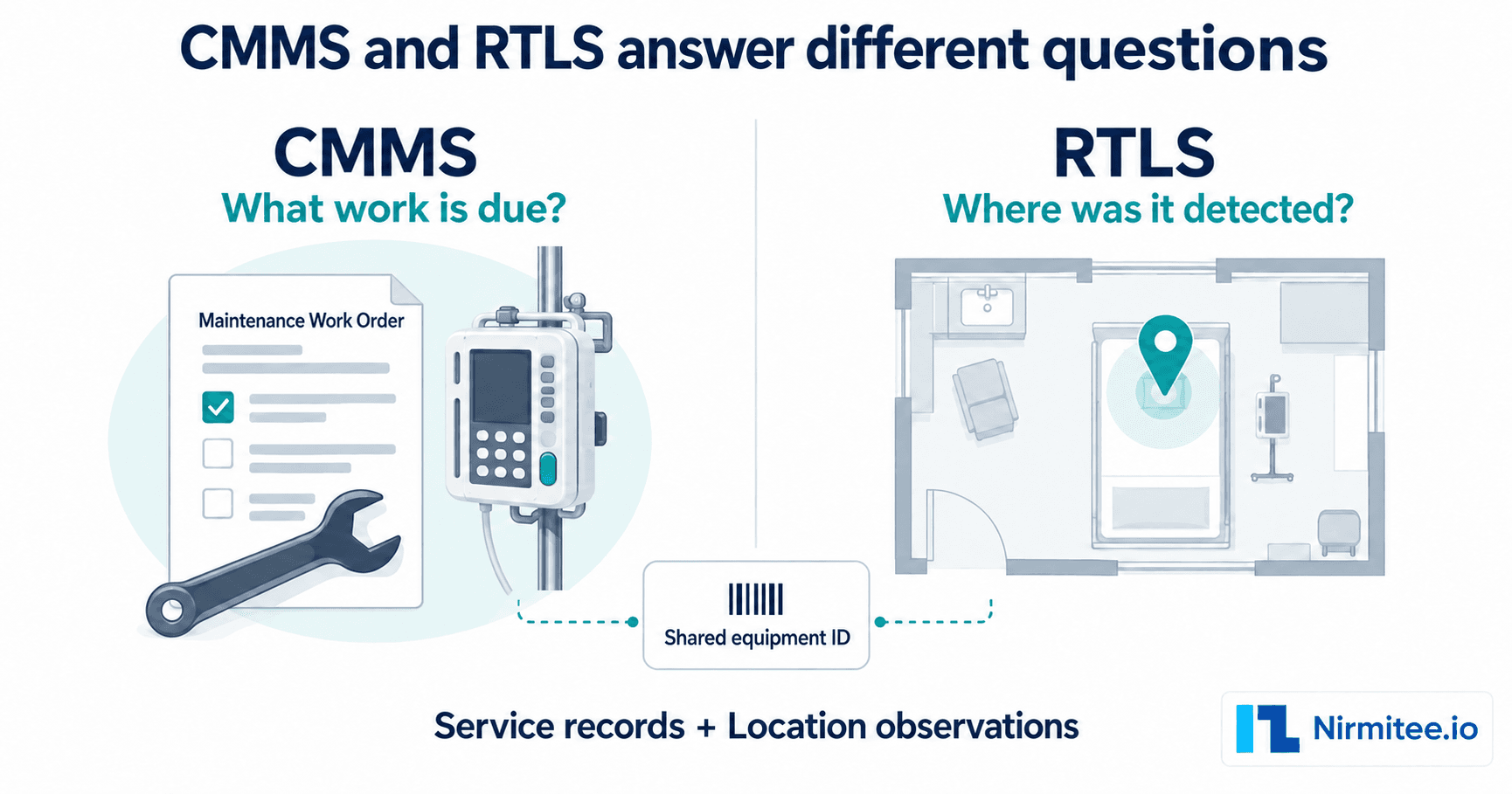
Quick answer: the main RTLS healthcare vendors in 2026 are Sonitor (which announced a 2026 Best in KLAS award for RTLS), CenTrak, Midmark, Securitas Healthcare, Kontakt.io, Zebra, Cognosos, Borda Technology and Vizzia. They differ most in how precise the location is, what hardware you must install, and whether the platform covers only location or also staff safety, patient flow and asset work. Location data tells you where a tagged device was observed. Maintenance, calibration and contract status require equipment records, provided through the vendor's own modules or a connected system. That is the job of an asset management system that uses the RTLS data.
RTLS healthcare vendors at a glance
| Vendor | How it describes itself | Potential fit to evaluate | Ask in the demo |
|---|---|---|---|
| Sonitor | Real-time location solutions for healthcare, using ultrasound-based positioning | Hospitals that need reliable room and bay level location for clinical workflows | Room and bay accuracy in your own wards; install effort per room |
| CenTrak | Healthcare asset tracking with location views, alerts and CMMS integration options | Large health systems wanting asset, patient and staff use cases on one vendor | Which use cases share one infrastructure; tag battery replacement plan |
| Midmark (CareFlow RTLS) | Healthcare RTLS for equipment tracking, patient flow and other clinical workflows | Teams evaluating equipment availability alongside patient-flow workflows | Fit for inpatient asset tracking vs patient flow |
| Securitas Healthcare | Asset management, RTLS and safety solutions | Hospitals combining infant or patient protection with asset tracking | Which modules are licensed separately |
| Kontakt.io | AI-powered, cloud RTLS platform for care operations | Health systems wanting a software-first, cloud platform | Which existing Wi-Fi or BLE infrastructure it reuses |
| Zebra (MotionWorks) | Location platform turning asset location into insights, across industries | Organisations already standardised on Zebra scanners and printers | Healthcare references, not only warehouse ones |
| Cognosos | Real-time location data and intelligence using AI | Lower-infrastructure deployments | Accuracy level you get without extra hardware |
| Borda Technology | "IoT for Healthcare" RTLS for patient, asset and personnel tracking | Hospitals wanting to reuse existing access points | Pilot terms, accuracy in your building |
| Vizzia | RTLS software provider, full-service RTLS for healthcare | Teams wanting a managed, full-service rollout | Who owns the hardware and the support SLA |
Descriptions summarise each vendor's own website as read on 15 October 2026. They are not test results. The table is a shortlist, not a performance ranking. Potential-fit suggestions are editorial assessments to test against your requirements. Sonitor's award is described in its linked announcement; it does not establish the best fit for every hospital.
How to choose an RTLS vendor: five questions that separate them
1. What precision does the workflow actually need?
Define the location precision each workflow needs and test it in the intended wards. Floor or zone location may help narrow a search, while room or bay location may be needed for a specific operational response. Presence in a cleaning area does not establish that cleaning was completed. Agree separate evidence for cleaning and safety workflows with the responsible hospital teams.
2. What must be installed, and who maintains it?
Some systems reuse Wi-Fi access points. Others need dedicated readers, exciters or ultrasound units per room. Ask for a per-room install count for one of your wards and the yearly battery replacement effort for 1,000 tags.
3. Is it one use case or a platform?
Payback depends on your baseline, implementation cost and the work that changes after installation. Several workflows may share infrastructure, but extra modules can also add cost and delivery effort. Ask which modules are separate licences and build the business case for each use case using your hospital's own data.
4. Where does the location data go?
Location is only useful when it changes a record or a task. Ask whether the vendor pushes events (device entered, device not seen for 24 hours) to your CMMS or asset management software, and in what format.
5. What does the pilot prove?
Agree in writing what the pilot must show: accuracy in named rooms, search time before and after, and how many tags went missing. A pilot without pass criteria only proves the demo works.
RTLS location data and equipment records: what to verify
This table separates location observations from maintenance and contract records. Some RTLS vendors provide both in one platform; verify the modules and integrations included in your quote.
| Question | RTLS answers it | Asset management software answers it |
|---|---|---|
| Where is infusion pump 4417 now? | Yes | Only if fed by RTLS or a recent scan |
| Is it due for preventive maintenance? | Requires maintenance or contract records beyond location data | Yes, when the required workflow and records are configured |
| Is its calibration certificate current? | Requires maintenance or contract records beyond location data | Yes, when the required workflow and records are configured |
| Is it under AMC or CMC, and when does that end? | Requires maintenance or contract records beyond location data | Yes, when the required workflow and records are configured |
| How many pumps do we really use per day? | Can provide location and dwell-time observations | Can report utilization if the source data supports the agreed definition of use |
A hospital can start with barcode or QR scans at handover to record a last-seen location, then evaluate continuous location separately. Compare labels, scanning effort, readers, integration and support costs for your own scope. See CMMS for hospitals vs RTLS and RFID vs barcode for that decision.
Where Assetly fits
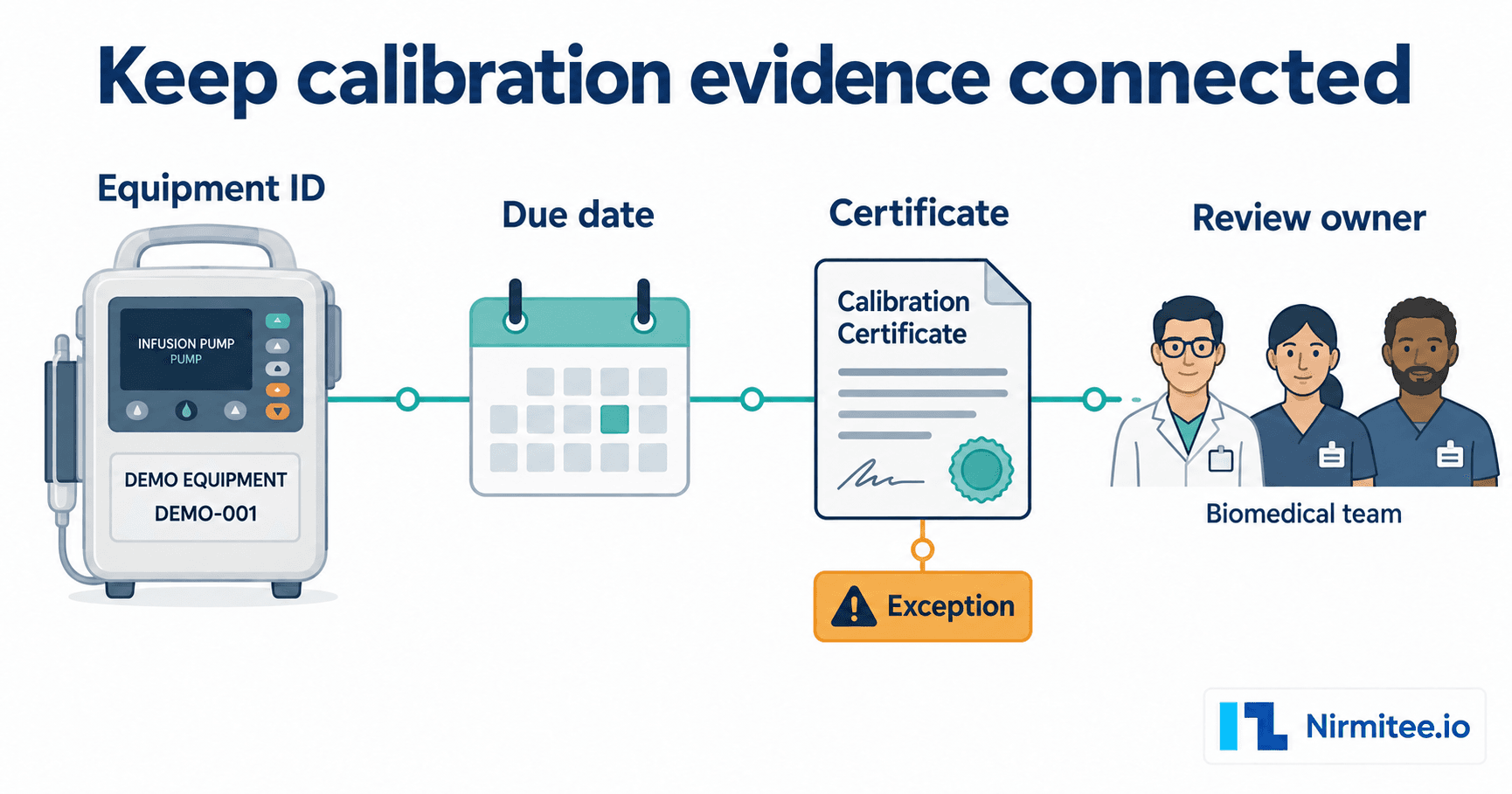
Assetly is not an RTLS hardware vendor. It is hospital asset tracking software that keeps one record per device (location, service, calibration, contract) and works with QR, barcode, RFID and BLE identifiers. If you already run an RTLS, Assetly is the place its location data turns into maintenance and audit actions. Connecting a specific RTLS vendor is scoped per project; we do not claim a ready-made connector for every vendor above.
Shortlisting RTLS vendors? Book an Assetly demo and bring your RTLS shortlist; we show what your team would see each day once location data reaches the equipment record.
Related buyer guides
See how Assetly fits your shortlist
Bring your shortlist and one real equipment record. We show what Assetly covers and what needs a separate scope.
Frequently Asked Questions
Who won Best in KLAS for RTLS in 2026?
What is the difference between RTLS and asset tracking software?
Can we start asset tracking without RTLS?
How long does an RTLS pilot take?
Is Assetly an RTLS vendor?
Check the product against your buying brief
Review Assetly equipment records, maintenance, vendors, transfers and audits before you request a scoped demonstration.