Healthcare Semantic Layer: A CIO Guide to Semantic Models and Metrics

CTO & Co-Founder
CTO & Co-Founder at Nirmitee.io. Architects healthcare integrations across FHIR, SMART on FHIR, ABDM and NHCX, writing from production experience taking hospital software from sandbox to go-live.

Updated October 2026
A healthcare semantic layer is a governed set of definitions between your data and everyone who uses it, so that "readmission rate" means one calculation in every dashboard, notebook and AI assistant. A semantic model is the buildable part of that layer: the metrics, dimensions and joins, written once and stored in one place.
This guide is for CIOs, CTOs and heads of data deciding whether to fund one. Our view: the hard part is getting people to agree who owns a definition, and the tool choice comes after that. Start with about ten contested metrics, on the platform most of your users can already reach, and skip the large catalog project. That number is our judgment, and it is a place to start. Our healthcare data engineering team scopes this work through a fixed-price Healthcare Data Platform Assessment.
Why Clean Healthcare Data Still Gives Different Numbers
Clean data still gives different numbers because a metric is a decision about what to count, and nobody has written that decision down in one place. Better pipelines cannot settle it, because each number can be correct under its own rule.
Here is a small example you can check. We built a table of 10 invented discharges and ran three reasonable definitions of a 30-day readmission rate over it.
The gap comes from three rules: whether a same-day transfer counts as a discharge and a return, whether a patient who died can be in the denominator, and whether a planned return counts. These numbers are synthetic and show only how far definitions can move a result. Your real gap will differ, and you can measure it by running the competing rules on your own data. This also is not any official measure. Program measures follow their steward's published specification, and your layer should cite that specification and never restate it from memory.
The same problem appears across healthcare data:
| Term | Where teams disagree | What the definition must state |
|---|---|---|
| Patient count | Unique across systems, or per source? Include test or merged records? | Identity rule and exclusions |
| Length of stay | Admit order or arrival? Do observation hours count? | Start and end events |
| Denial rate | By claim or by line? First pass or final? By billed dollars? | Grain, timing and unit |
| Active patient | Seen in 12 months? 18? At which sites? | Window and scope |
| No-show rate | Are late cancels no-shows? Rescheduled visits? | Status list |
| Revenue | Billed, allowed, or collected? Service date or post date? | Amount and date basis |
Semantic Layer vs Semantic Model vs Semantic Interoperability
Semantic layer, semantic model and semantic interoperability overlap in conversation, and they answer different questions. The difference matters because a vendor may sell you one while you need another.
| Term | Question it answers | Example |
|---|---|---|
| Semantic model | How is this metric calculated in this tool? | A Power BI semantic model, or dbt semantic models |
| Semantic layer | Where do all definitions, rules and context live? | Models, value sets, access rules, glossary and owners |
| Semantic interoperability | When system A sends data to system B, does B understand it? | SNOMED CT, LOINC and FHIR profiles between organizations |
| Knowledge graph | How are clinical and business concepts related? | Linking drugs, conditions and products |
Researchers at MIT CISR use the broad meaning: "a system of technologies and techniques that organizes and maintains a consistent and unified representation of data" for people and machines. Their healthcare example, Healthcare IQ, mapped messy supplier and hospital data to standard codes, and the authors report that semantic technologies automated 80 percent of the effort to onboard new hospitals. That is one company's result in a supply chain setting, so read it as a sign of what is possible, and do not plan a budget on it.
What a Healthcare Semantic Model Contains
A healthcare semantic model contains the metric logic, the dimensions you may group by, the joins between tables, and the identity of whoever owns each one. It sits above your conformed tables, and it depends on them being right.
A formula alone leaves questions open in healthcare, so we write a contract that reviewers can read before anyone builds it:
# A vendor-neutral metric contract. This is our own format for review, not a tool's syntax.
# Translate it into dbt, Snowflake, Databricks or Power BI when you build.
metric: readmission_rate_30d
version: 3
effective_from: 2026-10-01          # example
owner: VP Quality                   # a named person in practice
grain: index discharge
numerator: index discharges followed by an unplanned admission within 30 days
denominator: inpatient discharges
excludes: [transfer_out, died_in_hospital, planned_return]
time_basis: discharge date
allowed_groupings: [facility, service_line, payer_class, month]
not_the_same_as: official program measures, which follow the measure steward's specification
access: aggregate only; suppress small cells per policy
tests:
  - known_result_set: readmit_cases_2026q1
  - no_unmapped_facility: true
synonyms: [readmits, 30-day readmissions]
Three of these fields do the most work. grain stops two teams counting different things. time_basis settles the service date against the post date. not_the_same_as stops an internal measure from being quoted as the official one. Value sets belong with this contract as well, and for US quality measures the NLM Value Set Authority Center is the place to start.
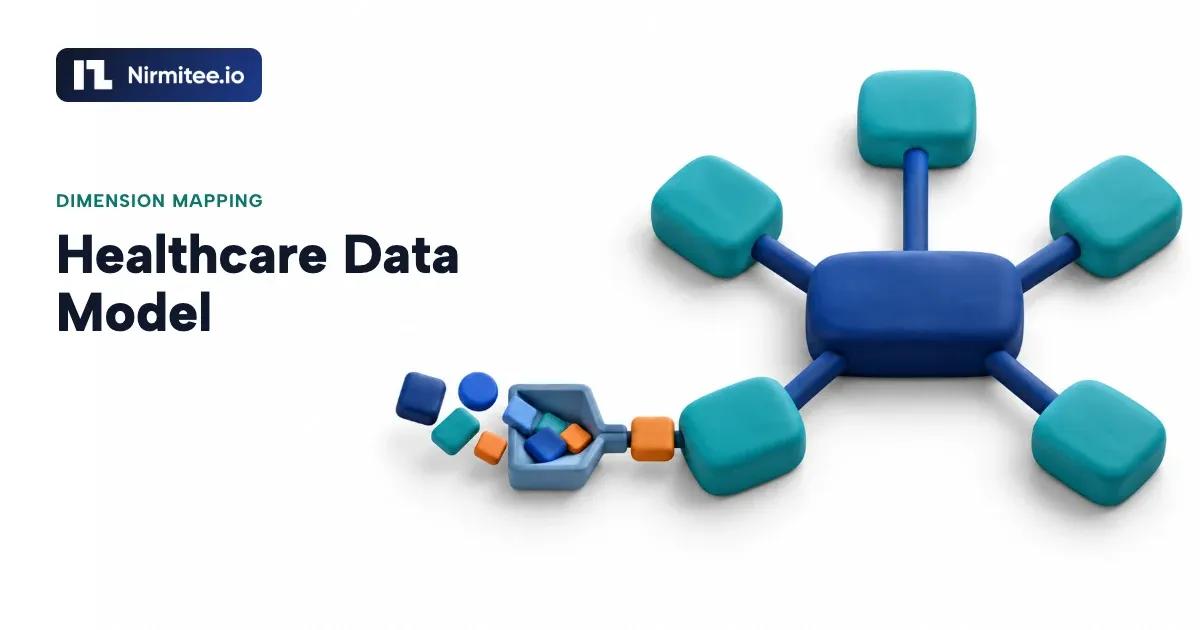
The model also depends on well-built dimensions. Our guide to healthcare data modeling and dimension mapping covers codes, units, facility names and history.
Where Should the Semantic Layer Live?
Put the definitions in the tool closest to the data that most of your consumers can reach. If nearly everything goes through one BI tool, use it. If several tools and AI assistants must share definitions, move them down to the data platform or a shared layer.
| Option | What it is | Good fit | Watch out |
|---|---|---|---|
| Power BI semantic models | Tabular models for reporting, with row-level security | Mostly Microsoft reporting | Other tools reach it less directly, and import models must load into memory and refresh |
| Snowflake semantic views | A schema-level object holding logical tables, facts, dimensions and metrics | Snowflake-centred teams using Cortex Analyst | Tied to one platform |
| Databricks metric views | Unity Catalog objects that separate measures from dimensions | Lakehouse teams using Genie and external BI | Tied to one platform. Check the release status for your features |
| dbt MetricFlow | Metrics defined in YAML beside dbt models. Apache 2.0 engine | Teams already on dbt with several consumers | Plan access to the hosted layer, and syntax changed in dbt v1.12 |
| Build your own | Views and a metric catalog | Few metrics, simple needs | You own the upkeep and every integration |
We read these vendor pages on 30 October 2026, and this area is moving fast. All of these can hold a metric definition, so we would choose by who must consume it and by your exit cost. Keep the contract above outside any one tool, because that is what lets you move later.
A semantic layer is often unnecessary. If one team uses one BI tool for a short list of metrics, it adds work with little return. It also cannot rescue weak foundations: fix data quality and patient matching first.
How to Govern Metric Definitions
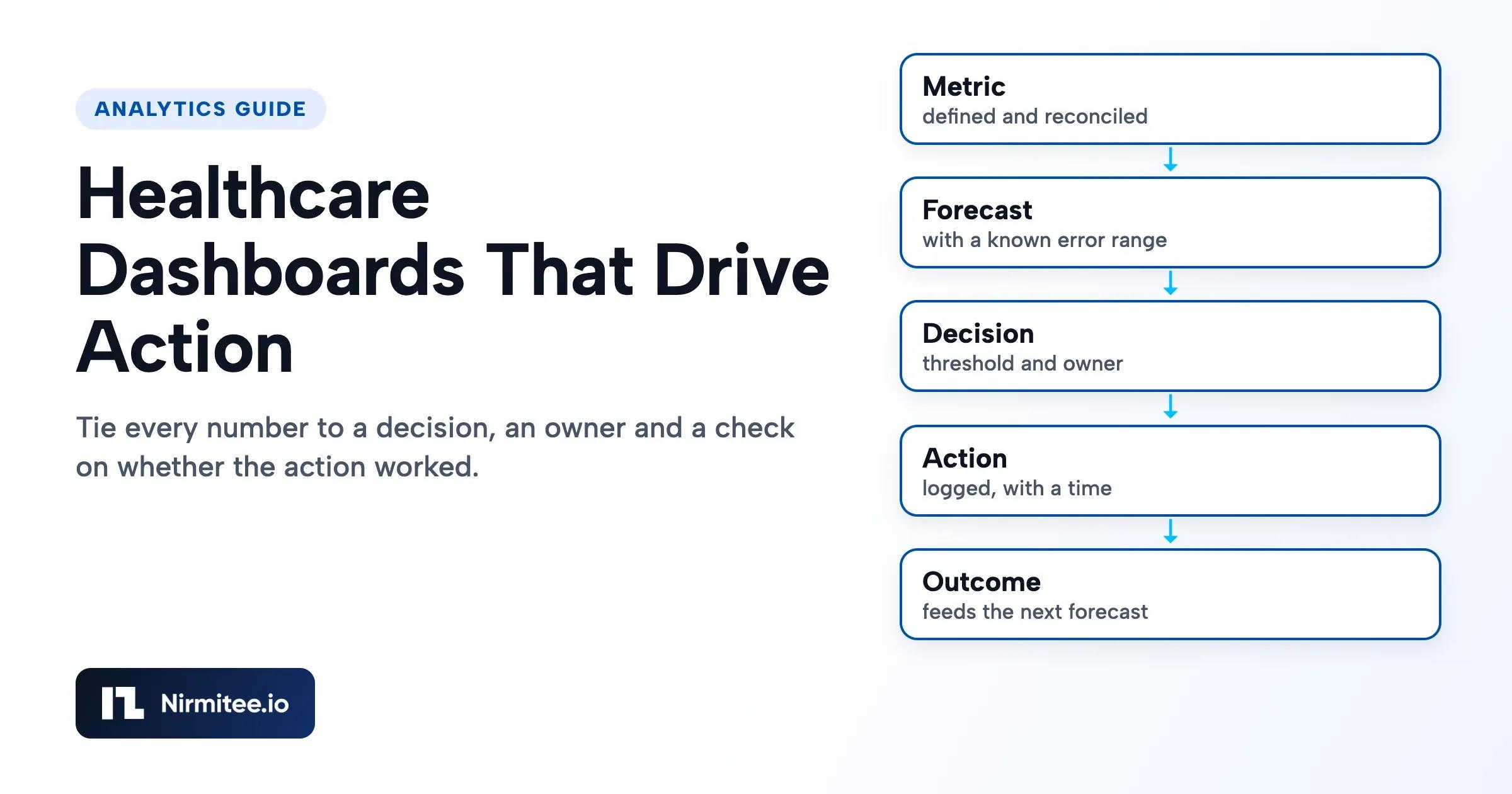
Govern a metric the way you govern code that affects money. Each definition has one named business owner, each change has a version and an effective date, and past results stay reproducible.
Value sets and official specifications change on a schedule, so put those dates on a calendar with an owner. Lineage, catalog and access control sit beside this work and make each number traceable to its source.
Measure adoption by what changes in behavior: the count of contested metrics closed, reports moved onto the layer, and the time it takes to answer "where did this number come from?" A count of metrics defined says little.
Semantic Layer for AI: Why This Became Urgent
AI assistants made this urgent because a model that writes SQL from column names will produce a confident answer using whichever definition it infers. A governed layer narrows the assistant's job to choosing a named metric, and the query comes from approved logic.
Vendors are building for this. Snowflake says Cortex Analyst uses semantic views for natural language queries. Databricks lists Genie as a consumer of metric views. A semantic layer reduces one class of error, and it does not make an assistant safe by itself, because it can still pick the wrong metric or misread the question.
Test it the way you test a clinical report. Keep a set of questions with known answers, and run it on every release of the model or the assistant. Also test questions it should refuse. We cover wider data readiness for AI in our guide to data quality for AI and analytics.
How to Start: A Practical Sequence
Start with a small set of disputed metrics and prove the method on them before you widen it. Here is the order we recommend.
- List the disputes. Collect metrics that have produced conflicting numbers in real meetings. Rank them by the decisions they affect.
- Measure the gap. Run the competing definitions on your own data, as in the example above. A real gap motivates agreement better than any slide.
- Name owners. No owner means the metric waits. Do not let engineering choose by default.
- Write contracts. Agree grain, exclusions and time basis before choosing or configuring a tool.
- Build on one platform. Choose for the consumers you have today.
- Move one report. Rebuild a high-visibility report on the layer, then reconcile it to the old one and explain each difference.
- Retire the old logic. If the old formula stays in reports, you now have one more definition.
What a CIO or Head of Data Should Ask Before Hiring
Here are the questions we would ask any semantic layer vendor, ourselves included. The answers show whether a team understands healthcare definitions or has only installed a tool.
Risks and how to control them
| Risk | What it costs you | Control to require |
|---|---|---|
| The layer codifies one team's view | Other teams reject it and keep spreadsheets | Named owner, written dispute process, data council ruling |
| Silent metric changes | Trend lines break and trust drops | Versions, effective dates and a parallel run |
| Internal measure quoted as official | Wrong figures reach regulators or the board | Label each metric, and cite the steward specification |
| Row-level rules bypassed through a shared service account | PHI reaches people who should not see it | Query as the end user, and log it |
| Small groups exposed in aggregates | Re-identification risk | Small-cell rules agreed with your privacy team |
| Lock-in to one tool | Costly exit | Keep contracts in your repository, outside the tool |
Governance and PHI handling
Treat metric definitions as non-PHI where they contain no patient data, and treat their results as PHI until shown otherwise. Enforce access at the data platform where you can, and test the routes around it, such as extracts and service accounts. Log who asked what, including AI assistants. Early design can run on schemas, profiles and synthetic examples like the one above. If row-level PHI is needed, a Business Associate Agreement comes first. Nirmitee is ISO 27001:2022 certified and signs Business Associate Agreements. Neither of those makes a given dataset compliant, so your own access rules and audit still apply.
Who owns the code and the data
Once paid, you own the custom model code, metric contracts and documents we write for you, and all of your data. We keep our reusable tools and open-source parts. Tool licences remain with their vendors.
What the team looks like
Expect these named roles: a business owner for each metric group, a clinical or quality reviewer, an analytics engineer, a privacy reviewer, and a sponsor who can settle disputes. Without a sponsor, disputes have nowhere to go.
What you receive
From a build: metric contracts, tested model code, a reconciliation of the first migrated report, access rules, a change process your team has used, and a known-answer test set if AI is in scope.
How to judge a vendor
- What do you do when a metric has no owner or two teams disagree?
- How do you keep past results reproducible after a definition changes?
- How do row-level rules reach an AI assistant?
- What happens when the assistant has no matching metric?
- Where do definitions live if we leave this tool next year?
- Who on our side needs to spend time, and how much are you assuming?
Start with a Healthcare Data Platform Assessment
Before you buy a tool, you need to know which definitions are in dispute and whether your data can support them. The Healthcare Data Platform Assessment is a fixed $3,500 review that takes 2 to 3 weeks and is credited against the build. It gives you written evidence for that decision before you commit a build budget.
- Source inventory: each system, its extract method, its access owner and its known gaps.
- Target architecture: a recommended design, with the options we rejected and why.
- Data model outline: conformed tables, grain and the first contested metrics to govern.
- Risk list: what could stop the work, who owns each risk and how to reduce it.
- Costed build plan: phases, roles and an estimate you can compare with other vendors.
It does not include building pipelines, loading production data, software or cloud licences, a compliance opinion or a fixed price for the build. You can take the output to any team, including your own. Ask for a Healthcare Data Platform Assessment.
You can also talk to our team about a single contested metric, or see how we approach Snowflake and Databricks for healthcare.
Ready to scale?
Talk to our healthcare engineering team about building, integrating, and shipping faster.
Frequently Asked Questions
What is a semantic layer in healthcare?
What is a semantic model?
What is the difference between a semantic layer and a data warehouse?
Does a semantic layer replace FHIR or terminology mapping?
Do we need a semantic layer for AI?
Which tool is best for a healthcare semantic layer?
Who should own metric definitions?
Is a semantic layer HIPAA compliant?