Snowflake for Healthcare

Snowflake Healthcare Data Engineering Services

Snowflake makes reporting and data sharing easier, but only if patient data is governed from the start and costs have an owner. Our Snowflake healthcare data engineering services give your teams reports built on one set of definitions and controlled sharing with partners. A fixed-price assessment shows the plan and the cost, including whether Snowflake is the right choice.

Book the Healthcare Data Platform Assessment

For analytics leaders, healthcare product teams and warehouse owners.

At a glanceFor decision makers
  1. 01
    The problem

    Teams wait for reports, costs drift, and sharing data with partners feels too risky to approve.

  2. 02
    The outcome

    Reports built on agreed definitions, and sharing that stays within what you approve.

  3. 03
    How risk is controlled

    The right Snowflake edition and agreement come first. Access and masking are tested with real roles.

  4. 04
    What it costs

    $3,500 fixed for the assessment. 2 to 3 weeks, credited against the build.

  5. 05
    The next step

    Book the assessment. If Snowflake is the wrong fit, it will say so.

The business case

What a Poorly Governed Snowflake Costs You

Snowflake is simple to start with. Keeping it trusted, safe and affordable takes deliberate setup.

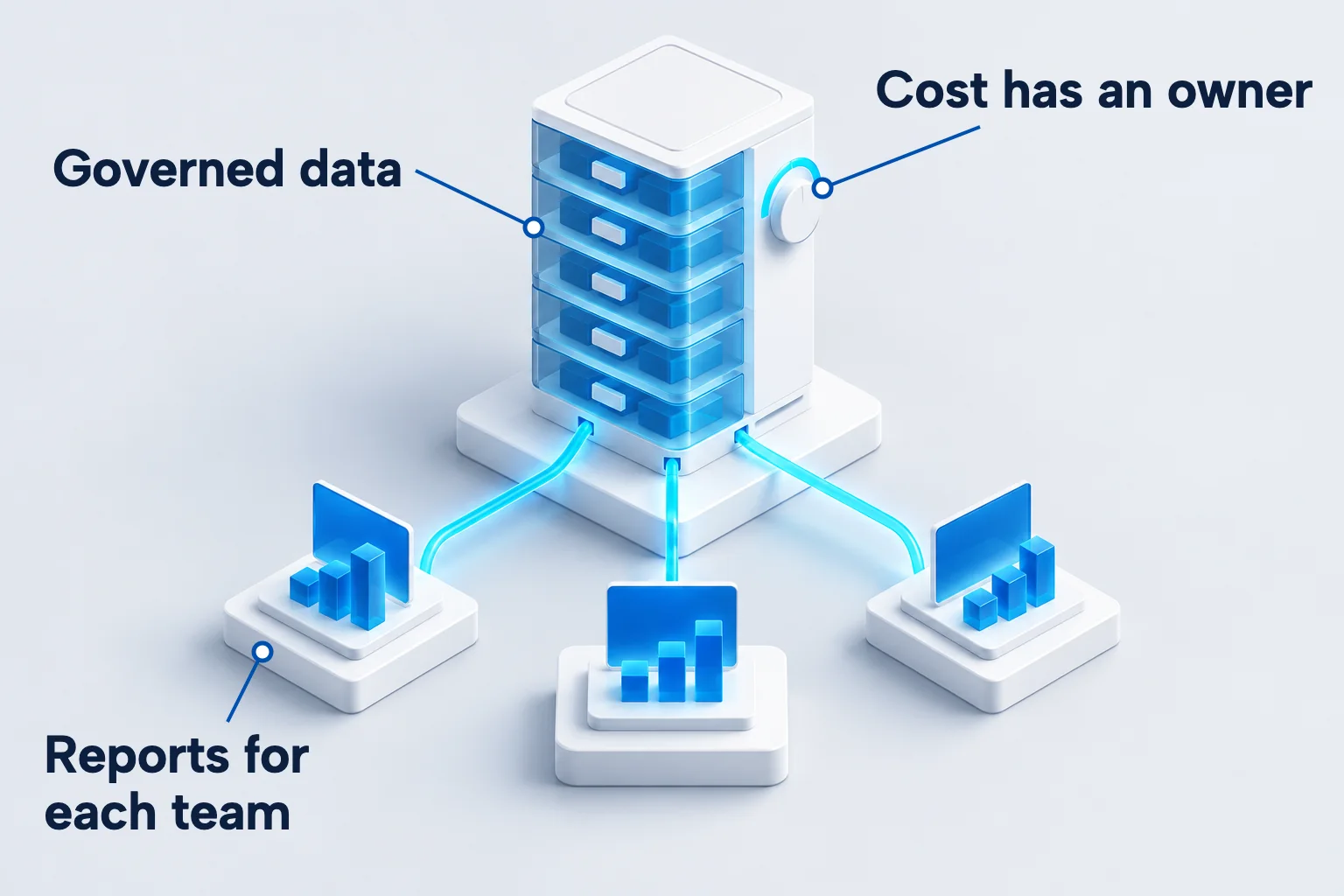
A tall glass data tower with separate glowing paths to three workstations, each showing a simple report, with a small dial for cost control.

The problem

Teams add data and reports quickly, and that speed creates its own problems. Numbers drift apart, patient data spreads into places it should not be, and the bill grows with nobody responsible for it. Partners ask for data, and the safe answer turns into a long debate.

What it costs you

  • Warehouses run with no one owning the bill.
  • Partner and payer requests stall on privacy and contract questions.
  • Patient data can spread into views and shares nobody reviewed.
  • Reports built by different teams give different answers.

What you get

  • One definition behind each number, for people and for reporting tools.
  • Partners see only what you approve, through reviewed shares.
  • Sensitive data is found, tagged and masked by rule, and your team reviews the results.
  • A cost owner for each workload, and code your team can run.

Our view

Choose Snowflake for SQL-First Teams, and Budget for the Right Edition

Snowflake fits when your team thinks in SQL, your main output is analytics and you need to share governed data with partners. Set the edition decision at the start: Snowflake lists PHI support on Business Critical and above, with a signed BAA required before any PHI is stored.

The edition is an architecture decision

PHI support and Tri-Secret Secure sit at Business Critical. Masking and row access policies start at Enterprise. Finding this out late changes your budget and your timeline.

Use dynamic tables first

A dynamic table keeps a query result up to date against a target lag, and chained tables refresh in order. We reach for streams and tasks when the logic is procedural or has to call out.

Target lag is a target

Snowflake states that actual lag can exceed it when refreshes take longer than expected. If a consumer depends on freshness, monitor it and show it on the report.

Put metrics in semantic views

Semantic views store logical tables, facts, dimensions and metrics in the database, and Cortex Analyst and Cortex Agents can use them. A definition held there can serve both reports and natural language questions.

When we would tell you not to choose Snowflake: large nested data needs heavy custom processing, or machine learning sits at the center of the work. Databricks may fit better, and a team already running one platform well should usually stay on it.

For decision makers

What a CIO or Head of Data Should Check Before Hiring Us

These are the questions that decide whether a data engineering vendor is safe to hire. Here are our answers, and how to test them.

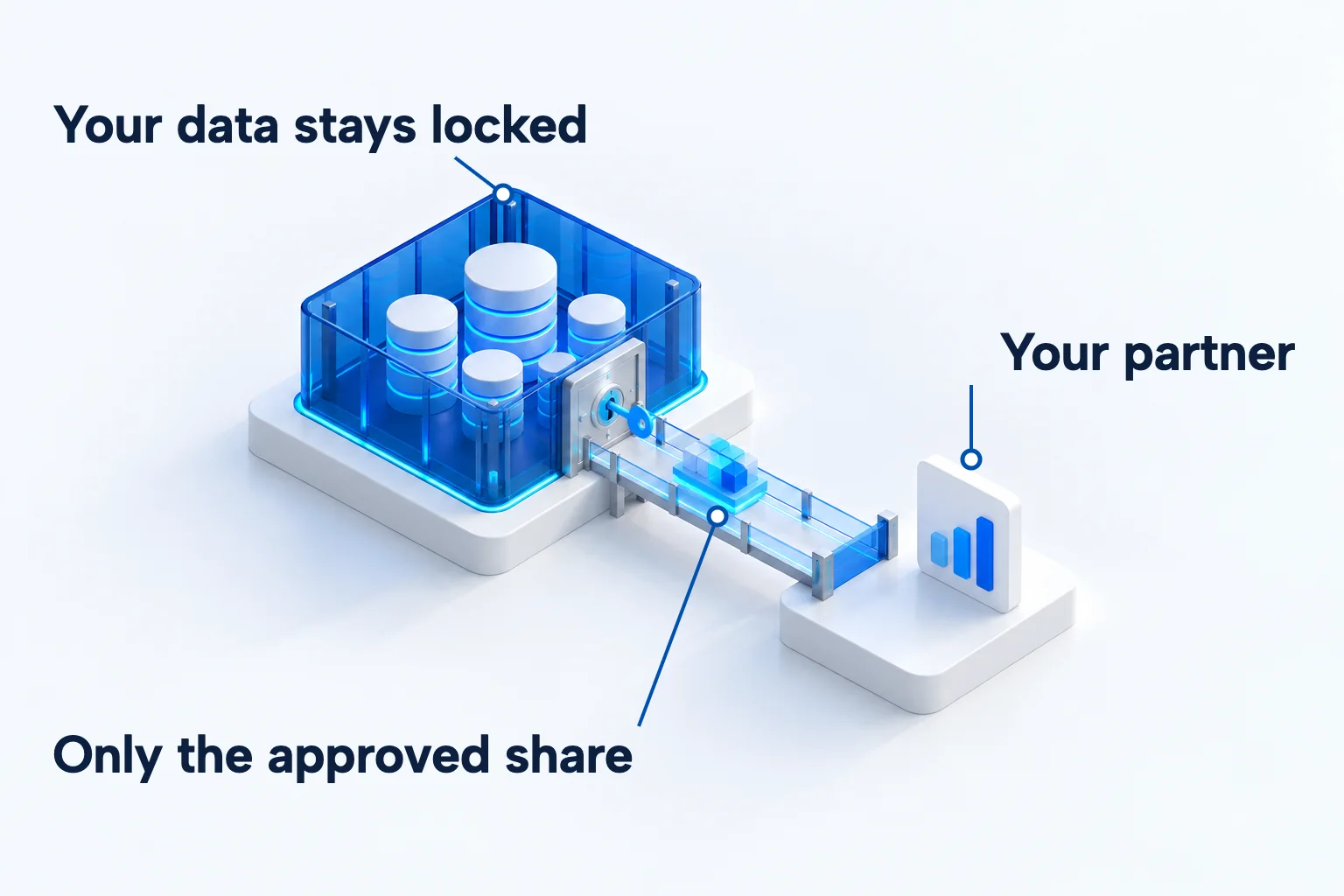
Two separate platforms joined by one narrow gated bridge carrying a single small tray of data, while the main data vault stays locked, showing controlled sharing on Snowflake.

Risks and how we control them

RiskHow we control it
PHI enters the wrong editionConfirm edition and BAA before the first load, and record it
A shared dataset exposes too muchSecure views with minimum necessary scope, and tests from the consumer side
Freshness is assumedShow actual lag on the report and alert when it exceeds the target
Credit use climbsSeparate warehouses by workload, with auto-suspend and a named owner
Legacy reports stop matchingMove report groups in stages, with a parallel run and reconciliation

Governance and PHI handling

  • We start with metadata, schemas and synthetic or de-identified samples. Production PHI comes in only when the work needs it and access has been approved.
  • We sign a business associate agreement with you before our work touches PHI. Your platform and cloud BAAs stay between you and those vendors, and we check that they are in place.
  • Nirmitee is ISO 27001:2022 certified. That covers how we run our security management. It does not certify your environment or your HIPAA compliance.
  • Access is tested using the roles that will really read the data, and your team approves who gets what.

Who owns the code and the data

  • Your data stays in your accounts and under your agreements. We work inside your environment.
  • Once paid, you own the custom code we write for you, including models, metric definitions and runbooks, and all of your data. We keep our reusable tools and open-source parts.
  • The custom code lives in your repository, so you can change vendor without a rebuild.

What the team looks like

  • A technical lead who owns the architecture and answers for the numbers.
  • Data engineers for ingestion and models, and an analytics engineer for metric definitions and dashboards.
  • A healthcare integration engineer when HL7 v2, FHIR or X12 sources are in scope.
  • From your side: a data owner, a clinical or finance owner for each definition, and someone who can grant access.

How to judge any vendor, including us

  • Ask them to explain how a corrected lab result or a reversed claim moves through their design, without double counting.
  • Ask who signs off a metric definition, and where that decision is recorded.
  • Ask to see a reconciliation report format and a replay test before you sign.
  • Ask what you would keep if you ended the contract next month.
  • Be wary of a firm that names a platform before it has asked about your sources and your decision.

The first step

Healthcare Data Platform Assessment

Fixed price: $3,500. 2 to 3 weeks, credited against the build.

A fixed-price first step for one decision you need the data to support. You finish with enough evidence to approve, change or stop the build, and the outputs are yours to use with any vendor.

Book the Healthcare Data Platform Assessment

What you receive

Source inventory
Each system, its owner, how it delivers data, how it sends corrections and what access still has to be granted.
Target architecture
The platform and layers we recommend for your workload, with the options we rejected and why.
Data model outline
The grain, the main facts and dimensions, and the first metric definitions to be agreed.
Risk list
Access, quality, identity, PHI and operating risks, each with an owner and a proposed control.
Costed build plan
The work in sequence with its cost and the dependencies on your team and your vendors.

What we need from you

  • One person who owns the decision the data must support.
  • Time with the owner of each source system and each metric.
  • Schemas, data dictionaries, sample layouts and any existing reports. We do not need PHI or production credentials for the assessment.

What is not included

  • Building pipelines, models or dashboards. That is separate work you can decide on after reading the plan.
  • Databricks, Snowflake or cloud subscriptions, which you contract directly with the vendor.
  • Clinical or measure sign-off, which stays with your clinical and quality leads.
  • Legal or compliance opinions, and any certification of your environment.

The assessment is complete when all five outputs are delivered and walked through with your owners. Sending the form starts a conversation, and you pay nothing until you agree the assessment.

How the work runs

How a Snowflake Engagement Runs

Edition, roles and policies come first, then loading, then models. Migrations run report group by report group.

  1. 1

    Confirm the account

    Check the edition, BAA, region, network rules and key management.

    You review: An account readiness record

  2. 2

    Design roles and policies

    Set role hierarchy, masking and row access policies, and classification with tags.

    You review: A policy design with access tests

  3. 3

    Load

    Use Snowpipe for files and Snowpipe Streaming for rows, keeping raw payloads in VARIANT.

    You review: Raw tables with load history

  4. 4

    Model

    Flatten with LATERAL FLATTEN and build curated and business layers with dynamic tables.

    You review: Documented models with tests

  5. 5

    Publish

    Define semantic views, connect reports and set up secure shares where needed.

    You review: Governed metrics and shares

  6. 6

    Operate

    Schedule data metric functions, watch warehouse cost and rehearse recovery.

    You review: A runbook and a cost review

Evidence you can check

Related delivery

Multi-source Data Integration for Governed AI

Public-source life-sciences data moves through collection, name reconciliation and approval before reporting and source-cited AI answers.

Delivery context: a public-data intelligence platform built with Frappe and Power BI, with AI assistants. The case shows source integration, reconciliation and review workflows.

Read the implementation case study →
Jitendra Choudhary

Technical contact

Jitendra Choudhary

Co-Founder & CTO

Meet the engineering leadership →

Cost drivers

What Drives the Cost of a Snowflake Healthcare Project

The assessment is a fixed $3,500. It takes 2 to 3 weeks and is credited against the build. The build is costed in its plan, and these factors move that cost most.

Sources and formats

FHIR JSON, X12 claims, HL7-derived tables and database CDC each need different parsing and tests.

Legacy dependencies

The number of reports, stored procedures and downstream consumers that must reconcile before cutover.

Definitions

Measures without an agreed definition need workshops and sign-off before they can be built.

Access model

Row-level PHI restrictions, masking by role and multiple environments add policy work and tests.

Sharing

Each external consumer adds secure views, agreements and possibly replication.

Freshness

Near-real-time loads with Snowpipe Streaming cost more to build and run than daily batch.

Book the Healthcare Data Platform Assessment →

For your engineers

The Technical Detail

What your technical team will want to check: loading, schema layers, governance on Snowflake and samples of the work. Platform statements were read on the Snowflake documentation in October 2026.

What we build and connectSources, ingestion and who owns what

The short answer

Snowflake for Healthcare, in Short

We engineer Snowflake healthcare warehouses: FHIR NDJSON, HL7-derived tables, X12 claims and EHR extracts load through Snowpipe or batch COPY into raw VARIANT and staging tables, dbt or dynamic tables build documented clinical and claims models, and masking and row access policies control PHI. Snowflake supports PHI only on Business Critical edition or higher, with a signed Snowflake BAA in place before PHI is stored, and we confirm both before the first load.

Who it is for
Analytics leaders, payers, provider groups and healthtech teams building or migrating a Snowflake warehouse.
What we build
Ingestion, clinical and claims models, access policies, Secure Data Sharing and migrations from legacy warehouses.
The outcome
Measures with one definition, reconciled to the source, shared safely with the teams and partners who need them.

What we build

What We Build on Snowflake for Healthcare Data

Snowflake features applied to clinical and claims data, each with a reviewable output.

FHIR JSON in VARIANT

Bulk Data NDJSON loads into VARIANT columns, then LATERAL FLATTEN views and typed tables for Patient, Encounter, Observation, Condition, Claim and ExplanationOfBenefit, with extensions and codings handled explicitly.

Clinical data modeling in Snowflake

Snowpipe and CDC ingestion

Snowpipe for file drops and exports, Snowpipe Streaming or connector-based CDC for EHR and billing databases, with load history reconciled to source counts.

CDC for healthcare data warehouses

Claims and clinical models

Member, claim, service line, encounter and cohort models with documented grain; X12 835 adjustments with CARC and RARC codes; OMOP CDM where research needs it. Built with dbt tests or dynamic tables.

OMOP vs FHIR for clinical analytics

PHI access policies

Dynamic data masking, row access policies and object tags for PHI columns, role hierarchy per team and environment, and access history review.

Governance, lineage and PHI access

Secure Data Sharing

Live, read-only shares of governed datasets to partners, payers, providers or research teams without copying files, including de-identified shares prepared under HIPAA Safe Harbor.

Safe Harbor vs Expert Determination

Sources handled

Sources on Snowflake

Snowpipe suits data that already sits in files. Snowpipe Streaming suits rows pushed from applications. The two work side by side.

SourceSnowflake pathWhat we keep or decide
FHIR Bulk Data NDJSONStage plus Snowpipe into a VARIANT columnThe raw resource, file name and load time, then flatten by resource type
HL7 v2 via an interface engineSnowpipe Streaming, or files from the engineThe raw message and control ID, then parse to segment tables
X12 837 and 835Parsed before loading, then stagedClaim, line and adjustment tables with CARC and RARC codes
EHR and billing databasesCDC tool into raw tables, then streams or dynamic tablesSource log position and delete markers
Partner and payer datasetsSecure Data Sharing where the partner is on SnowflakeAgreements, minimum necessary scope and a reader account if they are not

Snowflake clinical data warehouse guide

Integration boundaries

Integration Boundaries for a Snowflake Healthcare Project

What we own, and what stays with your platform, data and compliance owners.

Snowflake account

You hold the Snowflake contract, edition and BAA. PHI requires Business Critical or higher; we verify it before loading PHI.

Source access

Source owners grant extracts, database access or FHIR export registration. We build and test the loads.

Definitions

Business and clinical owners approve measure definitions. We implement them with tests and document every exclusion.

Dashboards

The primary scope is the data foundation. BI dashboards can be added as a separately agreed deliverable.

Sharing agreements

Data use agreements with partners are yours to sign. We implement the shares and access policies they require.

Platform choice and data layersOptions compared, layers and the data model

Compare your options

Ways to Share Healthcare Data from Snowflake

The sharing method decides who holds a copy, who pays for compute and how access is revoked.

MethodHow it worksBest forPlan for
Direct Secure Data SharingConsumer account queries your governed objects live, with no copyPartners that already run Snowflake in the same regionReplication for cross-region or cross-cloud consumers; share only secure views
Reader accountYou provision a managed account for a consumer without SnowflakeSmaller partners who need read accessYou pay the reader compute and manage its users
Listing (private or Marketplace)Packaged, discoverable share with terms and optional auto-fulfillmentRepeatable data products for many consumersProduct ownership, documentation and refresh commitments
File extractScheduled export to cloud storage or SFTPConsumers on other platformsCopies to track, encryption and retention on the receiving side

PHI in any share needs a permitted purpose, a BAA or data use agreement as applicable, and minimum-necessary views. De-identified shares follow Safe Harbor or an Expert Determination.

Medallion layers

Layers on Snowflake

The medallion idea applies in Snowflake as schemas with clear rules. We usually name them raw, curated and business.

LayerSnowflake objectsRuleWho reads it
Raw (bronze)Tables with VARIANT, loaded by SnowpipeLoad unchanged, with load metadataPipeline roles only
Curated (silver)Flattened tables and dynamic tablesOne row per stated grain, typed and checked with data metric functionsEngineers and approved analysts
Business (gold)Dynamic tables, secure views and semantic viewsReconciled and signed off, with masking and row access appliedAnalysts, BI tools and shares

Compare warehouse, lake and lakehouse

Dimension mapping

Dimension Mapping on Snowflake

Governance belongs on the dimension. Classification can tag sensitive columns, and a masking policy tied to a tag applies automatically when that tag is assigned.

DimensionMapping approachAccess treatment
PatientSurvivor key with merge history. A tokenized key for shared and de-identified dataTag-based masking on identifiers
ProviderNPI-based key with role and effective datesStandard role access
Payer and planGoverned crosswalk with effective datesStandard role access
FacilityHierarchy table that also drives row accessRow access policy using a mapping table
Clinical codesCrosswalk to LOINC, SNOMED CT, ICD-10-CM and RxNorm, with the local code keptStandard role access
Definitions, refresh and cleanupMetric definitions, how often data refreshes, and common fixes

Semantic models

Semantic Views for Healthcare Definitions

A semantic view is a schema-level object made of logical tables, facts, dimensions and metrics. You query it with SELECT, and Cortex Analyst can use it when you name it in the request.

Part of the semantic viewHealthcare exampleDecision for its owner
Logical tableClaim, claim line, encounter, memberWhich table sets the grain of each question
FactBilled amount, paid amount, adjustment amountWhether paid means current or as first remitted
DimensionPayer, service month, facility, reason groupWhich hierarchy finance and operations share
MetricInitial denial rate, net collection rateWritten definition, exclusions and a named owner

Refresh frequency

Refresh Options on Snowflake

Set refresh per table. With dynamic tables you state how fresh the data must be, and Snowflake schedules the work.

NeedOptionCheck first
Files arrive through the daySnowpipeWhether batch-style latency is acceptable
Rows pushed from an applicationSnowpipe StreamingWhether anything acts on low latency
Models that stay currentDynamic tables with a target lagWhether incremental refresh applies. AUTO lets Snowflake choose when the table is created
Procedural or conditional stepsStreams and tasksWho owns the task graph and its failures
Shared dataSecure views over refreshed tablesWhat freshness the partner agreement promises

Cleanup problems and fixes

Snowflake-Specific Problems and Fixes

These are issues we look for when reviewing an existing account.

ProblemFixHow you can check it
PHI in an account below Business CriticalStop, confirm the edition and BAA, then plan the moveAccount edition and agreement on record
Flattening multiplies rowsState a grain and aggregate before joiningRow counts per resource, before and after
Nulls and duplicates found by report usersSchedule data metric functions, with an expectation on each resultCheck history in the quality views
Target lag missed unnoticedMonitor refresh history and show freshness on the reportActual lag compared with target for each table
Sensitive columns not taggedRun classification, review its results and link tags to maskingQuery as a limited role and see masked values
Warehouses left oversizedSeparate warehouses by workload, with auto-suspend and an ownerCredit use by workload

CDC for healthcare data warehouses

Dashboards, forecasts and samples of the workWhat you receive, and what it looks like

Dashboards people act on

Dashboards People Act On, Built on Snowflake

Reports read semantic views, so a metric has one definition across BI tools and Cortex questions. These are scoping examples.

Who opens itThe questionThe action it triggersSnowflake piece
Payer contracting leadWhich plans underpay against contract?Open a dispute or renegotiateSemantic view over claim lines
Population health leadWhich members have open gaps by clinic?Direct outreachRow access by clinic
Partner analytics teamWhat does the shared dataset cover, and how fresh is it?Use or query the shareSecure share with a freshness field
CFOWhat cash should arrive by payer?Adjust the collections focusForecast results beside actuals

Forecasting loop

The Forecasting Loop on Snowflake

SNOWFLAKE.ML.FORECAST lets a SQL team begin without a separate platform, as long as the loop around it is taken seriously.

  1. 1

    Prepare

    Create a view with a timestamp at a fixed interval, a numeric target and any useful features.

  2. 2

    Forecast

    Train and predict. Each result has lower and upper bounds, with a default prediction interval setting of 0.95.

  3. 3

    Evaluate

    Read the cross-validation results with SHOW_EVALUATION_METRICS, such as MAE and MAPE, and compare them with a simple baseline.

  4. 4

    Plan for features

    If you train with extra columns, you must supply their future values, so choose features you will really know ahead of time.

  5. 5

    Compare and adjust

    Store each run, join it to actuals and retrain or retire the model.

Forecasting functions need the same PHI review as any other workload. Prefer aggregated inputs for operational forecasts.

Deliverables

What You Receive on Snowflake

All of it lives in your repository and your Snowflake account.

Account readiness record

Edition, BAA, network and key decisions.

Roles and policies as code

Role hierarchy, masking, row access and tags, with test results.

Loading and models

Snowpipe definitions, dynamic tables and tests in version control.

Semantic views

Signed-off metrics that reports and Cortex can read.

Sharing design

Secure views, shares or reader accounts and their scope.

Runbook and cost review

Recovery steps, quality checks and a workload cost owner.

Samples of the work

See the Format Before You Hire

You should see what the work looks like before you hire anyone. These samples show the format we hand over. All values here are invented for illustration. They do not come from any patient, client or project.

Sample: FHIR VARIANT Mapping to Curated

One row for each field, with the grain stated.

VARIANT pathCurated columnRuleCheck
raw:id, raw:meta.versionIdencounter_id, version_idKeep the latest version per IDDuplicate count is zero
raw:period.startadmit_atCast to timestamp and store in UTCNull count within the agreed limit
raw:type[] via LATERAL FLATTENencounter_type (one row each)Separate table, because flattening multiplies rowsRow count stated per encounter
raw:subject.referencepatient_keyResolve through the patient crosswalkUnresolved keys go to the exception table

Sample: Data Quality and Freshness Report

Data metric function results with an expectation, and actual lag against target.

TableMeasureExpectationThis run
curated.encounterNull count on patient_key00, pass
curated.claim_lineDuplicate count on line key014, fail: release held
business.denialsActual lag against targetWithin targetOver target, shown on the report
Architecture, flows and ownershipThe design written out, step by step

Snowflake Healthcare Data Platform

Features per Snowflake documentation, October 2026. A reference design.

StageWhat it holds
SourcesFHIR NDJSON, HL7 v2, X12 837 and 835, CDC feeds and partner data.
LoadStage and Snowpipe, Snowpipe Streaming and a CDC tool.
SchemasRaw as VARIANT, curated and flattened, business as dynamic tables.
Semantic viewsLogical tables, facts, dimensions and metrics.
ConsumersBI tools, Cortex Analyst, secure shares and ML forecasts.
Across it allBusiness Critical and a BAA for PHI, masking, row access and classification.

FHIR JSON to a Governed Semantic View

StepWhat happensWhy it matters
NDJSON files in a stageOne file set per resource type.
Snowpipe into VARIANTRaw resource, file name and load time.The payload is kept as received.
LATERAL FLATTEN to curatedState the grain of each table.One resource can give many rows.
Dynamic tables chainTarget lag, refreshed in order.Lag can exceed the target, so monitor it.
Data metric functionsMeasure, then set an expectation.Out of range: alert the owner.
Semantic viewReports and Cortex read it.

Schema Layers on Snowflake

LayerObjectsRolePromote when
Raw (bronze)VARIANT tables, SnowpipePipeline roles onlyLoad recorded
Curated (silver)Flattened and dynamic tablesEngineers, approved analystsGrain stated, quality checks pass
Business (gold)Dynamic tables, secure and semantic viewsAnalysts, BI tools, sharesReconciled, signed off, masked

Which Snowflake Object Fits the Job?

Answer in this order. The first yes is the object to use.

QuestionIf yes
Getting files into Snowflake?Snowpipe
Rows pushed by an application?Snowpipe Streaming
Can one query express the transformation?Dynamic table
Procedural or conditional steps?Streams and tasks
None of these?Rethink the step, or run it outside Snowflake.

Governing PHI on Snowflake

AreaWhat applies
Business CriticalPHI support and Tri-Secret Secure. BAA signed first.
Enterprise and upMasking, row access, classification and data metric functions.
ClassifyFind sensitive columns and review the results.
Tag and maskA masking policy tied to a tag applies automatically.
RolesHierarchy by job, tested from a limited role.
ShareSecure views, minimum necessary, tested from the consumer side.

Where PHI Sits, and Who Can Reach It

WhereWhat happens there
Your environmentHolds your source systems, data platform and PHI, under your platform and cloud BAAs, your roles, your masks and your audit logs.
During the assessmentWe use schemas, data dictionaries and synthetic samples. We do not use PHI or production credentials.
During a buildWe sign a BAA with you first. Access uses approved roles, is logged and is the least needed. You grant, review and revoke it.
The codeCode and tests use synthetic data and live in your repository.
Guides and referencesFurther reading and vendor documentation

Explore the implementation decisions

Guides for the Work Ahead.

Before we begin

Snowflake Healthcare Questions Buyers Ask

Is Snowflake HIPAA compliant?

Snowflake supports PHI under HIPAA on Business Critical edition or higher, and a signed business associate agreement with Snowflake must be in place before any PHI is stored. Your own configuration, access policies and procedures complete the picture, which is the work we implement and document.

Can Snowflake store FHIR data?

Yes. FHIR resources load as JSON into VARIANT columns, and views or tables flatten them for analytics. Snowflake is an analytics warehouse, so applications that need a live FHIR API use a FHIR server alongside it.

How do you load FHIR NDJSON into Snowflake?

We land FHIR Bulk Data export files in cloud storage, load them with Snowpipe or COPY into VARIANT tables per resource type, then build typed models with LATERAL FLATTEN. Incremental runs use _since and resource versions so corrected resources replace earlier ones.

What is Snowflake Secure Data Sharing, and can we share PHI?

Secure Data Sharing gives another account live, read-only access to selected objects without copying data. PHI can be shared only for a permitted purpose with the right agreements and minimum-necessary secure views; many teams share de-identified data instead.

Snowflake or Databricks for healthcare analytics?

Snowflake suits SQL-first analytics, reporting and data sharing. Databricks suits large nested FHIR and HL7 volumes, streaming and ML. We recommend based on workload, team skills and existing investment, and many organizations run both.

Can we migrate without replacing every report at once?

Yes. We migrate in report groups with parallel runs against the legacy warehouse, reconcile the outputs and cut over each group when its owners accept the results.

How do you de-identify data in Snowflake?

There are two HIPAA routes. Safe Harbor removes the 18 identifier types, and it keeps no date element more specific than the year. Date shifting and linkage tokens need a review under Expert Determination, so we prepare the data and documentation for that expert. Masking policies protect identified columns in the source layers.

How do we judge a Snowflake vendor?

Ask which edition they assume for PHI, how they test masking from a limited role, how they handle a flattened resource that multiplies rows, and what they do when target lag is missed. We build dashboards when they serve an agreed decision, on top of governed semantic views.

Can Snowflake and a FHIR store coexist?

Yes. The FHIR store serves applications through a live API and the warehouse serves analytics. We define the export, transformation and update behavior between them so each dataset has one source of truth.

How long does a Snowflake healthcare implementation take?

The assessment takes 2 to 3 weeks. We do not quote a build schedule before it, because source access and sign-off owners set the pace and differ widely. The costed build plan gives the sequence and its dependencies, once those are known.

What does a Snowflake healthcare implementation cost?

The Healthcare Data Platform Assessment is a fixed $3,500. It takes 2 to 3 weeks and is credited against the build. It ends with a costed build plan. The build depends on sources and formats, legacy report dependencies, undefined measures, the access model, sharing and freshness. Snowflake usage is billed by Snowflake.

Do you sign a BAA?

Yes. We sign a business associate agreement with you when our work touches PHI, and we confirm the Snowflake edition and BAA before PHI is loaded.

Talk to our team

Book the Healthcare Data Platform Assessment

Tell us what you are planning, what exists today and what needs to change. We’ll review the context and discuss scope, dependencies and the next useful step.

hello@nirmitee.io →

Please exclude patient data and credentials. We use these details to respond to your inquiry. Privacy policy

Thank you. Your inquiry has been received. Our team will review your requirements.