EHR and EMR Software Development: Cost, Timeline and How to Build (2026)

Founder & CEO
15+ years building healthcare technology. Led 100+ EHR integrations, FHIR implementations, and clinical AI deployments.

EHR software development is the work of building an electronic health record system: the patient record, scheduling, clinical documentation, orders and results, e-prescribing, billing, a patient portal, and the FHIR, HL7 and X12 connections that link it to labs, pharmacies, payers and other EHRs. Our planning ranges run from $40,000 to $100,000 for an MVP with a basic FHIR R4 API to $500,000 to $1,500,000 for an enterprise EHR with multi-system interoperability, and a first production release usually takes 6 to 9 months.
This guide is for founders, product leaders and CTOs at digital health companies deciding whether to build, buy or extend an EHR, and for teams scoping the work with a development partner. It covers the build vs buy decision, the modules an EHR needs, ONC certification and when you actually need it, architecture, the integration layer, security, timeline, cost, team and how to choose a partner. If you already know you want a team to build it, our custom EHR development services page shows how we scope and deliver EHR builds.
Key takeaways
- Decide early whether you are building an EMR for one organization or an EHR that exchanges records across providers. The data model and integration plan follow from that choice.
- Most digital health companies do not need a full EHR. Extending an open-source FHIR platform or building specialty modules on top of an existing EHR is often faster and cheaper.
- ONC certification only matters if providers will use your product to meet federal program requirements. An app that consumes EHR data does not need it.
- After the core modules, most of the effort sits in the integration layer: HL7 v2 for labs and hospitals, FHIR for apps and patient access, X12 for payers, NCPDP SCRIPT for pharmacies.
- Budget for integrations, HIPAA controls, data migration and training separately. They are where EHR budgets overrun.
What is EHR software development?
EHR software development means designing, building and running the system that holds a patient's longitudinal health record and the clinical and financial workflows around it. It is part product engineering, part clinical workflow design and part interoperability work, because an EHR is only as useful as the systems it can exchange data with.
The term covers several different projects that are easy to confuse. A clinic group may want a specialty EMR for its own workflows. A digital health startup may need a lightweight clinical record behind its virtual care product. A health system may want to modernize a legacy system or add specialty modules around its main EHR. Each has a different scope, cost and certification path, so name yours before you scope anything.
EHR vs EMR: which one are you building?
An EMR is the digital chart of one practice or organization; an EHR is a patient-centric record designed to be shared across providers, care settings and time. Most products labeled EMR today still need some EHR-level exchange, so plan the data model for sharing even if the first release serves one clinic.
| Question | EMR | EHR | Practice management system |
|---|---|---|---|
| Whose record is it? | One practice or organization | The patient, across providers | The practice's business operations |
| Main users | Clinicians at one site | Clinicians, patients, care teams, other organizations | Front desk, billing staff |
| Core data | Notes, orders, results, medications | Everything in an EMR plus records received from others | Schedules, demographics, claims, payments |
| Exchange | Limited, often exports | Designed for FHIR and HL7 exchange | X12 claims, eligibility and remittance |
| Typical build trigger | Specialty workflow the market ignores | Care coordination or multi-site product | Billing and scheduling for a clinic group |
In practice many products combine all three. A behavioral health platform, for example, usually needs clinical documentation, scheduling and claims in one product, and FHIR access for partners.
Should you build, buy or extend an open-source EHR?
Buy when your workflows are standard and speed matters; build when your clinical workflow is the product; extend an open-source platform when you need a custom product without writing a clinical data layer from scratch. A hybrid, specialty modules around an existing EHR, is the most common answer for health systems.
| Option | Best for | Main advantage | Main risk |
|---|---|---|---|
| Buy an off-the-shelf EHR | Clinics with standard workflows that need to go live fast | Certified modules and vendor-managed updates | Hard and expensive to bend to specialty workflows; per-provider fees grow with you |
| Build a custom EHR | Digital health products that compete on clinical workflow or experience | Full control of the data model, workflow and roadmap | Highest cost and time; you own security, compliance and every integration |
| Extend an open-source FHIR platform | Startups that need a custom product quickly | A standards-based data layer and API on day one | You still own hosting, hardening and support; the platform's model shapes yours |
| Hybrid: modules around an existing EHR | Health systems and specialty groups | Keeps the certified core, adds differentiated workflow | Depends on the host EHR's APIs and approval process |
Custom or heavily tailored EHR development becomes the smarter choice when:
- You operate in specialty care (oncology, fertility, behavioral health, complex surgery, home health, occupational health) with unique documentation and workflows.
- You are a digital health product company or health-tech startup that wants to differentiate on clinician experience, workflow automation, or patient engagement.
- You need tight integration with national frameworks and bespoke systems, such as ABDM in India, insurer platforms, lab networks, or bespoke clinical decision support tools.
- You expect frequent product iteration and want the EHR to evolve alongside your business rather than being constrained by a vendor roadmap.
Custom development demands more effort and governance, but it lets you encode your care model in software instead of making clinicians adapt to generic screens. If your product only needs to read and write data in an existing EHR, you may not need an EHR at all: see our guide on how to integrate with Epic and our comparison of EHR integration APIs.
What features does EHR software need?
Every EHR needs a patient master record, scheduling, clinical documentation, orders and results, e-prescribing, billing and coding, a patient portal and reporting. Advanced products add clinical decision support, remote monitoring, workflow automation and telehealth built into the encounter.
| Module | What it must do | Where teams get it wrong |
|---|---|---|
| Patient master record | Identity, demographics, insurance, allergies, problems and medications with full history | No duplicate detection or merge process, so records split |
| Scheduling | Provider and resource calendars, telehealth slots, reminders, wait-lists | Treated as a calendar instead of capacity management |
| Clinical documentation | Specialty templates, structured capture with SNOMED CT, LOINC and ICD-10, smart defaults | Too many fields and too much free text; clinicians copy and paste |
| Orders and results | Lab, imaging and referral orders, order sets, a single results inbox with critical alerts | Corrected results and acknowledgement not handled |
| e-Prescribing | Drug and allergy checks, formulary, transmission to pharmacies over NCPDP SCRIPT | Network certification and controlled-substance rules left too late |
| Billing and coding | ICD-10 and CPT coding, charge capture, claims, eligibility and remittance | Built without a clearinghouse plan, so claims cannot go out |
| Patient portal | Visit summaries, results, messaging, self-scheduling, consent | Portal data out of sync with the clinical record |
| Reporting | Operational and quality dashboards, exports to analytics | Reports built straight on the transactional database |
The sections below describe what each core module has to handle in production.
Complete patient management
At the heart of the system lies a robust patient master record. It must handle identity resolution across multiple sources, duplicate detection, and linkage to national identifiers where applicable, such as ABHA numbers in India or local patient identifiers elsewhere.
This involves:
- Rich demographic and contact details with support for multiple addresses and phone numbers.
- Allergy, problem, and medication lists maintained over time rather than overwritten, with complete version history.
- Support for multiple insurance coverages, guarantors, and payer relationships.
The data model must gracefully handle patients with fragmented histories, cross-border care, or complex social histories without becoming a tangle of free-text notes.
Appointment and resource scheduling
Scheduling is no longer a simple calendar feature. It is the backbone of access and capacity management. A modern EHR should coordinate:
- Provider calendars across locations, including teleconsultation windows.
- Room, equipment, and procedure slot booking.
- Wait-lists, overbooking rules, and automated reminders via SMS, email, or in-app notifications.
In high-volume settings, the scheduling module should work alongside triage rules to prioritize high-risk patients, post-discharge follow-ups, or chronic disease reviews instead of blindly filling slots on a first-come, first-served basis.
Clinical documentation that clinicians actually use
Documentation has historically been the source of most clinician frustration. For 2026-ready systems, the expectations are far higher:
- Template-driven notes that adapt to specialty, visit type, and context rather than one giant generic form.
- Structured capture of problems, procedures, and findings using standard terminologies such as SNOMED CT, LOINC, and ICD for analytics, reporting, and interoperability.
- Support for rich media such as diagrams, images, and annotated scans within the encounter note.
- Smart defaults, autopopulation of known values, and context-aware prompts to minimize repetitive data entry.
The goal is not to increase the number of fields but to help clinicians document complex encounters quickly without relying on copy-paste or free-text shortcuts.
Order entry, e-prescribing, and results management
Order entry should include diagnostic tests, procedures, referrals, and medications, with clear order sets for common conditions.
For prescriptions, the system should:
- Check for drug-drug and drug-allergy interactions.
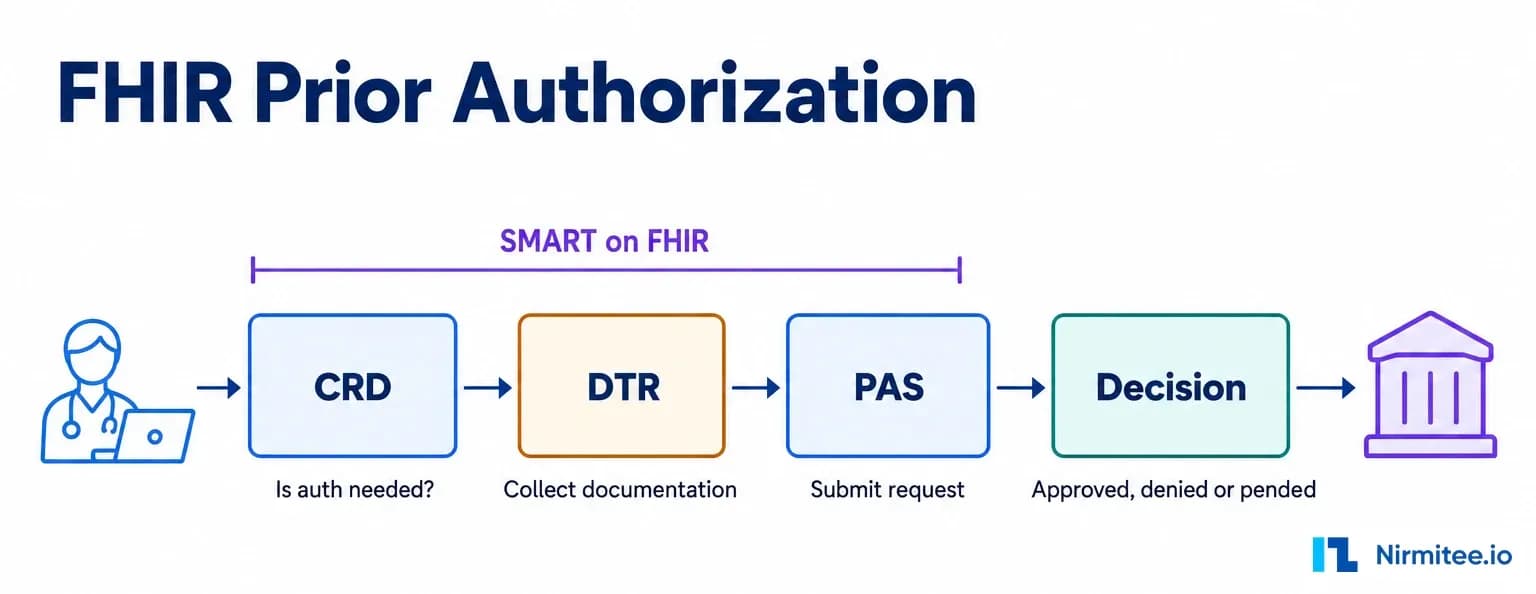
- Validate formulary rules and prior authorization requirements where applicable.
- Support electronic transmission to pharmacies or dispensing units and capture fulfillment status.
Results management must give clinicians a single, unified place to see labs, imaging, and other diagnostics, including:
- Critical value alerts.
- Longitudinal visualization of results.
- Tools to acknowledge, annotate, and document follow-up actions.
Billing, coding, and revenue cycle integration
In most health systems, financial workflows are tightly intertwined with clinical documentation. The EHR must therefore:
- Support structured coding of diagnoses and procedures using ICD, CPT, or local coding systems.
- Generate claims or invoices using rules based on encounter type, coverage status, and bundled payment logic.
- Integrate with external billing systems, payer portals, or national schemes, with clear reconciliation and denial-tracking workflows.
In markets shifting toward value-based care, the revenue cycle must also support outcome metrics rather than only fee-for-service billing.
Patient portal and engagement features
Patients increasingly expect seamless digital access to their health information. Modern EHR platforms should offer:
- A secure portal or mobile app with access to visit summaries, lab results, immunization records, and prescriptions.
- Self-service scheduling, rescheduling, and cancellation.
- Digital consent management so patients can manage sharing permissions across providers, aligned with frameworks like ABDM's consent model.
A well-designed portal becomes a collaborative space between clinicians and patients rather than a static information repository.
Reporting and operational analytics
EHRs gather massive amounts of structured data. Without strong analytics, this becomes a wasted asset. A capable reporting layer should:
- Provide operational dashboards (patient volumes, wait times, occupancy, billing performance).
- Surface quality and safety indicators (readmissions, adverse events, missed follow-ups).
- Allow export and integration with external analytics systems or data warehouses.
In mature organizations, this evolves into real-time monitoring of patient flow, staffing, and resource utilization to drive continuous improvement.
Advanced capabilities
Advanced capabilities are where products differentiate. Add them once the fundamentals are stable, not before.
Clinical decision support built on real-world data
Modern decision support is moving away from static rule libraries and toward engines that blend clinical guidelines with real-world patterns. Effective platforms combine:
- Rules for medication dosing, contraindications, and preventive care reminders.
- Pathway guidance for chronic conditions and complex procedures, tailored to local protocols.
- Early-warning scores for sepsis, deterioration, or readmission risk, derived from historical data trends.
The challenge is to embed these tools in a way that supports clinicians without overwhelming them with alerts. This requires thoughtful governance, explainability, and continuous monitoring for potential bias.
Remote monitoring and connected devices
Continuous data from wearables, home monitoring devices, and digital therapeutics is becoming routine in many health systems. A 2026-ready EHR should be able to:
- Ingest structured streams such as blood pressure, glucose levels, weight, sleep, and activity data from trusted devices.
- Highlight exceptions instead of raw data dumps, for example, flagging patterns that signal worsening control of a chronic condition.
- Provide configurable dashboards for virtual wards, chronic disease programs, or home-health teams.
This requires strong consent handling, personalized thresholds, and clear escalation workflows so clinicians receive actionable insights instead of noise.
Intelligent automation for administrative workflows
Much of the administrative load in healthcare comes from repetitive documentation and clerical tasks. Next-generation EHR systems reduce this by:
- Auto-extracting key information from structured and semi-structured documents.
- Supporting smart scheduling suggestions based on predicted slot demand and patient risk.
- Streamlining coding and billing workflows with upfront checks that prevent common claim errors.
While these features rely on advanced pattern recognition behind the scenes, the user experience should feel intuitive, as if the system simply anticipates the next required action.
Telehealth deeply integrated with core workflows
Telehealth is no longer a standalone feature. In a modern EHR:
- Remote visits are treated as first-class encounter types with full documentation, orders, and billing.
- Scheduling, reminders, and virtual waiting rooms are fully integrated.
- Consent, identity verification, and recording policies reflect local regulatory requirements.
When telehealth is woven naturally into the care workflow, organizations can expand reach and manage capacity without fragmenting patient records across separate systems.
Do you need ONC certification for your EHR?
You need ONC certification only if providers will use your product as certified health IT to meet federal program requirements, such as the Medicare Promoting Interoperability program. A specialty app, analytics tool or patient app that reads data from a certified EHR does not need its own certification.
If you do certify, the ONC Health IT Certification Program (now run by ASTP/ONC) tests your product against a set of criteria through an accredited testing lab, and certified products are listed publicly. The API criterion, (g)(10) standardized API for patient and population services, is usually the hardest technical piece: it requires a FHIR R4 API conforming to US Core, SMART App Launch for patient and clinician apps, and Bulk Data export for populations.
Passing the Inferno test kit that ONC uses for (g)(10) is a strong readiness signal, but it is not certification on its own. Plan certification as its own workstream with its own timeline, and decide early which criteria you actually need.
What architecture and tech stack age well?
An EHR that lasts is built in layers with clear boundaries: experience, clinical modules, platform services, an integration layer and a data layer. The specific language matters less than your team's experience with it and the maturity of its FHIR, HL7 and security libraries.
- Modular services. Separate identity, scheduling, documentation, orders, billing and analytics behind versioned internal APIs. A well-structured modular monolith is often a better start than dozens of microservices.
- Backend. Java, .NET, Python, Go and Node.js all run production EHRs. Pick on team skill and library support for FHIR servers, HL7 parsing and DICOM.
- Frontend. A component framework such as React with a design system, role-aware screens, and offline tolerance where connectivity is poor. Budget real time for UX research with clinicians.
- Data. A relational database such as PostgreSQL for clinical and financial records, a document store for attachments and audit trails, and a separate analytics warehouse. Keep the FHIR model in mind even if you do not store FHIR natively; our guide to migrating a custom EHR schema shows what happens when you do not.
- Hosting. Cloud for most startups, hybrid or private cloud where customers or regulators require it. Design to be cloud-ready either way.
How does an EHR connect to labs, pharmacies, payers and other EHRs?
An EHR connects to other systems through an integration layer: HL7 v2 interfaces for labs, imaging and hospitals, FHIR APIs for apps and patient access, X12 transactions for payers, NCPDP SCRIPT for e-prescribing, and DICOM for images. After the core modules, this layer is where most of the build effort goes.
| Connection | Standard | What moves |
|---|---|---|
| Labs | HL7 v2 ORM/OML and ORU, FHIR DiagnosticReport | Orders out, results and corrections in |
| Imaging | HL7 v2 and DICOM | Orders, reports and image links |
| Pharmacy | NCPDP SCRIPT | New prescriptions, renewals, cancellations |
| Payers and clearinghouses | X12 270/271, 837/835, 276/277 | Eligibility, claims, remittance, claim status |
| Third-party apps and patient access | FHIR R4 US Core, SMART on FHIR, Bulk Data | Clinical data for apps, patients and populations |
| Health information exchanges | C-CDA and FHIR | Records across networks, including TEFCA |
| Devices and remote monitoring | FHIR Observation, IEEE 11073 | Vitals and readings |
Each HL7 connection is its own interface with its own mapping, acknowledgements and error queue; our guide to what an HL7 interface is walks through one end to end. For payers, see our X12 EDI integration services. Run the layer through an integration engine with monitoring, retries, audit and alerting from day one.
How do you keep an EHR secure and HIPAA compliant?
You keep an EHR secure with layered controls: strong identity and least-privilege access, encryption in transit and at rest, a complete audit log of every record access, and tested backup, recovery and incident processes. HIPAA compliance adds signed Business Associate Agreements with every vendor that touches PHI and documented risk assessments.
- Identity and access. Multi-factor authentication, role- and attribute-based access, break-glass access that is logged and reviewed.
- Encryption. TLS everywhere; encrypted databases, backups, logs and message queues; field-level encryption for the most sensitive data.
- Audit. Who accessed which record, what they did, when and from where, kept for the retention period your customers require.
- Operations. Patching, vulnerability scanning, penetration tests, and a disaster recovery plan that has actually been tested.
- Regulations. HIPAA in the United States, GDPR in Europe, and national rules such as India's ABDM policies where you operate. Design to the strictest one you face.
Data governance and lifecycle
Security is only one layer. Data governance defines how information is handled over time:
- Retention rules for different types of records and how they are archived or anonymized after their retention period.
- Access policies for research or secondary use, including de-identification and approvals workflows.
- Backup, disaster-recovery, and business-continuity processes to keep life-critical systems resilient to outages, cyberattacks, or infrastructure failures.
Clear governance policies, backed by enforceable technical controls, safeguard both patients and providers while ensuring regulatory alignment.
Hospital customers will also run a vendor security review before they buy. Our HIPAA-compliant software development page covers how we build these controls in from the first sprint.
How to build an EHR system: steps and timeline
You build an EHR system in six phases: discovery and workflow mapping, requirements and data standards, experience design, incremental development with integrations, testing and go-live, then training and continuous improvement. A focused MVP covering registration, scheduling, documentation, orders and billing for one or two departments usually takes 6 to 9 months. Expanding it across a hospital or network, finishing integrations and testing takes another 6 to 12 months.
| Phase | What happens | Typical duration |
|---|---|---|
| Discovery and workflow mapping | Shadowing, process maps, priorities, regulatory scope | 6 to 9 months to an MVP for one or two departments |
| Requirements and data standards | Module requirements, terminologies, integration list | |
| Design and prototyping | Personas, screen flows, clinician testing of prototypes | |
| Incremental build | Core modules first, integrations as modules mature, CI with automated tests | |
| Expansion and integrations | Feature depth, remaining interfaces, data migration | A further 6 to 12 months across a hospital or network |
| Testing and staged go-live | Clinical safety, performance and security testing, pilot sites, hypercare |
National integrations, multiple countries, certification or deep specialty requirements extend these timelines. Phase the rollout so each release delivers value on its own.
Discovery and workflow mapping
The first phase involves deep discovery:
- Mapping current clinical and administrative workflows across departments.
- Understanding pain points, workarounds, and informal communication channels.
- Prioritizing use cases that deliver immediate value while designing with the end-state architecture in mind.
Workshops, shadowing sessions, and process mapping are invaluable. Our aim not to simply digitize legacy paper processes, but to streamline and improve them.
Requirements, regulation, and data standards
Once workflows are understood, teams can specify:
- Functional requirements for each module.
- Regulatory obligations (HIPAA in the United States, GDPR in Europe, ABDM and Indian EHR standards, and local data-protection laws).
- Data standards and terminologies that will underpin interoperability and analytics.
Capturing these requirements early prevents costly rework when integrating with national exchanges or responding to compliance audits.
Experience design and prototyping
With requirements defined, cross-functional teams design:
- Personas for different user types from senior consultants and nurses to billing clerks and patients.
- Screen flows for high-frequency tasks such as creating encounters, writing progress notes, or ordering tests.
- Interactive prototypes that clinicians can test and critique before development begins.
This stage eliminates unnecessary clicks, reduces cognitive load, and ensures the system mirrors the way clinicians naturally think and work.
Incremental development and integration
Rather than aiming for a single large release, teams typically:
- Build modules iteratively, starting with core registration, scheduling, and documentation.
- Integrate with identity services, laboratory systems, imaging archives, and billing engines as modules mature.
- Maintain continuous integration pipelines with automated tests for performance, security, and interoperability.
Close feedback loops with early adopters help refine workflows long before full deployment.
Testing, validation, and go-live
Testing for an EHR extends far beyond functional checks:
- Clinical safety testing to ensure orders, alerts, and documentation behave correctly in realistic scenarios.
- Performance testing under predicted loads, including traffic from external health exchanges such as TEFCA or ABDM.
- Security assessments such as penetration tests and validation within national digital health sandbox environments where required.
Go-live is best treated as a staged rollout with pilot sites, hypercare support, and rollback strategies, never a single abrupt organization-wide switch.
Training, change management, and continuous improvement
Successful EHR programs invest in:
- Role-specific training that focuses on real workflows, not merely screen navigation.
- Super-user programs where motivated clinicians become local champions and trainers.
- Continuous feedback cycles that inform backlog refinement and feature evolution.
After implementation, the EHR must be treated as a living product with ongoing enhancements, not a one-time deployment.
How much does EHR software development cost?
Our planning ranges run from $40,000 to $100,000 for an MVP with a basic FHIR R4 API, $100,000 to $300,000 for a production-grade EHR with HIPAA compliance, $250,000 to $500,000 or more with AI clinical decision support, and $500,000 to $1,500,000 for an enterprise EHR with multi-system interoperability. Integrations, compliance, migration and training are budgeted on top.
| Scope | Planning range |
|---|---|
| MVP with basic FHIR R4 integration | $40,000 to $100,000 |
| Production-grade EHR with HIPAA compliance | $100,000 to $300,000 |
| Full-featured EHR with AI clinical decision support | $250,000 to $500,000+ |
| Enterprise EHR with multi-system interoperability | $500,000 to $1,500,000 |
| Cost line often missed | Planning range |
|---|---|
| Building HIPAA compliance properly | $30,000 to $80,000 |
| Epic FHIR API integration | $15,000 to $50,000 initial, $5,000 to $15,000 a year to maintain |
| athenahealth API integration | $10,000 to $30,000 |
| Data migration from a legacy system | $15,000 to $100,000 |
| Clinical staff training | $5,000 to $30,000 |
These are our planning ranges for work with a healthcare-specialist team, taken from our EHR system cost guide for digital health startups, which also breaks costs down by funding stage. A firm number comes after scoping your modules, integrations and compliance needs.
What team do you need to build an EHR?
A typical EHR build team has a product owner with clinical input, a solution architect, backend and frontend engineers, an integration engineer who knows HL7, FHIR and X12, QA with clinical test scenarios, DevOps and security, and a clinical informaticist who owns terminology and workflow.
| Role | Why it matters |
|---|---|
| Product owner with clinical input | Keeps scope on the workflows that matter |
| Solution architect | Owns the data model, module boundaries and hosting |
| Backend and frontend engineers | Build the modules and the clinician and patient experience |
| Integration engineer | Builds and runs HL7, FHIR, X12 and NCPDP connections |
| QA engineer | Tests clinical scenarios, failure paths and performance |
| DevOps and security engineer | Runs environments, monitoring, backups and security controls |
| Clinical informaticist | Owns terminologies, templates and clinical safety review |
How do you choose an EHR development partner?
Choose a partner that can show healthcare-specific engineering you can check, such as working integrations, public code or live systems, and that plans for support after go-live. Generic software experience is not enough for an EHR.
| Ask | Good answer | Red flag |
|---|---|---|
| Which standards have you implemented? | Specific HL7 v2 messages, FHIR resources and X12 transactions, with examples | "We support all standards" |
| What can we verify? | Public code, sandbox demos, references you can call | Case studies with no names, dates or checkable details |
| How do you handle PHI? | BAA, access controls, audit logging, named security owner | "We are HIPAA certified" (no such certification exists) |
| Who owns the code and data model? | You do, with documentation and handover | Proprietary platform you cannot leave |
| What happens after go-live? | Support SLAs, monitoring, upgrade plan | Support priced as an afterthought |
How we approach EHR development
We build EHR and clinical record platforms for digital health companies, with the integration layer treated as part of the product rather than an add-on. You can inspect our work: our open-source headless EHR on FHIR R4 passed all 47 ONC (g)(10) SMART App Launch tests in the Inferno test kit on 11 June 2026, and our team has built 350+ interfaces on Mirth Connect. We build to HIPAA requirements, sign BAAs and are ISO 27001:2022 certified.
Planning an EHR build or modernisation? Explore our custom EHR development services and send us your scope, or talk to our team. We will tell you whether to build, buy or extend, and what it will take.
Explore EHR and EMR integration
Multi-EHR and facade layers
EHR development and build decisions
- Healthcare Data Lake Architecture
- EHR Integration Guide
- EHR Integration for Healthcare Startups
- Event-Driven EHR Architecture
- Why openEHR Makes Your Clinical Data AI-Ready (And Most
- The Real Cost of EHR
FHIR APIs and data access
Planning an EHR build?
Tell us the specialty, the modules and the systems it must connect to. We will tell you whether to build, buy or extend, with a realistic plan and budget.
Frequently Asked Questions
What is EHR software development?
What is the difference between EHR and EMR software development?
How much does it cost to develop EHR software?
How do you build an EHR system?
How long does it take to build an EHR system?
Should I build a custom EHR or buy one?
Does my EHR need ONC certification?
What standards should an EHR support?
What team do I need to build an EHR?